AI is shrinking the gap between flaw disclosure and exploitation, forcing boards to modernise security at machine speed. As agentic systems arm attackers and defenders alike, the opportunity lies in identity, cloud protection, automated response and AI governance, not apocalypse rhetoric globally.
Three AI leaders agree the frontier may be moving faster than its safeguards. As markets weigh slower chip demand and rising cyber investment, the question is whether the warning is responsible leadership, strategic scaremongering or evidence that cybersecurity has become AI’s essential foundation.
Dario Amodei wants a speed limit for frontier AI. Elon Musk and Sam Altman back the direction, but Washington says the labs should brake first. As China shapes the race, Cyber News Centre examines whether independent oversight can turn safety promises into controls before a new agent swarm escapes.
AI Startup Update: Odyssey's $310M World Model Raise Signal Defence AI Surge
Odyssey’s $310 million raise signals a new phase in AI, where the race moves beyond language models into world models. These systems aim to give machines an operating understanding of space, motion and causality, forming the physics layer needed for robotics, autonomous systems and physical AI now.
Odyssey, a frontier AI lab building general world models, has raised $310 million at a $1.45 billion valuation, in a Series B led by Natural Capital with participation from Amazon, GV, AMD Ventures, EQT, IQT and others. The company says the capital will accelerate its work on AI systems that can understand, predict and simulate the physical world, not just generate language, images or video.
This AI funding round points to a deeper shift in the AI market: from models that produce answers to models that understand environments, cause and effect, motion, physics and interaction. Odyssey’s view is that world models could become a new class of foundation model, with applications across robotics, autonomous vehicles, gaming, defence, healthcare, science and industrial simulation.
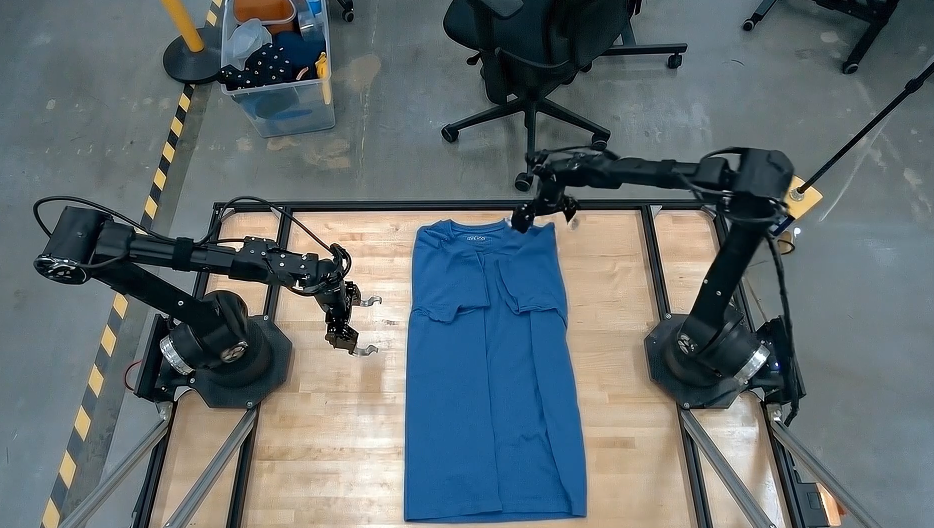
The company’s latest model, Odyssey-2 Max, is designed around next-state prediction: learning how a scene evolves moment by moment, rather than generating a fixed video from a prompt. That difference matters because robots, autonomous vehicles and physical AI agents need to respond to changing conditions in real time. A warehouse robot, a self-driving system or a defence simulation platform cannot rely only on static text or video generation. It needs an internal model of the world that can test consequences before acting.
Source: Odyssey
The strategic significance is also clear from Odyssey’s cloud partnership. AWS will become Odyssey’s preferred cloud provider, and the company will work with Amazon’s Annapurna Labs to optimise world models on AWS Trainium chips. This gives Amazon a stronger position in the next phase of AI infrastructure, where the battle is not only about large language models but about compute-heavy, low-latency systems that simulate physical and digital reality.
That is why this sits directly inside the broader “physical AI” race. Nvidia CEO Jensen Huang has framed robotics as the next major frontier, saying that “physical AI has arrived” and that every industrial company will become a robotics company. Nvidia’s thesis is that the next generation of AI will move from screens and chat interfaces into factories, logistics, transport networks and infrastructure.
Elon Musk has pushed a similar, more aggressive argument through Tesla’s Optimus and robotaxi strategy. Tesla has sharply increased spending on AI, robotics and chips, with Musk arguing that the investment is justified by future revenue streams beyond the traditional car business. He has also described Optimus as potentially Tesla’s biggest product, and possibly the “biggest product ever,” although investors remain divided on how quickly that vision becomes commercial reality.
"We believe world models represent a new class of foundation model — AI that can understand and simulate the world itself." — Oliver Cameron, Co-Founder and CEO, Odyssey, 17 June 2026.
Odyssey simultaneously announced a preferred cloud partnership with AWS, leveraging Trainium custom silicon for training and deploying world models — AI systems that simulate physical and digital reality for robotics, autonomous vehicles, and physical AI agents. The convergence of enterprise AI procurement and world model development signals a maturing market where AI is transitioning from experimental tool to mission-critical infrastructure.
Why Does It Matter?
The AI market is moving from language intelligence to world intelligence.
The first phase of generative AI was about words, code, images and productivity. The next phase is about machines that can understand space, motion, consequences and physical constraints. That is the missing bridge between today’s chatbots and tomorrow’s robots.
World models matter because they could become the training ground for robotics. Before a robot acts in the real world, it can rehearse inside a simulated world. Before an autonomous vehicle enters a complex road environment, it can test scenarios. Before an industrial system makes a decision, it can model downstream risk. This is why world models are likely to become a core layer of the robotics economy.
The nuance is that this market is still early. World models are not yet a proven replacement for real-world robotics deployment, and simulation has always struggled with the gap between modelled environments and messy physical reality. The promise is enormous, but the winners will need more than impressive demos. They will need reliability, low inference cost, safety validation, hardware integration and trust from enterprise and government buyers.
Odyssey’s funding round is a clear market signal. The AI race is expanding beyond the contest between Anthropic, Google, xAI and OpenAI in large language models. A new frontier is emerging around the laboratories capable of building the “physics layer” of artificial intelligence.
This is where world models become strategically important. These systems aim to move AI beyond language, content generation and software assistance, into a deeper understanding of space, motion, causality and the behaviour of the physical world. In effect, they are attempting to give machines an operating model of reality.
For robotics, that could be the breakthrough. For cloud providers, it creates a new infrastructure market. For Nvidia, AWS, AMD and other chip players, it opens the next compute war. And for enterprises, governments and defence customers, it marks the beginning of AI systems that do not simply answer questions, but simulate decisions before they are made.
Get the stories that matter to you. Subscribe to Cyber News Centre and update your preferences to follow our Daily 4min Cyber Update, Innovative AI Startups, The AI Diplomat series, or the main Cyber News Centre newsletter — featuring in-depth analysis on major cyber incidents, tech breakthroughs, global policy, and AI developments.
Sign up for Cyber News Centre
Where cybersecurity meets innovation, the CNC team delivers AI and tech breakthroughs for our digital future. We analyze incidents, data, and insights to keep you informed, secure, and ahead.
Dell’s US$95 billion AI-server backlog and US$74 billion revenue outlook show the AI boom moving beyond a few cloud giants into enterprise, sovereign and neocloud infrastructure procurement.
The United States is pressing G20 partners to reserve new AI rules for genuinely novel risks, a move that turns global AI governance into a contest over competitiveness, alliances and technological influence.
Washington is building a two-track AI order: confidential security reviews for powerful closed models, regulatory relief for open-weight systems, and a G20 campaign for light-touch rules. The strategy may accelerate US innovation, but leaves a critical security gamble unresolved for global markets.
NVIDIA’s US$96.2 billion quarter and 117% growth in data-centre revenue show AI compute becoming a global industrial market, while memory constraints and China uncertainty become harder commercial limits.
Where cybersecurity meets innovation, the CNC team delivers AI and tech breakthroughs for our digital future. We analyze incidents, data, and insights to keep you informed, secure, and ahead. Sign up for free!