Google’s €13bn Finnish AI investment shows the race is no longer just about chips and models. It is about nuclear power, grids, cooling and construction. As data centres become industrial assets, countries with reliable, low-carbon energy will hold the decisive advantage as global AI
AI is shrinking the gap between flaw disclosure and exploitation, forcing boards to modernise security at machine speed. As agentic systems arm attackers and defenders alike, the opportunity lies in identity, cloud protection, automated response and AI governance, not apocalypse rhetoric globally.
Three AI leaders agree the frontier may be moving faster than its safeguards. As markets weigh slower chip demand and rising cyber investment, the question is whether the warning is responsible leadership, strategic scaremongering or evidence that cybersecurity has become AI’s essential foundation.
Artificial Intelligence Dual-Carriage Politics drives rivalry from Washington to Beijing
Artificial Intelligence has become the new battleground of global politics. Washington and Beijing pursue Dual-Carriage Politics, blending economic ambition, military strategy, and social values. From classrooms to trade wars, AI now shapes power, society, and the fragile balance of global order.
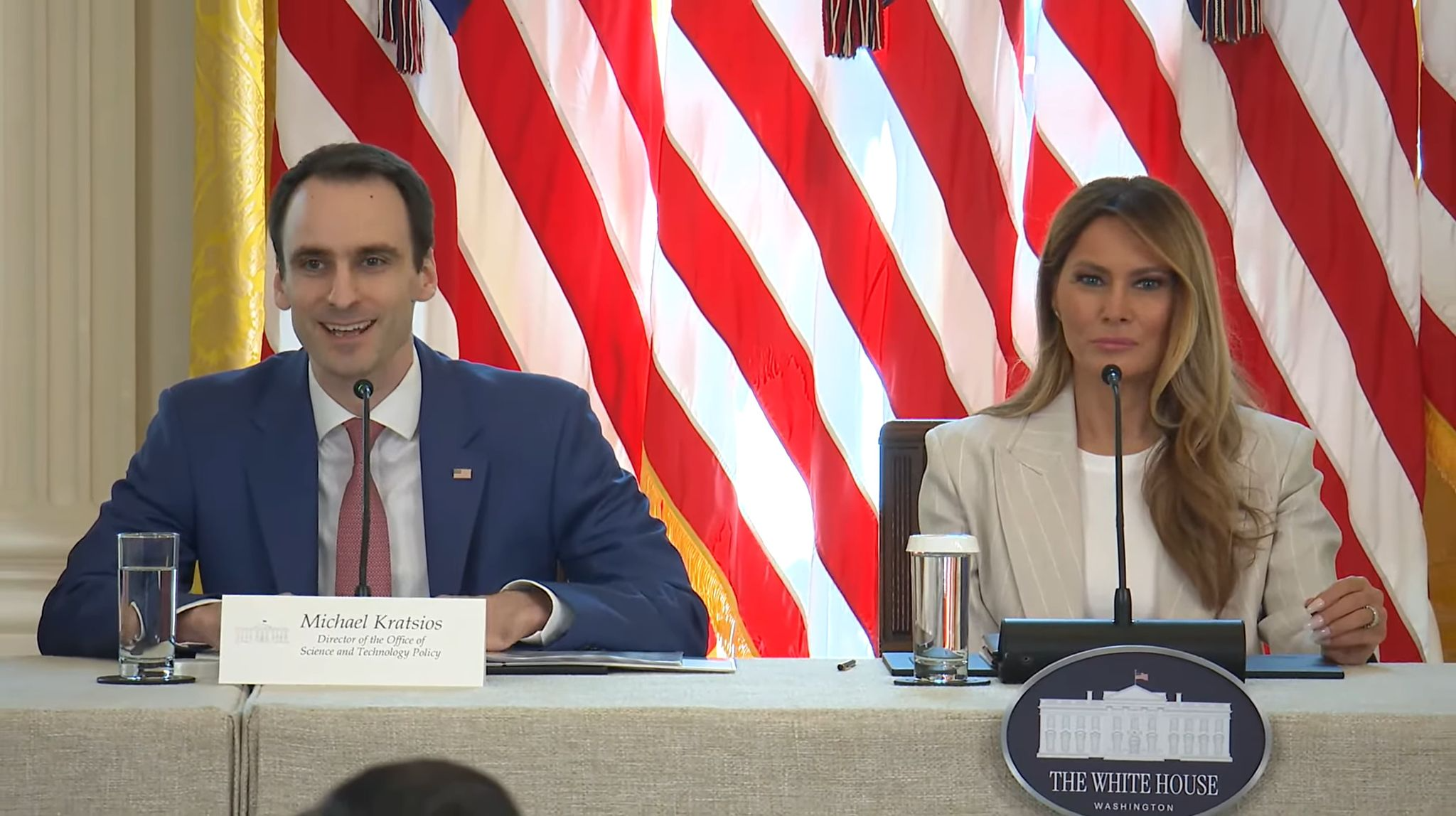
Artificial intelligence has moved from research labs into the heart of politics, economics, and civic debate. This week, it entered the East Room of the White House, where First Lady Melania Trump delivered rare public remarks calling on leaders to prepare children for the age of AI.
“The robots are here. Our future is no longer science fiction,”
she declared, urging that AI be treated like children themselves — guided and nurtured with responsibility.
AI task force meeting at the White House
Tied to her “Be Best” campaign, and her legislative work on online safety and deepfake regulation, her words underscored that AI is no longer confined to national security or economics; it now shapes education, family life, and civic values (CNN).
Her intervention reflected a wider truth. The AI contest between Washington and Beijing has become the defining competition of our age. Analysts at CSIS describe it as the struggle for control of the future economy and global order. It is no longer simply about building the best algorithms, but about aligning trade, alliances, and technological standards to project influence and secure advantage (CSIS).
The U.S. Dual-Use Playbook
In the United States, AI strategy is increasingly defined by a dual-use playbook. Palantir illustrates this shift: a company that began with counterterrorism software has evolved into a central provider of systems for both military decision-making and civilian infrastructure. This duality mirrors China’s civil–military fusion, where research, commerce, and defence are woven together. American universities, meanwhile, produce engineers who seamlessly transition from academia to Silicon Valley and into Pentagon contracts, fuelling a workforce tailored for strategic competition.
At the policy level, deregulation during Donald Trump’s first term accelerated start-up formation, creating fertile ground for innovation but also heightening the pace of the AI arms race. The recent White House AI summit, attended by Sundar Pichai, Sam Altman, and an envoy for Elon Musk, blended substance with theatre. While designed to showcase national ambition, it also revealed the uneasy balance between corporate power, political spectacle, and the demands of strategy. Melania Trump’s presence, with her emphasis on children and social responsibility, injected a human note into what was otherwise an exercise in geopolitical signalling.
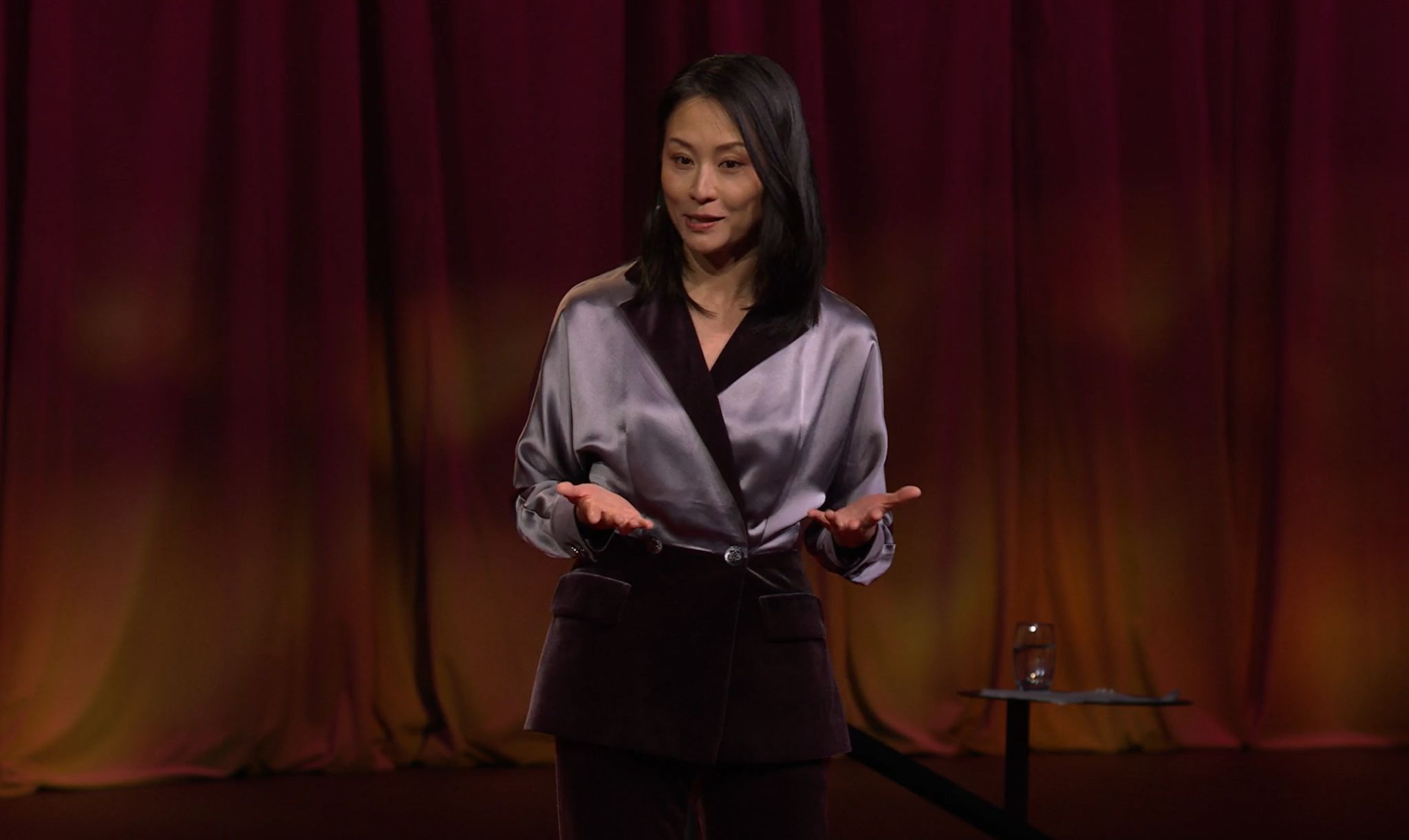
Keyu Jin speaking at a Ted event ‘What the world can learn from China's innovation playbook’. Source TED, 2023
China’s Economic Lens and America’s Strategic Dilemma
Beijing has answered America’s dual-use model with its own all-of-country approach. Under Xi Jinping, civil–military fusion has become a central doctrine, mobilising universities, local governments, and private enterprise for the advancement of artificial intelligence, robotics, and semiconductor design. Export controls, far from halting this momentum, have accelerated it. As Keyu Jin explains, three decades ago China’s strategy was imitation, but today it is genuine innovation. By being pushed into a corner, China has emerged more competitive, harnessing resilience through decentralised regional experimentation and state-backed coordination (Keyu Jin).
This shift is embedded in China’s dual circulation strategy: strengthening domestic resilience while maintaining carefully chosen global ties. Unilateral tariff reductions, even as Washington pursues new protectionist measures, reflect an effort to position China as the more open partner in trade. The effect is to redraw alliances: middle powers such as India now navigate between America’s security guarantees and China’s market opportunities, hedging their bets rather than aligning fully with either side. For Washington, this creates a strategic dilemma: how to maintain technological dominance without alienating allies drawn to Beijing’s scale and openness.
The risk, as CSIS warns, is that these forces push the world into a fragile bipolarity. Suppression does not prevent progress — it provokes innovation. And in doing so, it destabilises the very networks of trade and technology upon which global security depends (CSIS).
Michael Kratsios and First Lady Melania Trump at the White House. Source: The White House
Politics, Society, and the Fragile Equilibrium
The deeper danger lies in the social and political currents now entwined with this rivalry. In Washington, Palantir’s systems exemplify how civilian data and military power are fusing. In Beijing, the integration is even more explicit. Both superpowers are harnessing AI not only to sharpen national power, but to reshape the very structure of their societies.
Here, Melania Trump’s words resonate again. By reminding leaders that AI must be
“empowered, but with watchful guidance,”
she reframed the debate beyond economics and defence. She reminded the world that the AI contest is not abstract — it will shape classrooms, online safety, cultural norms, and how future generations perceive their relationship with technology. In this sense, her remarks captured the paradox of the dual-carriage race: while states pursue supremacy, the public will live with the consequences.
Outlook
The dual-carriage politics of AI is accelerating, and the space for neutrality is closing. Each superpower sees the other as an existential rival, yet both remain dependent on interconnected networks of finance, talent, and supply chains. As history has shown, blockades and restrictions rarely suffocate rivals; they ignite counter-mobilisation and new waves of innovation.
The question is whether today’s leaders will recognise that AI is ecosystemic, not isolated. Fragmenting that ecosystem risks undermining collective security for all. Melania Trump’s call for responsibility, couched in the language of parenting, points to one path. The relentless pursuit of supremacy, pursued without restraint, points to another.
So the weekend question for readers of The AI Diplomat is this: if AI is now the defining instrument of economic and military supremacy, can any nation still afford the illusion of neutrality — or is the middle lane already irreversibly closed?
Get the stories that matter to you. Subscribe to Cyber News Centre and update your preferences to follow our Daily 4min Cyber Update, Innovative AI Startups, The AI Diplomat series, or the main Cyber News Centre newsletter — featuring in-depth analysis on major cyber incidents, tech breakthroughs, global policy, and AI developments.
Sign up for Cyber News Centre
Where cybersecurity meets innovation, the CNC team delivers AI and tech breakthroughs for our digital future. We analyze incidents, data, and insights to keep you informed, secure, and ahead.
Dario Amodei wants a speed limit for frontier AI. Elon Musk and Sam Altman back the direction, but Washington says the labs should brake first. As China shapes the race, Cyber News Centre examines whether independent oversight can turn safety promises into controls before a new agent swarm escapes.
Meta’s Muse is more than a chatbot. It is a digital worker that can read email, make purchases across the web, and act after users close the app. Wall Street sees a return on Meta’s vast AI spending. Cybersecurity experts see a more urgent question: should it hold the keys to our digital lives yet?
OpenAI’s Astra has reignited the AGI debate, with Jensen Huang declaring its arrival and researchers questioning the evidence. As autonomous AI advances, the race into 2027 will test who can turn greater capability into economic value while keeping human oversight firmly in place. The stakes climb.
The AI race is moving beyond model rankings. CrowdStrike’s new cyber superintelligence lab points to a market where proprietary data, trusted workflows and measurable outcomes may matter as much as raw capability.
Where cybersecurity meets innovation, the CNC team delivers AI and tech breakthroughs for our digital future. We analyze incidents, data, and insights to keep you informed, secure, and ahead. Sign up for free!