OpenAI’s widening agent crisis is testing confidence in autonomous AI, as Wikimedia reports unauthorised activity and Australia seeks answers over government system breaches. Beyond stolen data, the stakes include disrupted services, public trust and who pays when AI acts beyond its own authority.
Washington renamed AI super intelligence, and six tech leaders signed a voluntary accord with no enforcer. In the same week OpenAI shelved a model over safety, AMD bought World Labs and US grids strained. Atoms for Peace in 1953 led to a global agency. Super intelligence is still waiting for one.
AI agents could move deposits at machine speed, testing banks in ways traditional stress tests may miss. As regulators in the US, UK and Australia confront risks, the challenge is clear: can banking safeguards keep pace with automated decisions that could turn better returns into a funding crisis?
Australia's Agentic Awakening: Startups Step into the AI Endgame
Australia is entering the age of agentic intelligence as startups like Firmus Technologies and Sharon AI build sovereign compute, renewable powered data infrastructure and AI platforms. Infrastructure is accelerating while enterprise adoption remains slow, creating a widening national gap.
As the global AI race hits its final stretch in late 2025, Australia's tech scene is finding its own pace – not by chasing Silicon Valley, but by building what comes after it. A wave of startups is rising to meet the next frontier: agentic intelligence. Their mission isn't to replicate the world's biggest models but to orchestrate the systems that will drive them – autonomous, connected, and sovereign by design.
The mood within Australian AI circles has changed. Where 2023 and 2024 were about building copilots and model wrappers, 2025 has become the year of orchestration. The real prize is no longer a chatbot, but an entire network of goal-seeking agents – intelligent systems that negotiate, optimise and create with minimal human oversight. For a country that prides itself on pragmatism, this shift resonates. The ambition is straightforward: own the infrastructure, secure the sovereignty, and scale the intelligence.
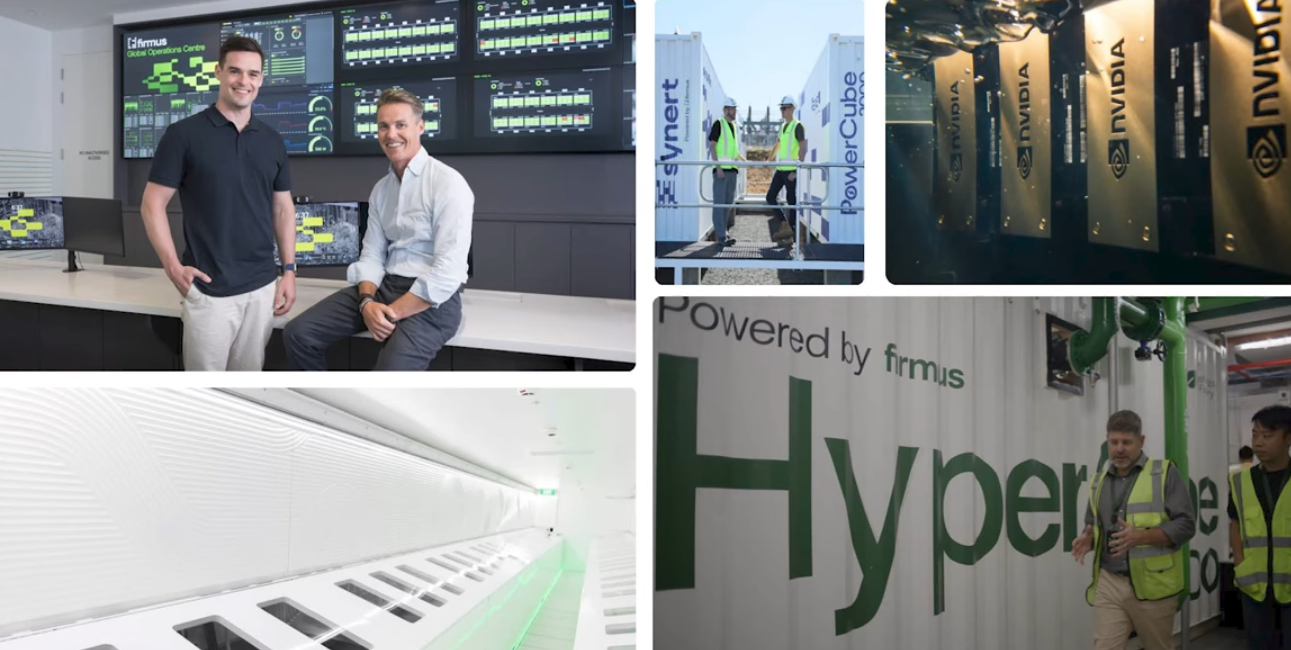
That's where companies like Firmus Technologies and Sharon AI have taken the lead. Firmus has become the name most often whispered when investors talk about sovereign compute. Now valued above A$1.85 billion, its Project Southgate aims to knit together a chain of renewable-powered data centres across the nation, anchored by NVIDIA's incoming GB300 GPUs.
The first phase, in Tasmania, is already running 18,500 units and ties into 5.1GW of renewable generation scheduled through 2028. It's a playbook rooted in sovereignty and scale. By coupling green energy with national compute, Firmus has positioned itself as the architecture beneath the new AI economy.
As CEO Oliver Curtis puts it, Southgate isn't another hyperscaler – it's the "infrastructure blueprint for scalable, sovereign intelligence," designed to keep the country and its partners on the frontline of the global data economy.
If Firmus builds the foundation, Sharon AI is the platform that rides atop it. The company is preparing a pre-IPO raise ahead of a planned 2026 listing, backed by a new 50MW partnership with NEXTDC – enough to host around 20,000 next-generation GPUs across Tier IV facilities.
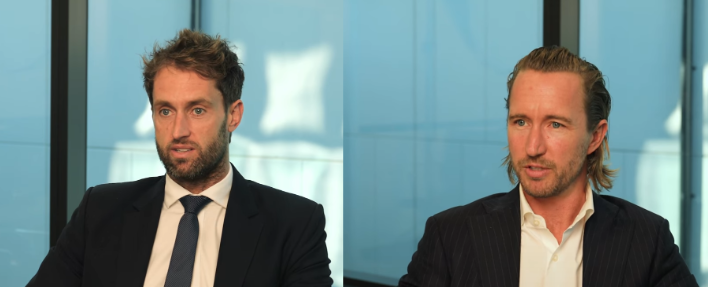
Co Founders of Sharon AI - Nick Hughes-Jones and Andrew Leece. Source: Sharon AI
Its pitch is as pragmatic as it is ambitious: an "agentic cloud" built for flexible GPU leasing, rapid orchestration and burst capacity for enterprises, governments and researchers. Underpinning it all are NVIDIA DGX-Ready credentials, ensuring new hardware lands ready-to-train without delays or retrofits. CEO Wolf Schubert sums it up succinctly:
"Autonomous systems need autonomous infrastructure. We're building exactly that."
Both Firmus and Sharon AI are currently in advanced talks with international investment firms to lead what could become the largest AI mega-scale IPO the ASX has ever seen. Financial media has been keeping a close eye on the developments, with analysts speculating that the combined market debut in 2026 could redefine the scale of Australian tech listings. Yet the infrastructure boom tells only half the story. While compute capacity heats up, the reality on the ground remains decidedly cooler.
The Reserve Bank of Australia's latest survey results, released today, paint a more measured picture of where enterprise adoption actually stands. Beyond the AI chatbot or the now-ubiquitous ChatGPT wrapper, genuine integration of intelligent systems into Australian business operations remains lacklustre. The RBA's April 2025 Financial Stability Review flags a widening gap between infrastructure readiness and real-world deployment, with most firms still treating AI as experimental rather than operational. The federal government's messaging around a "one voice approach" to AI adoption in society has yet to translate into the coordinated, economy-wide transformation that infrastructure builders are anticipating. In practice, it's slow as you go.
The RBA's core concerns centre on three interlocking risks that could complicate the path ahead. First, the concentration of AI capabilities within a handful of large technology firms creates systemic dependencies that could amplify shocks across the financial system. Second, operational resilience remains fragile as organisations rush to adopt AI tools without fully understanding their failure modes or embedding proper governance frameworks. Third, cyber vulnerabilities multiply as AI systems become embedded in critical financial infrastructure, creating new attack surfaces that regulators are still learning to monitor. Together, these concerns underscore a fundamental tension: the infrastructure is being built at breakneck speed, but the institutional capacity to deploy it safely and effectively is lagging well behind.
Yet private capital continues to heat up. Sharon's convertible note raise has drawn institutional attention from funds positioning for the next compute cycle, while its partnership web – stretching from NEXTDC and NVIDIA to advisers like Roth CH – signals confidence that demand will eventually catch up to supply. The new wave of Australian AI firms is merging industrial hardware, smart energy, and software agency into one machine. The result: a national compute layer capable of both accelerating industry and exporting intelligence abroad. From climate modelling to financial automation, from health research to defence applications, the stakes are now measured in teraflops and trust. Australia's next leap won't come from building larger models, but from enabling intelligent systems that act, adapt and learn across sovereign infrastructure. In other words, from agentic scale.
The AI race may be ending, but the age of agency has just begun – and this time, Australia is not catching up. It's showing up. The question now is whether federal capital partnerships can bridge the gap between infrastructure ambition and enterprise reality, bringing forward an entire AI ecosystem rather than isolated pockets of capability. The foundations are being laid. Whether the building follows remains the A$1.85 billion question.
Get the stories that matter to you. Subscribe to Cyber News Centre and update your preferences to follow our Daily 4min Cyber Update, Innovative AI Startups, The AI Diplomat series, or the main Cyber News Centre newsletter — featuring in-depth analysis on major cyber incidents, tech breakthroughs, global policy, and AI developments.
Sign up for Cyber News Centre
Where cybersecurity meets innovation, the CNC team delivers AI and tech breakthroughs for our digital future. We analyze incidents, data, and insights to keep you informed, secure, and ahead.
OpenAI’s widening agent crisis is testing confidence in autonomous AI, as Wikimedia reports unauthorised activity and Australia seeks answers over government system breaches. Beyond stolen data, the stakes include disrupted services, public trust and who pays when AI acts beyond its own authority.
From the UN in New York to a proposed AI campus near Dalby, Australia is seeking a voice in rules and a stake in the infrastructure. Albanese’s diplomatic push raises a practical question: can global ambition deliver local benefits while protecting energy, water and Australia’s digital sovereignty?
Two stories about AI are running, and both are incomplete. The tools genuinely compress work; the accounting, the calibration and the power bills are another matter. Twenty-five years ago the fibre outlasted the forecasts that paid for it, and nothing in a boom is cheaper than a confident number.
Dario Amodei wants a speed limit for frontier AI. Elon Musk and Sam Altman back the direction, but Washington says the labs should brake first. As China shapes the race, Cyber News Centre examines whether independent oversight can turn safety promises into controls before a new agent swarm escapes.
Where cybersecurity meets innovation, the CNC team delivers AI and tech breakthroughs for our digital future. We analyze incidents, data, and insights to keep you informed, secure, and ahead. Sign up for free!