A bipartisan AI committee wants independent evaluators inside OpenAI and Anthropic and early access for security agencies. Read slowly, its letter to Albanese is a ransom note written in reverse. Australia is not being held hostage. It is offering itself, with its creative archive as collateral.
Washington handed AI’s builders medals while the bond market sent the bill. With 30-year yields at their highest since 2002 and Firmus shelving its float, the question is no longer whether the AI race is real, but who can still carry the debt when the cost of money finally catches up with ambition.
Donald Trump has handed America's highest science honours to Musk, Huang, Brin, Su, Nadella and Dell, crowning the builders of AI's chips, clouds and rockets. His maxim that whoever wins AI wins leaves no silver medal, and middle powers like Australia must now choose between partner and tenant.
Brazil Builds an AI Bridge Between Washington and Beijing
Brazil is investing US$444 million in AI infrastructure spanning Chinese and US technology. Its strategy avoids dependence on one power, using rival suppliers to build sovereign compute, domestic models and leverage, although genuine autonomy will depend on its energy, skills and strong execution.
Brazil is turning AI sovereignty from a political slogan into an infrastructure programme, committing BRL2.3 billion, approximately US$444 million, to build national computing capacity without placing its future entirely in American or Chinese hands.
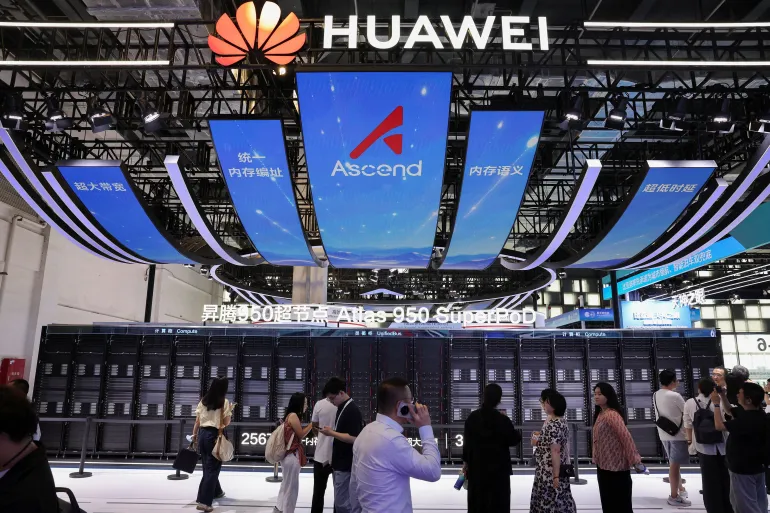
The strategy has two tracks. Around BRL1.3 billion, or US$251 million, will support supercomputing infrastructure in Rio de Janeiro developed with China’s Huawei and iFlytek. The system will help train general-purpose and sector-specific language models, giving Brazil greater control over the models, data and computing capacity serving its economy.
A separate tender of approximately BRL1 billion, or US$193 million, will finance an AI supercomputer in Rio Grande do Norte, where access to energy helped determine the location. Brazil expects the machine to rank among the world’s 10 most powerful AI-processing systems. Officials anticipate that Nvidia will become the supplier, although the tender remains open and no contract has been awarded.
This is not technological neutrality so much as strategic diversification. Brasília is using competition between the world’s two dominant technology ecosystems to obtain infrastructure, training and negotiating leverage while reducing its exposure to any single supplier. As the government put it, the objective is not to depend on one company, technology or country.
The programme also reaches beyond computing hardware. Brazil is pursuing a public-private national cloud, RISC-V semiconductor cooperation with Spain and a centre for algorithmic transparency and trustworthy AI.
The harder test now begins. Sovereignty cannot be purchased as a collection of machines. It requires reliable energy, skilled operators, secure data, locally relevant models and institutions capable of sustaining them. Brazil has chosen a sophisticated path between Washington and Beijing. Its success will depend on whether procurement becomes enduring domestic capability.
Brazil is investing in AI infrastructure developed in partnership with Chinese technology giant Huawei and iFlytek [File: Go Nakamura/Reuters]
Why Does It Matter?
Brazil’s decision captures an important shift in the global AI race. Middle powers are no longer treating sovereign AI as a choice between buying American technology and accepting Chinese infrastructure. They are increasingly trying to combine competing supply chains, preserve room to manoeuvre and keep more of the economic value created by AI within their own borders.
For technology leaders, however, diversification creates its own difficulties. Chinese and American systems may carry different software, security, networking and governance requirements. Integrating them into a coherent national architecture will demand strong technical oversight, clear data controls and a workforce capable of operating infrastructure from multiple vendors.
Brazil’s real achievement will therefore not be owning two powerful machines. It will be converting foreign hardware into Brazilian capability: Portuguese-language models, scientific research, public services, industrial applications and a domestic cloud ecosystem that can survive changes in geopolitics or export controls.
That makes this programme more than another supercomputer purchase. It is an early test of whether a major middle power can use the US–China technology contest to strengthen its own autonomy, rather than simply exchanging dependence on one foreign platform for dependence on several.
Get the stories that matter to you. Subscribe to Cyber News Centre and update your preferences to follow our Daily 4min Cyber Update, Innovative AI Startups, The AI Diplomat series, or the main Cyber News Centre newsletter — featuring in-depth analysis on major cyber incidents, tech breakthroughs, global policy, and AI developments.
Sign up for Cyber News Centre
Where cybersecurity meets innovation, the CNC team delivers AI and tech breakthroughs for our digital future. We analyze incidents, data, and insights to keep you informed, secure, and ahead.
A bipartisan AI committee wants independent evaluators inside OpenAI and Anthropic and early access for security agencies. Read slowly, its letter to Albanese is a ransom note written in reverse. Australia is not being held hostage. It is offering itself, with its creative archive as collateral.
Beam and Mistral are challenging China’s lead in open-weight AI, promising far greater efficiency, choice and sovereign control. For Australia and the Global South, the opportunity is to host intelligence on their own terms, even as unverified benchmarks and cyber risks demand closer scrutiny.
Washington renamed AI super intelligence, and six tech leaders signed a voluntary accord with no enforcer. In the same week OpenAI shelved a model over safety, AMD bought World Labs and US grids strained. Atoms for Peace in 1953 led to a global agency. Super intelligence is still waiting for one.
The scientist whose ImageNet dataset launched Nvidia's AI empire has sold her company to its chief challenger. AMD's $8.2bn all-stock bid for Fei-Fei Li's World Labs is a bet on world models, inference and the race up the AI stack, where chipmakers now buy the labs that define tomorrow's workloads.
Where cybersecurity meets innovation, the CNC team delivers AI and tech breakthroughs for our digital future. We analyze incidents, data, and insights to keep you informed, secure, and ahead. Sign up for free!