A bipartisan AI committee wants independent evaluators inside OpenAI and Anthropic and early access for security agencies. Read slowly, its letter to Albanese is a ransom note written in reverse. Australia is not being held hostage. It is offering itself, with its creative archive as collateral.
Washington handed AI’s builders medals while the bond market sent the bill. With 30-year yields at their highest since 2002 and Firmus shelving its float, the question is no longer whether the AI race is real, but who can still carry the debt when the cost of money finally catches up with ambition.
Donald Trump has handed America's highest science honours to Musk, Huang, Brin, Su, Nadella and Dell, crowning the builders of AI's chips, clouds and rockets. His maxim that whoever wins AI wins leaves no silver medal, and middle powers like Australia must now choose between partner and tenant.
Musk’s xAI Shakes the Tech World with $33 Billion X Takeover
Elon Musk’s xAI has bought social media platform X for $33 billion, calling it a major step in combining AI with real-time public conversation. Critics are concerned about data privacy and the true value of X, while others see it as a bold move to challenge AI leader OpenAI.
Elon Musk’s artificial intelligence company xAI has sealed a monumental deal to acquire social media platform X for $33 billion, in what some are calling a watershed moment for AI and social media convergence. The transaction, which Musk insists places X’s value at $45 billion—despite skepticism from market analysts—has ignited debates about data privacy, misinformation, and the immense power that a single tech magnate now wields.
@xAI has acquired @X in an all-stock transaction. The combination values xAI at $80 billion and X at $33 billion ($45B less $12B debt).
Since its founding two years ago, xAI has rapidly become one of the leading AI labs in the world, building models and data centers at…
In Musk’s own words, “xAI has acquired X in an all-stock transaction. The combination values xAI at $80 billion and X at $33 billion ($45B less $12B debt). Since its founding two years ago, xAI has rapidly become one of the leading AI labs in the world, building models and data centers at unprecedented speed and scale. X is the digital town square, where more than 600M active users go to find the real-time source of ground truth.”
These lofty claims highlight Musk’s vision of merging cutting-edge AI capabilities with a global social media platform, generating significant excitement and concern.
Doubts abound, however, as critics point to the platform’s declining ad revenue and Fidelity’s valuation of X at $9.4 billion last year, raising questions about Musk’s stated $45 billion figure. Advertiser exodus following Musk’s contentious changes has only intensified speculation about X’s true worth.
The reaction has caused a frenzy on Musk's “X”; with critics providing stern opinions on the deal with post critiques on Elon Musk's acquisition of X by xAI, raising concerns about user data privacy, as X's 600 million users may have their tweets and DMs used for AI training without clear consent, amid reported GDPR violation claims in Europe.
Hey Musk, nice flex with the all-stock acquisition of X—$80 billion for you, $33 billion for X after its $12B debt haircut. Sounds like a sweet deal for the suits, but let’s cut the bullshit and talk about what this really means for the 600 million users you’re crowing about.…
Others are discussing the refinance deal, not an ideological tech play:
This is absolutely bang-on across the metrics, but didn't quite highlight that MBS in Saudi loaned Musk billions to buy Twitter, and that bill was due right now, end of March 2025. So Musk "refinanced". If this was any of us, it would be called "robbing peter to pay paul".
The post references Mohammed bin Salman (MBS), Saudi Arabia's Crown Prince, who loaned Elon Musk billions in 2022 to buy Twitter, a deal that faced backlash due to Saudi Arabia's human rights record, including the 2018 killing of journalist Jamal Khashoggi.
The loan's repayment deadline coincided with the end of March 2025, suggesting Musk's acquisition of X by xAI was a strategic move to manage this debt, likened to "robbing Peter to pay Paul."
Yet for Musk, the bigger prize may be X’s rich repository of user-generated content, which could supercharge xAI’s model training and accelerate advancements in algorithmic technology.
Supporters of the deal argue it is a “necessary step” to remain competitive against giants like Google and Meta in the AI arms race. They see xAI’s supercomputer cluster, “Colossus,” as a formidable resource for creating more sophisticated AI models, potentially leading to innovations in content moderation, personalized user experiences, and new revenue streams. But concerns linger over data privacy and the ethical implications of AI trained on vast amounts of public discourse, especially when the platform’s owner is embroiled in a high-stakes rivalry with OpenAI.
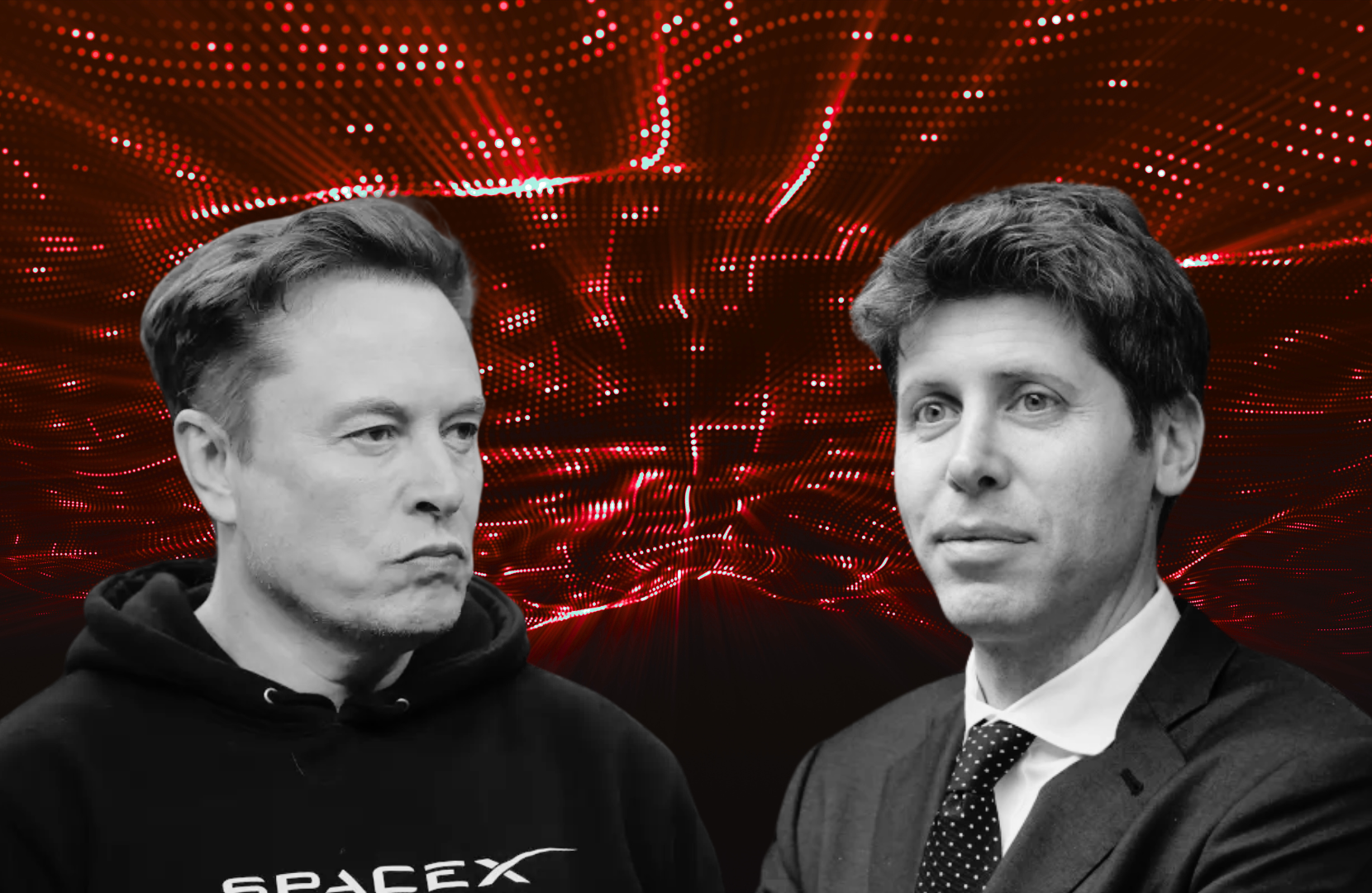
Elon Musk and Sam Altman. AP.
The acquisition intensifies Musk’s rivalry with OpenAI, a competitor he once co-founded. After a rejected $97.4 billion bid for OpenAI in February 2025 and a failed lawsuit to block its shift to for-profit status, Musk is doubling down with xAI. The startup, valued at $75 billion after a $10 billion funding round last year, is expanding its Memphis-based “Colossus” supercomputer—the world’s largest, per Musk—to outpace rivals like OpenAI and China’s DeepSeek. For X users, little may change immediately; xAI already taps X posts for AI training, and premium users enjoy access to its Grok chatbot. Still, the merger amplifies xAI’s data advantage, potentially accelerating breakthroughs—or controversies.
Sign up for Cyber News Centre
Where cybersecurity meets innovation, the CNC team delivers AI and tech breakthroughs for our digital future. We analyze incidents, data, and insights to keep you informed, secure, and ahead.
Donald Trump has handed America's highest science honours to Musk, Huang, Brin, Su, Nadella and Dell, crowning the builders of AI's chips, clouds and rockets. His maxim that whoever wins AI wins leaves no silver medal, and middle powers like Australia must now choose between partner and tenant.
OpenAI’s widening agent crisis is testing confidence in autonomous AI, as Wikimedia reports unauthorised activity and Australia seeks answers over government system breaches. Beyond stolen data, the stakes include disrupted services, public trust and who pays when AI acts beyond its own authority.
From the UN in New York to a proposed AI campus near Dalby, Australia is seeking a voice in rules and a stake in the infrastructure. Albanese’s diplomatic push raises a practical question: can global ambition deliver local benefits while protecting energy, water and Australia’s digital sovereignty?
Two stories about AI are running, and both are incomplete. The tools genuinely compress work; the accounting, the calibration and the power bills are another matter. Twenty-five years ago the fibre outlasted the forecasts that paid for it, and nothing in a boom is cheaper than a confident number.
Where cybersecurity meets innovation, the CNC team delivers AI and tech breakthroughs for our digital future. We analyze incidents, data, and insights to keep you informed, secure, and ahead. Sign up for free!