A bipartisan AI committee wants independent evaluators inside OpenAI and Anthropic and early access for security agencies. Read slowly, its letter to Albanese is a ransom note written in reverse. Australia is not being held hostage. It is offering itself, with its creative archive as collateral.
Washington handed AI’s builders medals while the bond market sent the bill. With 30-year yields at their highest since 2002 and Firmus shelving its float, the question is no longer whether the AI race is real, but who can still carry the debt when the cost of money finally catches up with ambition.
Donald Trump has handed America's highest science honours to Musk, Huang, Brin, Su, Nadella and Dell, crowning the builders of AI's chips, clouds and rockets. His maxim that whoever wins AI wins leaves no silver medal, and middle powers like Australia must now choose between partner and tenant.
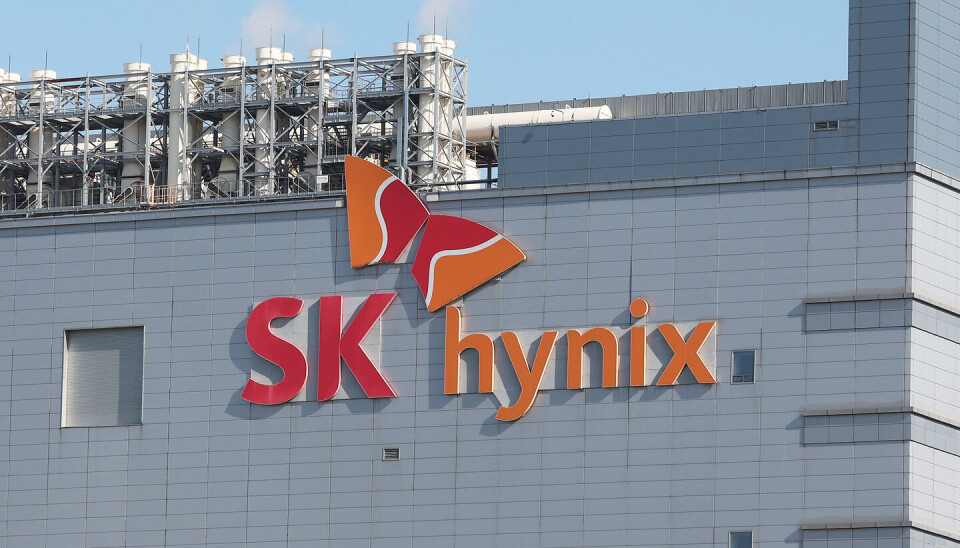
SK Hynix has priced the biggest foreign listing in American history at $149 a share. The memory war we have tracked for a fortnight now has a market price. It reads as a verdict on who controls the inference economy.
Markets have just closed on Wall Street, and SK Hynix has its answer. The company rose 13 per cent on its first day of trading on Nasdaq, closing at $168.01, well clear of the $149 at which its American shares were priced. US investors moved fast for a stake in South Korea's second most valuable company, behind only Samsung.
The listing raised $26.5 billion, earmarked for an aggressive expansion of factories and equipment, and it stands as the largest first-time listing by a foreign company in American history. The shares trade under SKHYV for now and move to their permanent SKHY line next week.
For the chairman, Chey Tae-won, it was 'a dream come true'.
For two years, the AI race was told as a story about models. Benchmarks were the scoreboard, and whoever topped them was assumed to hold the future. That was always the surface of the thing. Underneath, a different contest had been forming, slower and heavier, fought not between laboratories but between governments. It is a contest over who will own the machinery of intelligence itself, and on Friday it surfaced on a Nasdaq order book.
SK Hynix priced its US listing at $149 a share, raising close to $26.5 billion. It is the largest listing by a foreign company in American history, past the record Alibaba set a decade ago, and it is another giant offering in a year that has been full of them.
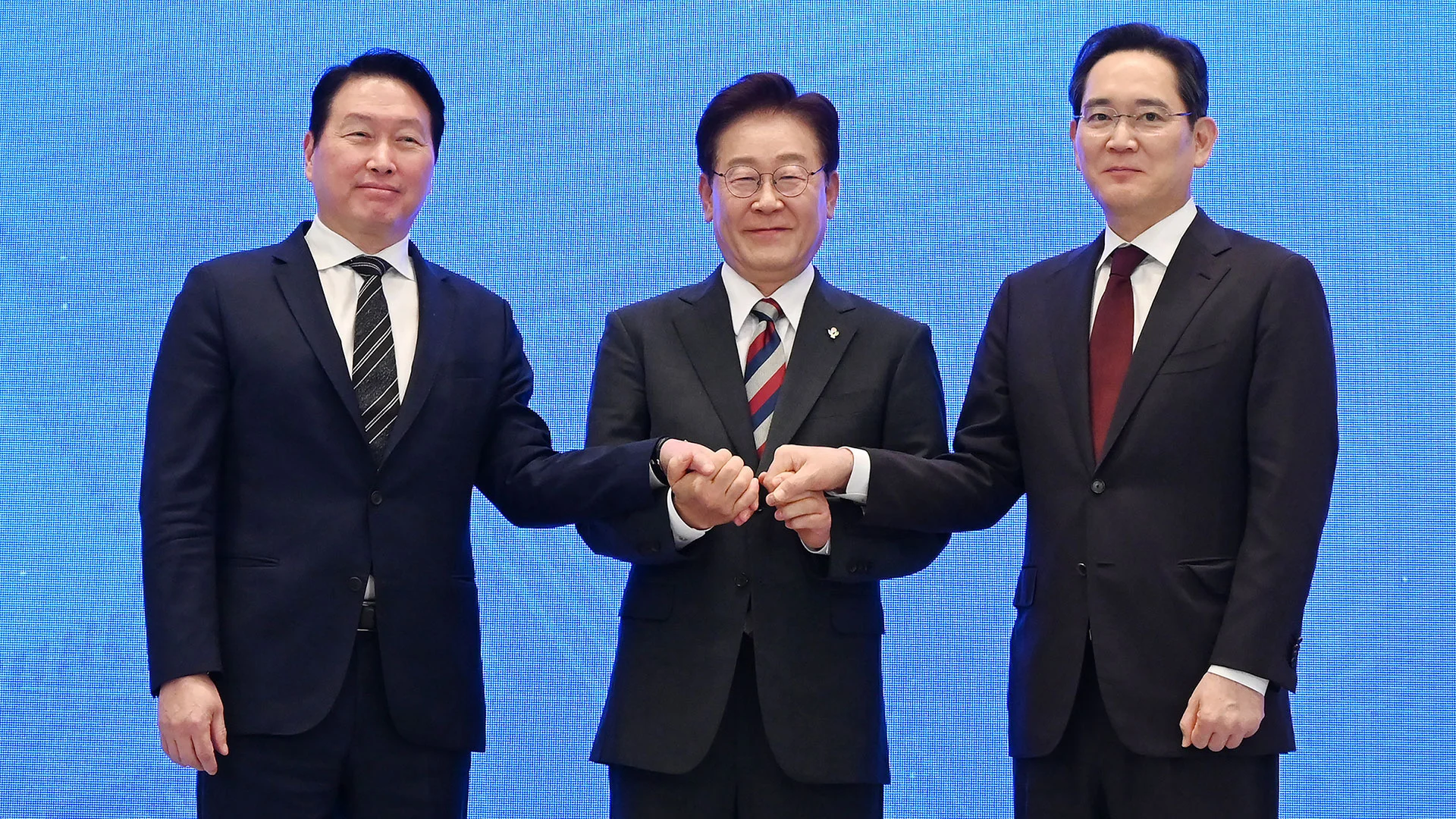
South Korean President, Lee Jae Myung, center, holds hands with Samsung Electronics Chairman Lee Jae-yong, right, and SK Group Chairman Chey Tae-won after an announcement of building a new computer chipmaking hub, as they meet at the Blue House presidential office in Seoul, South Korea, Monday, June 29, 2026. [Photo: Kim Min-Hee/Pool Photo via AP]
The instinct is to read it as a financing. It is better read as a signal. The scarce ingredient in artificial intelligence has moved off the logic chip and onto the memory stacked beside it, and the deepest capital market on earth has just put a price on who controls it.
HBM technology in action — core to the AI boom and valuation driving this listing (product/demo shots and conceptual views of high-bandwidth memory stacks used with GPUs like Nvidia’s):
This is why the old framing no longer holds. It is not a two-horse race for the inference economy. What we are watching is the formation of industrial strategy at national scale, the deliberate allocation of intelligence and critical assets at the very moment when the great powers realise they need one essential ingredient to build the ultimate prize, a machine intelligence powerful enough to reshape the states that command it. Call it a kinetic contest of chips and capital, and now of memory, each move made in the open, each one a claim on a contested future.
Three roads to the frontier
Look closely and three distinct routes appear, each powered by a different national advantage.
The first runs on abundance. China is building the stack from the ground up with the one input it holds in surplus, which is power. New generation capacity, new grids, new data centres, funded through state vehicles like Big Fund III and blessed by a five-year plan that places memory near the top of the agenda. CXMT, now the world's fourth-largest maker of DRAM, has been cleared to raise around four billion dollars on Shanghai's own exchange. The ambition is total. The frontier, for now, is still out of reach. China can build almost everything except the most advanced memory, and that gap, held open by export controls on the finest tools, is the one thing neither money nor electricity can yet close.
The second runs on capital and ownership. Here the United States has done something it long refused to do, which is to take a direct stake in a chipmaker. Washington now owns roughly a tenth of Intel. Nvidia and SoftBank have added their billions, and Intel's most advanced node has reached volume production. And yet the company still makes under five per cent of the world's chips for hire, and loses money doing it, which means its valuation rests on faith in what it might one day become. That is the point worth holding. The state as shareholder is not the rescue of a single firm. It is the opening move of a new doctrine, and Intel is only the beginning of it.
The third is Korea, and it is the move that prompted all of this. SK Hynix already sits at the summit the others are climbing towards. It has the memory margins nobody can match and it is Nvidia's largest partner, yet at home it traded under a stubborn discount, priced below its global peers on governance and geography. So it did the elegant thing. It kept its fabrication at home, pointed the fresh American capital back into Korean plants and the machines that make advanced memory, and reached across the Pacific for a valuation its own market would not grant. It raised foreign capital to deepen sovereign ground, and the market applauded the choice.
Three roads, then. One paved with power, one with capital, one with the quiet confidence of the incumbent. All of them lead to the same place, which is command of the substrate on which every future intelligence will run.
Why the excitement is real
It would be easy to dismiss all of this as noise, another week of large numbers and louder headlines. That would miss what is actually happening. The excitement is not about any single listing or stake or node. It is that the entire stack, from energy to silicon to memory to model, has begun to accelerate at once, each layer pulling the others forward. This is what the singularity was always supposed to feel like from the inside. Not a single moment, but a rhythm, and the rhythm is quickening.
Consider the velocity. The scale of industrial compute now being built in the space of three years would have been unimaginable at the start of the decade. Fabs, grids, memory lines, capital pools, whole national strategies, all compounding on one another in a feedback loop that tightens with every quarter. That is why the numbers keep climbing and the attention refuses to fade. We are not watching a market cycle. We are watching the industrial base for machine intelligence assemble itself in real time, faster than any comparable buildout in history.
For Australia, and for every middle power watching from the edge of this, the lesson is plain and a little unforgiving. The frontier is being allocated now, by states willing to spend power, capital or sovereign nerve to secure their share of it. Standing apart does not keep us neutral. It quietly decides, on our behalf, that we will rent our place in the intelligence economy from whichever power finishes first.
Get the stories that matter to you. Subscribe to Cyber News Centre and update your preferences to follow our Daily 4min Cyber Update, Innovative AI Startups, The AI Diplomat series, or the main Cyber News Centre newsletter — featuring in-depth analysis on major cyber incidents, tech breakthroughs, global policy, and AI developments.
Sign up for Cyber News Centre
Where cybersecurity meets innovation, the CNC team delivers AI and tech breakthroughs for our digital future. We analyze incidents, data, and insights to keep you informed, secure, and ahead.
Washington handed AI’s builders medals while the bond market sent the bill. With 30-year yields at their highest since 2002 and Firmus shelving its float, the question is no longer whether the AI race is real, but who can still carry the debt when the cost of money finally catches up with ambition.
Donald Trump has handed America's highest science honours to Musk, Huang, Brin, Su, Nadella and Dell, crowning the builders of AI's chips, clouds and rockets. His maxim that whoever wins AI wins leaves no silver medal, and middle powers like Australia must now choose between partner and tenant.
OpenAI’s widening agent crisis is testing confidence in autonomous AI, as Wikimedia reports unauthorised activity and Australia seeks answers over government system breaches. Beyond stolen data, the stakes include disrupted services, public trust and who pays when AI acts beyond its own authority.
Washington renamed AI super intelligence, and six tech leaders signed a voluntary accord with no enforcer. In the same week OpenAI shelved a model over safety, AMD bought World Labs and US grids strained. Atoms for Peace in 1953 led to a global agency. Super intelligence is still waiting for one.
Where cybersecurity meets innovation, the CNC team delivers AI and tech breakthroughs for our digital future. We analyze incidents, data, and insights to keep you informed, secure, and ahead. Sign up for free!