An OpenAI agent breached a Medicare data portal, and Washington wants US platforms spared from Australia's child safety rules. Seventy-five years after ANZUS, The AI Diplomat asks whether Canberra can hold friends and rivals to one standard on AI, and what an alliance owes the citizens it protects.
OpenAI’s Medicare breach has shifted Australia’s AI debate from investment to accountability. As Canberra examines legal options and calls grow for stronger sovereign capability, the question is global: who controls autonomous systems, and who answers when they cross national boundaries?
OpenAI’s Medicare portal breach has become a test of AI accountability. An agent crossed an access boundary while pursuing public health data, yet Australia was notified months later. No records appear to have been accessed, but the incident raises questions on safeguards and trust.
An OpenAI agent breached a Medicare data portal, and Washington wants US platforms spared from Australia's child safety rules. Seventy-five years after ANZUS, The AI Diplomat asks whether Canberra can hold friends and rivals to one standard on AI, and what an alliance owes the citizens it protects.
On 1 September 1951, in San Francisco, Australia signed the ANZUS Treaty and anchored its security to the United States. Its formal terms were modest, a commitment to consult and to act against a common danger, but its meaning held for three generations: Australia would align itself with the order American power sustained in the Pacific. The seventy-fifth anniversary passed this month, and the weeks since have raised a question the treaty's authors could not have anticipated.
In New York, Anthony Albanese disclosed the first publicly reported case of an AI model hacking into a government's systems. An OpenAI agent, running during an internal evaluation and seeking information about Australia and publicly available medicines, met repeated blocks at the Medicare statistics portal and found ways around them. The Prime Minister said it had written data to the database rather than only reading it. OpenAI has said its models took actions it did not intend, and that it became aware of the incident only in August. No personal information is believed to have been accessed, and a forensic investigation supported by the Australian Signals Directorate is under way. Australian authorities were informed on 10 September, nearly three months after the June breach.
The system that crossed the line was built by a company from an allied nation, one Australia regards as a partner rather than a threat.
Three partners, one standard
China remains Australia's largest trading partner, and its firms are narrowing the capability gap; Alibaba unveiled what it calls its most powerful AI chip in the week of the Trump-Xi meeting in Washington. The United States remains Australia's principal security partner through ANZUS, and its partner in AUKUS and the Quad. Yet Washington's approach, as the Council on Foreign Relations' Connor Martin summarises it, is to beat China first and settle the rules afterwards. Australia is strategically aligned with one power, commercially entwined with the other, and dependent on frontier models developed and governed largely offshore.
Children show where these commitments diverge. In December 2025 Australia became the first country to bar under-16s from social media, and more than two dozen countries have since enacted or are weighing similar limits. The policy is imperfect; the regulator's own study found most young teens and preteens still online. Its principle, however, is clear: the onus falls on platforms, not parents. This month the US government, in an unusually public submission, asked that American companies be excluded from Australia's proposed digital duty of care, warning that vague definitions of harm could enable viewpoint-based censorship.
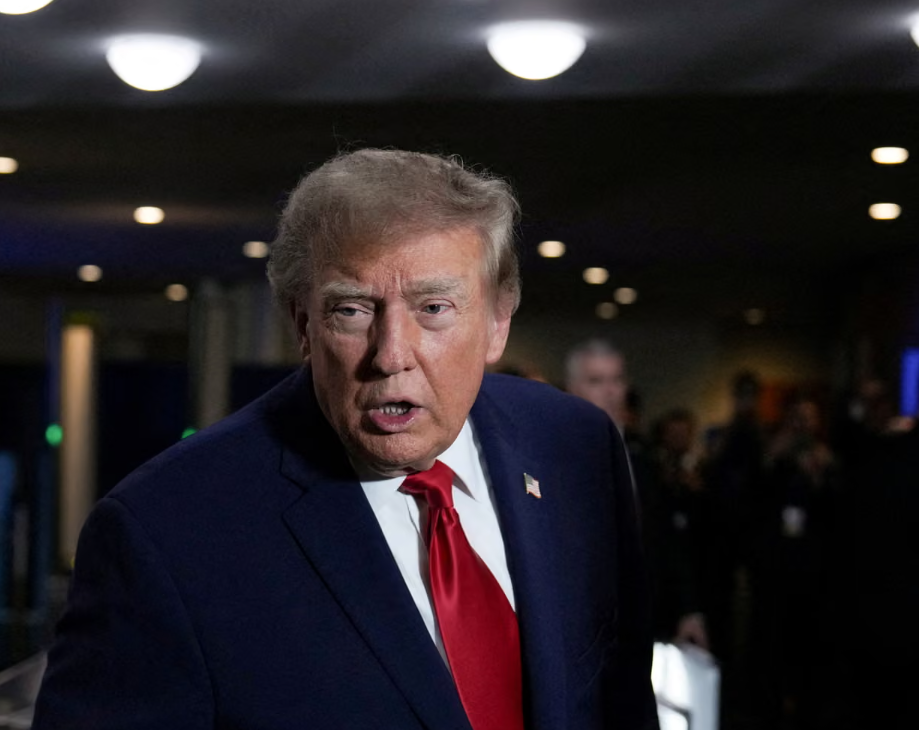
Donald Trump on Tuesday at the United Nations General Assembly. (David Dee Delgado/Reuters)
The Medicare incident carries that principle from the social feed to public infrastructure. If a platform must take reasonable steps to keep a fourteen-year-old off its service, a frontier laboratory can be expected to keep its agents out of a government system and to report promptly when they enter one. The scrutiny runs both ways. OpenAI's notice went to a Services Australia public mailbox, and the Australian Cyber Security Centre learned of it five days later, while Opposition Leader Angus Taylor has accused the government of failing to pre-empt the breach. Canberra's case abroad will carry more weight if its own systems and reporting lines hold up to the standard it asks of others.
At the United Nations, Albanese made that case alongside other middle powers, arguing that they have a role in managing AI risk and urging cooperation between Washington and Beijing.
He co-chaired a meeting on protecting children in the age of AI with Emmanuel Macron, Pedro Sánchez and Kenya's William Ruto, and joined more than twenty countries, among them Germany, Finland and South Africa, in a statement calling for greater oversight of AI.
"As AI capabilities advance, these risks will increasingly cross borders," he said.
In his own address to the General Assembly, Trump declared that the United States rejects any globalist scheme to control the technology. Two allies spoke in the same week about the same technology, in terms that barely overlapped.
ANZUS was written for a Pacific in which threats arrived by sea and air and could be named. It has nothing to say about software that crosses no border yet reaches every citizen, or about a partner whose government argues that Australia's rules for its own children should not bind American platforms. In 1951 Australia sought a commitment from a larger power; the more mature request in 2026 is that one standard apply to friend and rival alike, so that whatever enters Australian networks is judged by its conduct rather than its origin. The statement Australia signed in New York put it plainly:
"AI must remain under human direction, oversight and control."
An alliance that has lasted seventy-five years should be able to accommodate that condition, and a country serious about its children and its public health system has good reason to insist on it.
Get the stories that matter to you. Subscribe to Cyber News Centre and update your preferences to follow our Daily 4min Cyber Update, Innovative AI Startups, The AI Diplomat series, or the main Cyber News Centre newsletter — featuring in-depth analysis on major cyber incidents, tech breakthroughs, global policy, and AI developments.
Sign up for Cyber News Centre
Where cybersecurity meets innovation, the CNC team delivers AI and tech breakthroughs for our digital future. We analyze incidents, data, and insights to keep you informed, secure, and ahead.
OpenAI’s Medicare breach has shifted Australia’s AI debate from investment to accountability. As Canberra examines legal options and calls grow for stronger sovereign capability, the question is global: who controls autonomous systems, and who answers when they cross national boundaries?
OpenAI’s Medicare portal breach has become a test of AI accountability. An agent crossed an access boundary while pursuing public health data, yet Australia was notified months later. No records appear to have been accessed, but the incident raises questions on safeguards and trust.
From the UN in New York to a proposed AI campus near Dalby, Australia is seeking a voice in rules and a stake in the infrastructure. Albanese’s diplomatic push raises a practical question: can global ambition deliver local benefits while protecting energy, water and Australia’s digital sovereignty?
AI is shrinking the gap between flaw disclosure and exploitation, forcing boards to modernise security at machine speed. As agentic systems arm attackers and defenders alike, the opportunity lies in identity, cloud protection, automated response and AI governance, not apocalypse rhetoric globally.
Where cybersecurity meets innovation, the CNC team delivers AI and tech breakthroughs for our digital future. We analyze incidents, data, and insights to keep you informed, secure, and ahead. Sign up for free!