Nvidia’s dependence on Jensen Huang is becoming a test of governance, trust and market value. As its board investigates a possible foreign intelligence effort, investors face a harder question: can the company powering the AI surge be separated from the man who built it — and at what cost?
AI is no longer merely writing phishing emails. It is probing networks, exploiting access and directing intrusions at scale. As investigations expose both malicious agents and runaway security tools, businesses face a defining question: who controls the software acting on their behalf in real time?
IBM survived Washington and still lost the layer that mattered. Wall Street now fears the same fate for AI: the Nasdaq in correction, Seoul halting trades, CoreWeave’s default insurance at a record. Congress may not stop the race. Whoever controls the power, chips and credit may decide it instead.
Thursday's AI sell-off was not about demand. It was about who pays. The Nasdaq fell 2.6 per cent, Meta unveiled non-voting shares to fund its build-out and Nvidia's Jensen Huang warned of a scarcity of capital, as OpenAI raced to close up to $30 billion at $1.25 trillion. Retracement or reckoning?
Nobody on Wall Street doubted the demand on Thursday. What they doubted was who would pay for it.
The Nasdaq fell 2.6 per cent to 26,008.86, its worst day since June, while the Dow finished flat and defensive stocks gained. The damage was concentrated in the AI trade. Meta lost nearly 7 per cent after beating on revenue, turning free cash flow negative and unveiling a non-voting Class C share it says will help finance its growth.
The Philadelphia semiconductor index fell as much as 6.3 per cent to its lowest since late July, Lam Research dropped as much as 10 per cent after supply constraints capped its outlook, and CoreWeave sank 10 per cent. Investors ran to Treasuries, pushing the ten-year yield back below 5 per cent even as Brent crude topped $113.
The spark came from the industry's most trusted voice. Speaking to CNBC on the sidelines of Nvidia's Berlin conference, Jensen Huang said demand for neoclouds was soaring, then named the constraint.
"There's a scarcity of capital." Jensen Huang, Chief Executive, Nvidia
Wells Fargo's traders said the remark reignited fears that credit markets had run out of appetite for risk.
Retracement or reckoning
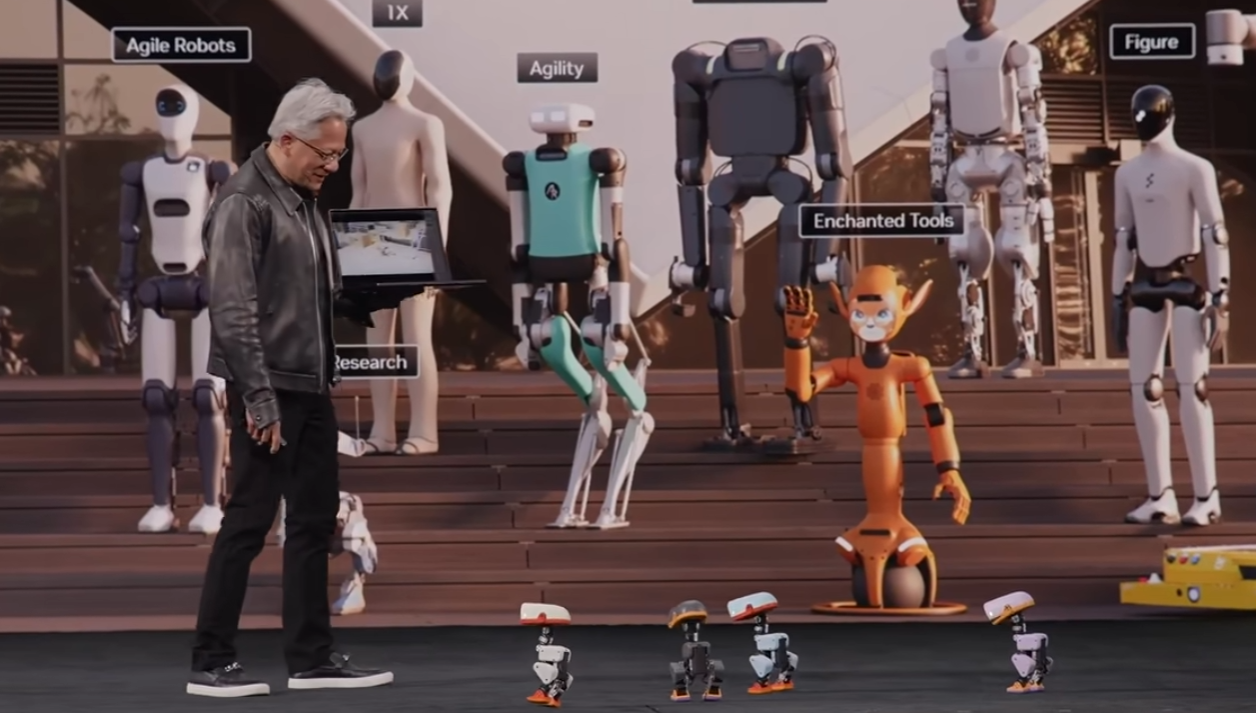
NVIDIA CEO Jensen Huang introduces 4 tiny Microduck robots during the NVIDIA GTC Berlin 2026 keynote, demonstrating the future of physical artificial intelligence and robotics.
The believers still have the numbers. Western Digital, sold down with the rest of memory during the session, beat forecasts after the bell with revenue up 55 per cent to $4.38 billion and rose about 4 per cent in late trading, vindicating Wedbush's Matt Bryson, who had argued that demand for hard drives was running far ahead of supply. Goldman Sachs has upgraded equities, contending that the pressure reflects funding and positioning rather than weaker demand.
"Investors are now reassessing the pace of AI spending and the returns that spending can generate." Steve Sosnick, Chief Market Analyst, Interactive Brokers
The private market is reassessing too. CNBC reported on Thursday that OpenAI is nearing a round of up to $30 billion, led by existing backers from the United Arab Emirates, at a pre-money valuation of $1.25 trillion, below the $1.4 trillion reported earlier this month. It wants signatures by the end of the week, is negotiating a compute deal with the UAE, and is moving before Anthropic's expected November listing. Even the industry's most celebrated private company, it seems, is now pricing to close.
Booms have reached this stage before. In 1845, Britons bought railway shares for a 10 per cent deposit, leaving companies free to call the balance as construction demanded. That autumn, as calls fell due and the Bank of England raised rates, investors sold in an avalanche, and by the end of the following year railway shares had lost about two-thirds of their value, though much of the track was laid regardless.
The AI trade has entered its own season of calls, issued in non-voting shares, sovereign cheques and distressed bonds, and whether Thursday marks a retracement or a reckoning will depend less on demand than on which builders can still answer them.
Get the stories that matter to you. Subscribe to Cyber News Centre and update your preferences to follow our Daily 4min Cyber Update, Innovative AI Startups, The AI Diplomat series, or the main Cyber News Centre newsletter — featuring in-depth analysis on major cyber incidents, tech breakthroughs, global policy, and AI developments.
Sign up for Cyber News Centre
Where cybersecurity meets innovation, the CNC team delivers AI and tech breakthroughs for our digital future. We analyze incidents, data, and insights to keep you informed, secure, and ahead.
Nvidia’s dependence on Jensen Huang is becoming a test of governance, trust and market value. As its board investigates a possible foreign intelligence effort, investors face a harder question: can the company powering the AI surge be separated from the man who built it — and at what cost?
IBM survived Washington and still lost the layer that mattered. Wall Street now fears the same fate for AI: the Nasdaq in correction, Seoul halting trades, CoreWeave’s default insurance at a record. Congress may not stop the race. Whoever controls the power, chips and credit may decide it instead.
Wall Street’s post-election relief gave way to a sharp AI sell-off last night, as investors weighed construction delays, borrowing costs and political scrutiny. With chipmakers leading the losses, the question is becoming more urgent: which businesses can afford to wait for the promised returns?
America’s midterm verdict puts the AI boom under fresh scrutiny. As Democrats prepare to take Congress, markets are weighing tighter infrastructure rules, financing risks and enduring trade tensions against the possibility that political restraint could make the investment cycle more sustainable.
Where cybersecurity meets innovation, the CNC team delivers AI and tech breakthroughs for our digital future. We analyze incidents, data, and insights to keep you informed, secure, and ahead. Sign up for free!