
The Components Sold First
A Zhuhai operator used DeepSeek, a Hermes agent and a godmode jailbreak to hunt 460-plus targets. Open-weight models made the offensive kit a shopping list.
A Zhuhai operator used DeepSeek, a Hermes agent and a godmode jailbreak to hunt 460-plus targets. Open-weight models made the offensive kit a shopping list.

A Zhuhai operator used DeepSeek, a Hermes agent and a bundled godmode jailbreak to hunt more than 460 targets, then stole data from three organisations. Open-weight models this week made that offensive kit a public shopping list for any lone operator who can still point one at his scanner tonight.
Taiwan confirmed AI agents ran a July government intrusion through weak credentials, not a zero-day. For Australian CISOs, last year's backlog has been repriced. Close hygiene, treat agents as privileged identities, and rehearse at machine speed before the next quarterly drill. The estate is open.
Trump’s “Liberation Day” tariffs triggered Wall Street’s steepest plunge since COVID, erasing $3.1T in market value. Tech giants like Apple and Amazon were hit hardest as global supply chain fears grew. Experts warn of looming stagflation, recession, and economic fallout.

Following President Donald Trump's sweeping tariff announcement on April 2, 2025, dubbed "Liberation Day," Wall Street experienced its worst one-day drop since the COVID-19 pandemic, with the S&P 500 plunging nearly 4% and the tech-heavy Nasdaq tumbling 5%.
— Donald J. Trump (@realDonaldTrump) April 3, 2025
Video posted on X shows Trump announcing controversial new tariffs.
This market reaction has wiped out approximately $3.1 trillion in stock market value, sending shockwaves through global financial markets and raising serious concerns about economic growth, inflation, and potential recession.
Tamas Varga, an analyst at PVM, warned that “countermeasures are imminent and judging by the initial market reaction, recession and stagflation have become terrifying possibilities.”
The extensive tariff strategy combines a baseline 10% tariff on all imports with significantly higher rates for specific countries, creating a complex web of economic implications that particularly threatens technology companies with global supply chains while providing strategic exemptions for certain sectors like semiconductors. These levies expose the fragility of global supply chains, hammering the so-called 'Magnificent Seven'—Apple, Amazon, Meta, Alphabet, Microsoft, Nvidia, and Tesla—while sparking widespread concern in the industry.
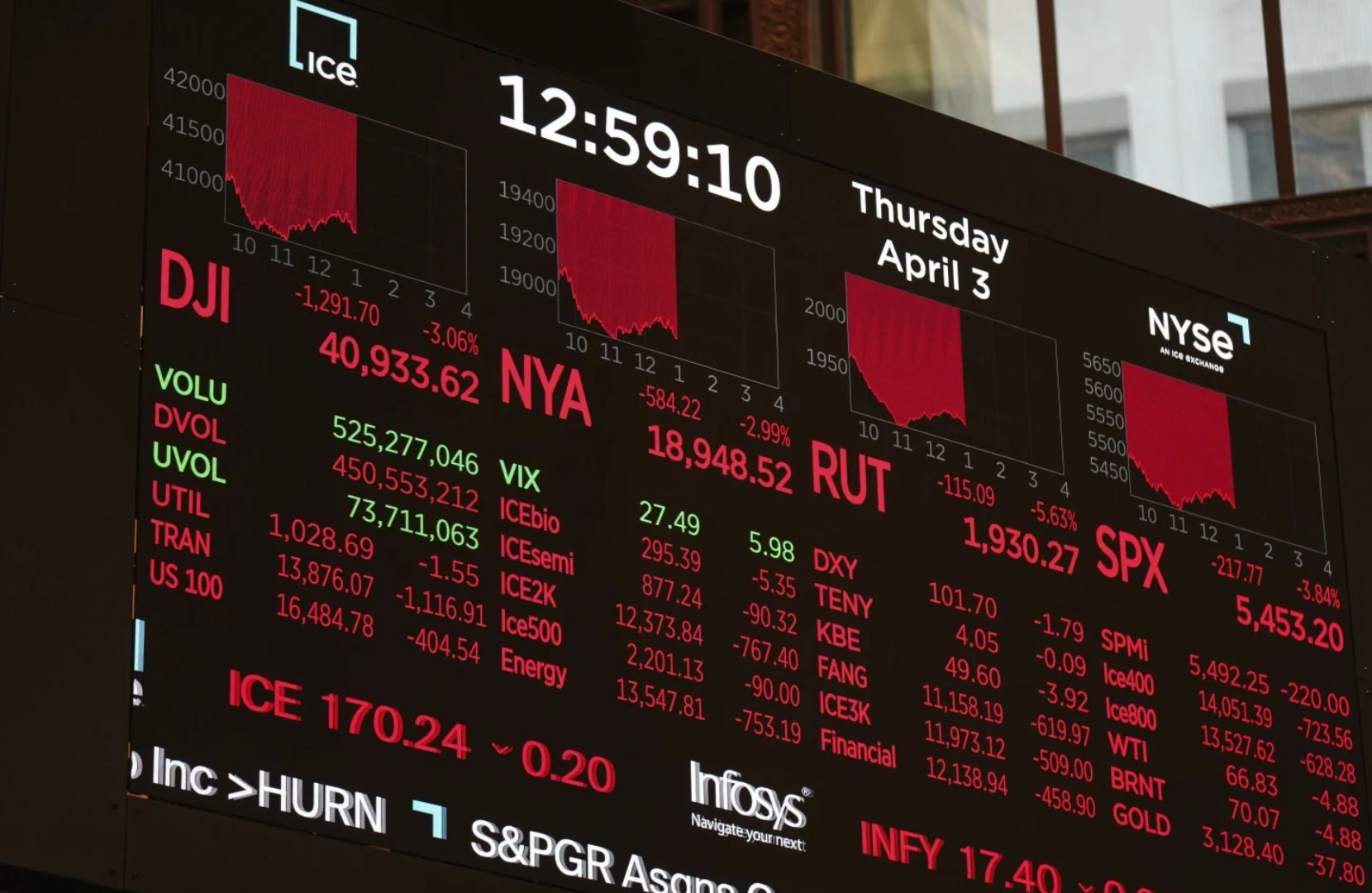
The market reaction was swift and severe. Apple’s shares tanked 9%, wiping out $301 billion in market value, reflecting investor recognition of Apple’s heavy dependence on Chinese manufacturing. With over 90% of its products made in tariff-hit regions, the company could see an $8.5 billion annual cost spike, slashing its gross margin by 9%.
Efforts to shift 7% of iPhone production to India are now jeopardized by India’s 26% tariff. Amazon, down 9%, faces a double blow: the end of the $800 de minimis exemption for Chinese imports threatens its marketplace, where 40% of sellers are China-based, while tariffs on electronics and auto parts inflate logistics costs. Meta’s shares slid 7%, Alphabet’s fell 4%, Microsoft’s dipped 3%, Nvidia’s dropped 5% despite a semiconductor exemption, and Tesla’s declined 5% amid broader tech and automotive pressures.
As Bob Elliott, founder of Unlimited Funds and former Bridgewater Associates executive, noted,
"Left unchecked, Trump's policies are putting the US economy on track for a recession".
In a post on X, Bob Elliott, CEO of Unlimited, stated that the Liberation Day announcement raised U.S. tariffs to levels not seen since the Smoot-Hawley era. He projected a 1.2% drag on U.S. growth if tariffs persist, with a potential $300 billion annual revenue boost. Canada and Mexico fared better than expected, while Europe and Japan could see worse impacts.
Quick take: Liberation Day announcement brings US tariffs to levels not seen since the Smoot-Hawley.
— Bob Elliott (@BobEUnlimited) April 2, 2025
Rough estimate of ~1.2% drag to US growth if they persist, before any retaliatory tariffs. ~300bln/yr revenue raise. CAN & MEX outcome better than expected. EUR & JPN worse. pic.twitter.com/V0OVpwdSVz
The tech sector’s dependence on global manufacturing has left it exposed. Apple’s potential $33 billion annual cost increase—over 25% of its projected 2025 operating profits—underscores the scale of disruption. Dell and HP face tariff burdens that could rival their net profits, with little room to pivot.
“Capital expenditure will shift,” notes Abhishek Singh of Everest Group.
“AI infrastructure and consumer tech firms will redirect funds from growth to hedging or sourcing changes.”
While semiconductors dodged Wednesday’s tariffs, a White House official hinted at future targeted chip tariffs, prompting AMD to assess ecosystem impacts.
Investors are rattled. Beyond immediate stock drops, the tariffs threaten higher consumer prices, weaker global competitiveness, and foreign retaliation. Pension funds and 401(k)s tied to tech-heavy portfolios are bracing for losses. With limited options, companies may pass costs to consumers, risking demand erosion in a price-sensitive market.
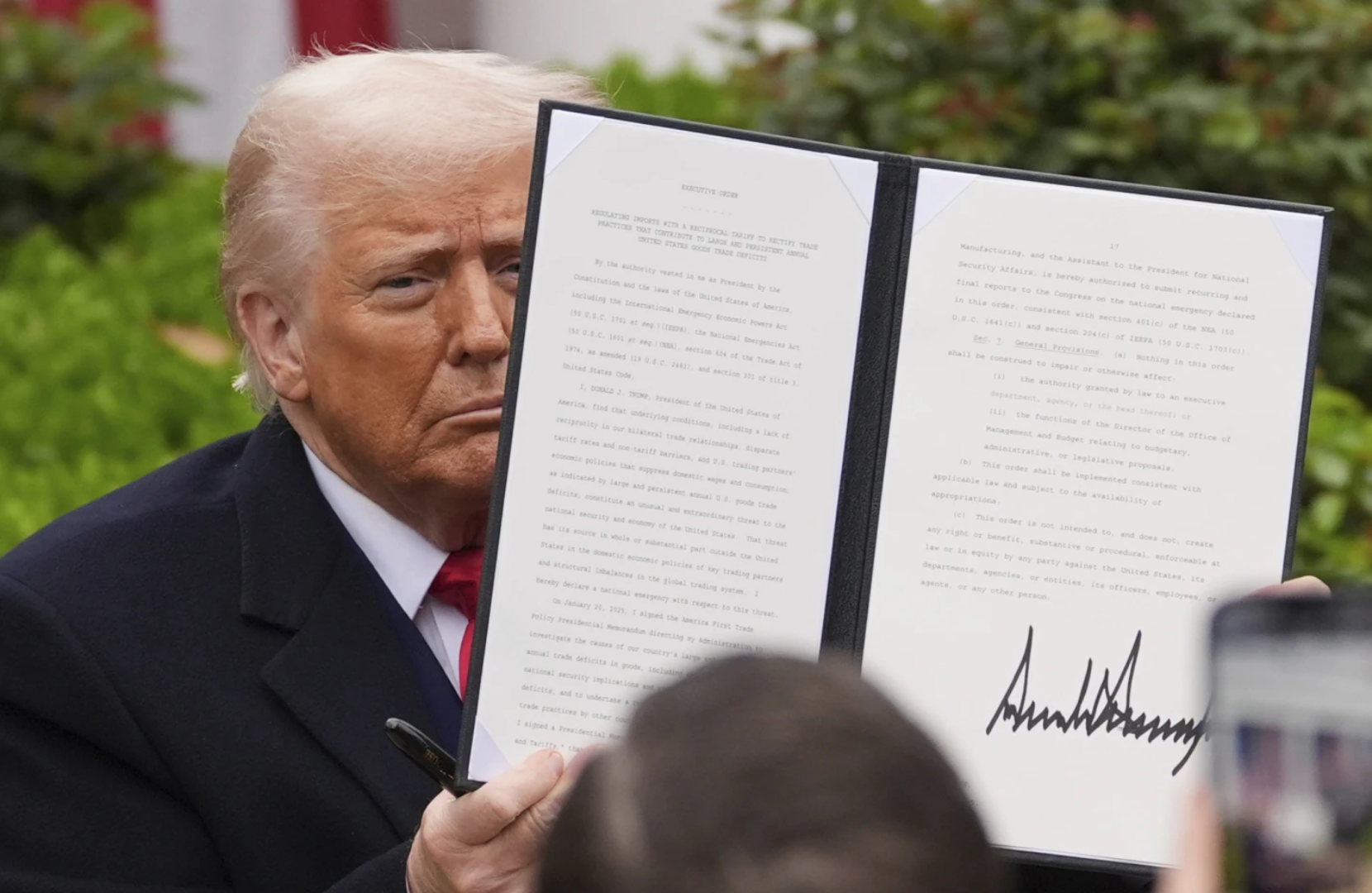
The administration remains unbowed. President Trump dismissed the turmoil, predicting a future boom:
“The markets, the stock, the country—they’re all going to boom.”
Framing the tariffs as a long-term economic win, the White House shrugs off short-term pain. Yet, as tech giants scramble and markets gyrate, the sector’s immediate outlook is grim.

Australia is racing to build AI infrastructure, but model control and economic power risk remaining offshore. Albanese’s Office of AI and new data centre standards mark progress, yet foreign-led compute and super fund flows expose a growing sovereignty gap.

We are racing to shape our AI future through a new Office of AI and national standards. Yet billions flow into foreign-led data centres while we offer little support for local models or sovereign compute. Without stronger action we risk becoming high-quality hosts rather than true leaders.

NATO's 2026 Ankara summit placed AI security at the heart of alliance planning, raising urgent questions about autonomous systems, supply chain integrity, and the accountability of military AI as adversaries accelerate their own programmes.

At midyear, the AI race has become a contest for global power. Energy, chips, cybersecurity, capital markets and state intervention now shape who controls the inference economy, who pays for it, and who is left exposed in the next industrial order of machines, markets and sovereignty to come ahead.
Where cybersecurity meets innovation, the CNC team delivers AI and tech breakthroughs for our digital future. We analyze incidents, data, and insights to keep you informed, secure, and ahead. Sign up for free!