Hot inflation, record AI credit stress and a seven-day chip slide showed that the boom’s limit is no longer demand but the price of money. Investors are rotating rather than fleeing, and the bill is landing far from Silicon Valley.
AI is learning to anticipate our choices, from battlefield decisions to mortgages, spending and relationships. Alex Karp’s warning raises a question of power: when machines understand our habits and vulnerabilities, will they serve our interests or subtly steer us towards someone else’s objectives?
The AI-assisted raid on South Korea's banks never went near the vault. It slipped in through loan portals, sales platforms and a staff mobile app. Now Seoul is ordering every bank to count its exposed doors, and regulators in Washington, London, Frankfurt and Sydney are asking the same question.
2nd December 2025 Cyber Update: Coupang Data Breach Exposes 33.7 Million Customers
South Korean e-commerce giant Coupang has confirmed a massive data breach exposing the personal information of 33.7 million customers. The incident, which began in June 2025, is one of the largest in the nation's history and is linked to a former employee's active credentials.
Cyber News Centre's cyber update for 2nd December 2025: Coupang has confirmed a significant data breach affecting over 33 million of its customers.
Coupang is South Korea's largest online retailer, often described as the nation's equivalent of Amazon.com. The company, founded in 2010 and backed by SoftBank Group, offers a wide range of services including its popular "Rocket Delivery" and is expanding into food delivery, streaming, and fintech.
The Update and Why It Matters
Update: South Korean e-commerce giant Coupang has confirmed a data breach that exposed the personal information of 33.7 million customers, making it one of the largest in the country's history. The breach, which began on June 24, 2025, was not detected until November 18. Exposed data includes customer names, email addresses, phone numbers, and shipping addresses, though the company states that financial details and login credentials were not compromised. An investigation by South Korean police points to a former employee, a Chinese national who has since left the country, as a key suspect. It is believed the individual used an authentication key that remained active after their employment was terminated, allowing prolonged access to the company's servers. Coupang CEO Park Dae-jun issued a public apology, stating,
"We sincerely apologise once again for causing our customers inconvenience."
The company is cooperating with authorities and has retained an independent security firm.
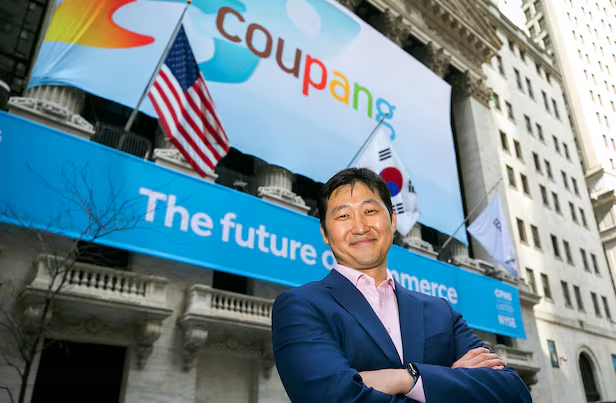
U.S. national Kim Beom-su, founder and chairman of Coupang, maintains effective control over Coupang—the leading e-commerce platform in South Korea—through his ownership of 74.3% of the voting rights in Coupang Inc., a U.S.-listed entity that wholly owns (100%) the Korean operating subsidiary. His continued behind-the-scenes influence has drawn increasing criticism, particularly in the wake of Korea’s largest-ever data breach involving Coupang. The accompanying photo shows Kim at the New York Stock Exchange on March 11, 2021 (local time), commemorating Coupang Inc.’s IPO. (Source: Coupang)
Why it Matters: This incident highlights a critical failure in internal security controls, specifically the lack of a robust offboarding process for employees with privileged access. The fact that a former employee's credentials remained active for months demonstrates a significant gap in identity and access management. For a company of Coupang's scale, which handles the data of over half of South Korea's population, this oversight is a major concern. The breach serves as a stark reminder that even sophisticated e-commerce platforms can be compromised by basic security hygiene failures, and that the insider threat, whether malicious or negligent, remains a potent risk.
Get the stories that matter to you. Subscribe to Cyber News Centre and update your preferences to follow our Daily 4min Cyber Update, Innovative AI Startups, The AI Diplomat series, or the main Cyber News Centre newsletter — featuring in-depth analysis on major cyber incidents, tech breakthroughs, global policy, and AI developments.
Sign up for Cyber News Centre
Where cybersecurity meets innovation, the CNC team delivers AI and tech breakthroughs for our digital future. We analyze incidents, data, and insights to keep you informed, secure, and ahead.
The AI-assisted raid on South Korea's banks never went near the vault. It slipped in through loan portals, sales platforms and a staff mobile app. Now Seoul is ordering every bank to count its exposed doors, and regulators in Washington, London, Frankfurt and Sydney are asking the same question.
OpenAI flew its chief strategy officer to Sydney to apologise for a rogue AI agent's Medicare breach. The hack was clumsy. The silence that followed was worse, and Parliament now has to decide whether sorry is the only accountability on offer.
OpenAI’s Medicare breach has shifted Australia’s AI debate from investment to accountability. As Canberra examines legal options and calls grow for stronger sovereign capability, the question is global: who controls autonomous systems, and who answers when they cross national boundaries?
OpenAI's Astra can develop zero-day exploits, while a US$1 billion defence push seeks to give critical infrastructure teams the same machine-speed advantage.
Where cybersecurity meets innovation, the CNC team delivers AI and tech breakthroughs for our digital future. We analyze incidents, data, and insights to keep you informed, secure, and ahead. Sign up for free!