Binance’s US$6.3 billion theft exposes the fault line beneath crypto’s institutional ambitions: the authority to move money. With the FBI blaming North Korea and investigators tracing stolen assets, the breach raises urgent questions for custody, tokenisation and the future of automated finance.
Even SpaceX will lease its newest chips. As October's credit squeeze hit AI, Peter Diamandis saw two bubbles: the technology and its financing. The AI Diplomat asks who becomes the second owner of the machines when debt-financed compute changes hands, and whether Australia will own or merely rent.
Alphabet lost $500 billion in a day, Amazon slid after hours and Seoul’s Kospi fell 4 per cent as the AI build outgrew the cash that funds it. Lenders still queue for Microsoft, while shareholders punish the cash burners. Washington beat Moscow with public money. Against Beijing, it is borrowing.
Dobot’s Robot Redefines Automation as Jensen Huang’s Blackwell Chip Pushes AI to New Heights
NVIDIA's Blackwell Chip ignites an AI innovation race, slashing DeepSeek R1’s time to 10 seconds. Dobot’s $27,500 humanoid robot dazzles, sending stocks soaring with affordable automation flair. Alphabet’s $32B Wiz buy excites markets, yet U.S. cyberattacks cast a dark shadow over tech’s rise.
Get ready for an electrifying mid-week surge from the Cyber News Centre, where robotics, and Jensen Huang igniting AI innovation race with Blackwell Chip. Leading the charge is Shenzhen Dobot’s jaw-dropping $27,500 humanoid robot, a game-changer that’s sending stocks soaring and promising a future where automation meets affordability with dazzling flair. Hot on its heels, Alphabet’s $32 billion Wiz acquisition are fueling market excitement, while a sinister sprawl of cyberattacks across the U.S. delivers a stark reminder of the risks in play.
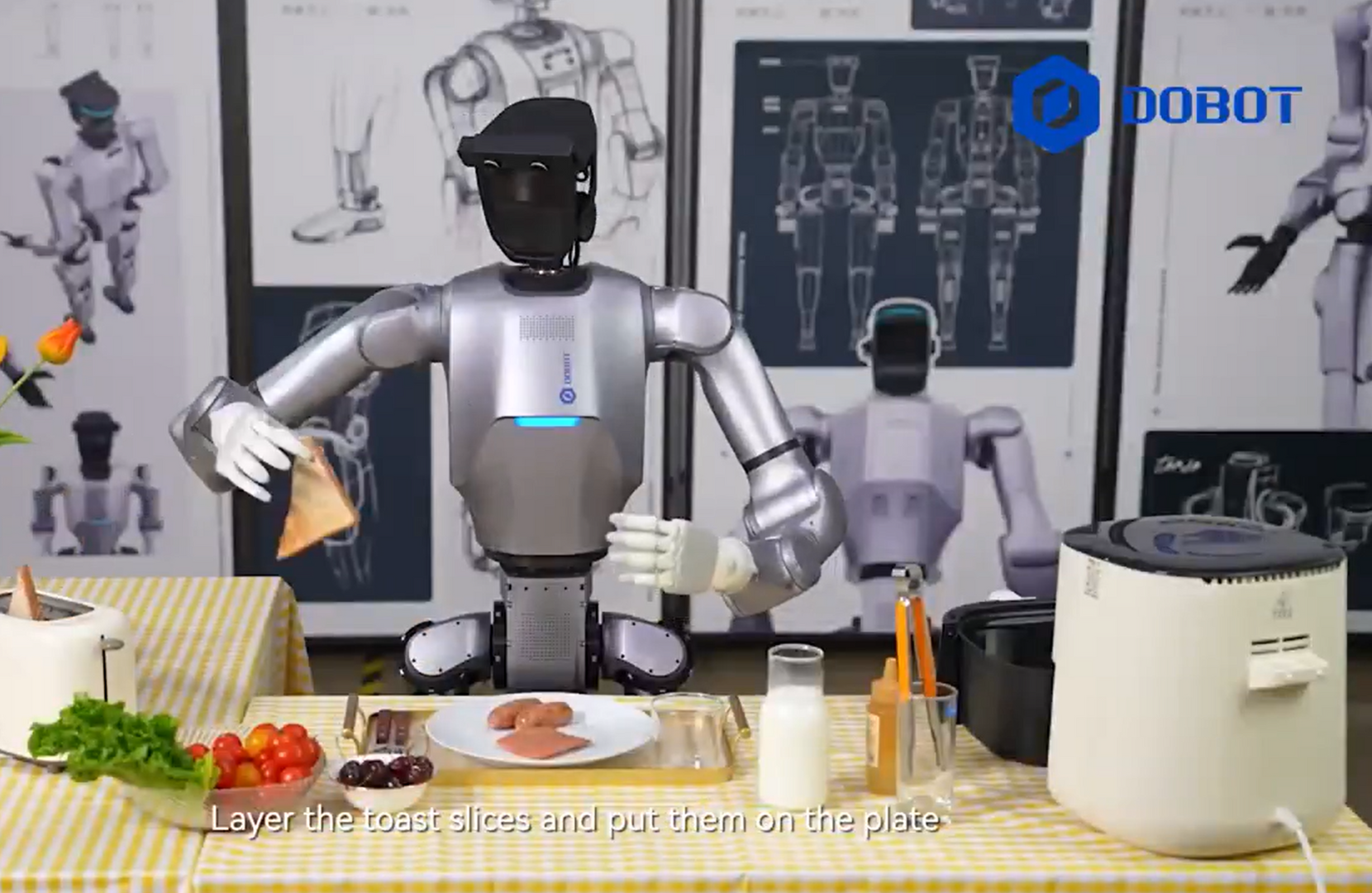
Dobot Robotics. Source: X
Chinese Robotics Firm Shenzhen Dobot Excites Investors with $27,500 Humanoid
Shenzhen Dobot is setting the robotics world ablaze with its USD$27,500 Dobot Atom humanoid, a breakthrough that’s propelled its Hong Kong-listed shares up nearly 28% and ignited visions of robots in every home. Launched last week, this sleek, energy-efficient marvel—featuring dexterous five-finger hands and a straight-knee gait—has pre-orders pouring in ahead of its mid-2025 mass production rollout.
“This is the world’s first humanoid robot featuring both dexterous hands and a straight-knee gait,”
a company spokesperson beamed, showcasing its ability to serve breakfast with finesse. Dobot’s pivot from industrial arms to household robotics is a bold bet paying off spectacularly.
✨ Dobot Atom: Our First Humanoid Robot! 🤖
Why is Dobot Atom so special? Let’s break it down: ✅ Dexterous Manipulation ✅ Straight-Knee Walking ✅ Edge Computing and ROM-1 Model
At 1.53 meters tall with a 1,500 TOPS edge computing brain, Dobot Atom is no gimmick—it’s a contender in China’s red-hot robotics race, squaring off against UBTech, EngineAI, and even Tesla’s Optimus.
Pilot tests in factories and coffee shops prove its versatility, while its $27,500 price tag undercuts rivals, making it a tantalizing prospect for mass adoption. As investors pile in and shares soar, Dobot is carving a path to bring affordable, futuristic automation to the masses, blending sci-fi wonder with real-world impact.
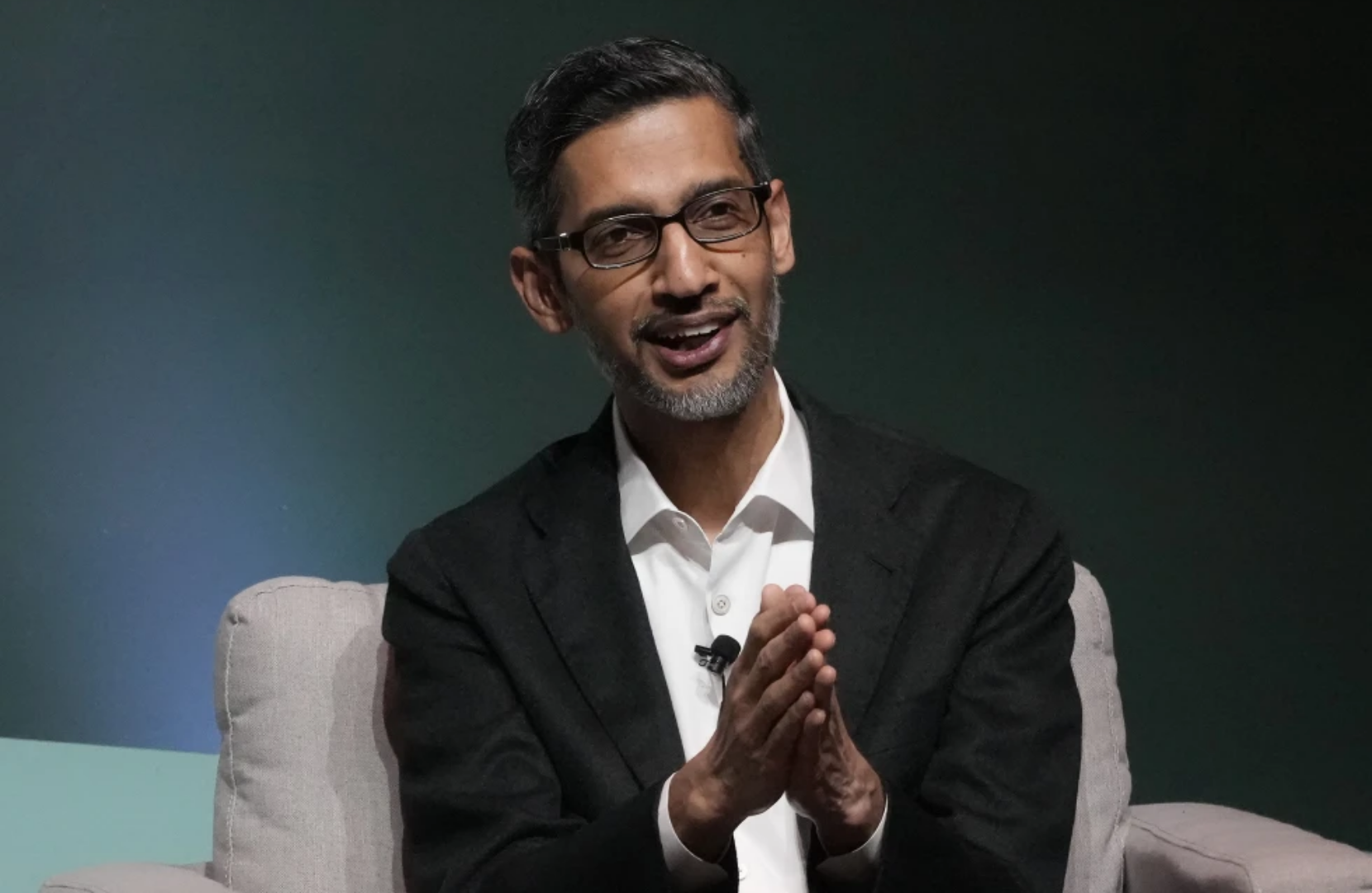
Alphabet CEO Sundar Pichai
Alphabet Agrees to Buy Cybersecurity Group Wiz for $32bn
In a deal that’s sending shockwaves through the tech ecosystem, Alphabet has clinched a $32 billion acquisition of cybersecurity titan Wiz, cementing its biggest buyout ever and an audacious leap into the cloud security arena. Unveiled on Tuesday, this all-cash transaction—sweetened with a $1 billion retention bonus for Wiz’s crack team of Israeli cyber intelligence veterans—underscores Alphabet’s determination to turbocharge Google Cloud against heavyweights like AWS and Azure.
CEO Sundar Pichai is all in, proclaiming, “Google Cloud and Wiz will turbocharge improved cloud security and the ability to use multiple clouds.”
Google-Wiz deal is 'litmus test' for Trump administration's handling of Big Tech https://t.co/r5Dk1KXcaw
With Wiz raking in $700 million in annualized revenue and eyeing $1 billion by year-end, this move is a masterstroke for growth. The stakes couldn’t be higher as Alphabet navigates a tricky landscape: the deal, dwarfing its prior $12.5 billion Motorola Mobility purchase, comes amid a jittery U.S. market and potential FTC pushback under the Trump administration’s watchful eye.
Last year’s collapsed talks pegged Wiz at $23 billion, but its valuation has soared since, reflecting its status as one of the fastest-growing software startups ever. With cloud adoption skyrocketing, Wiz’s expertise in securing multi-cloud environments positions Alphabet to seize a booming market—and weather whatever regulatory storms lie ahead.
Cyberattacks Disrupt Municipal Services Across Four U.S. States
A menacing surge of cyberattacks is tearing through the United States, leaving municipal services in four states reeling and exposing a terrifying weakness in the nation’s public framework. Kansas, Ohio, New Hampshire, and Connecticut are grappling with ransomware assaults that have shuttered county offices, stalled court proceedings, and disrupted schools, with gangs like Qilin claiming responsibility.
“As soon as we learned this, we began working to investigate and determine the effects of the incident,” county officials said on social media.
A Strafford County, New Hampshire, prosecutor summed up the chaos, calling it “debilitating” as the attack severed all electronic communication, forcing a reliance on outdated manual processes. The fallout is palpable: thousands of residents and workers are caught in the crossfire of this digital onslaught.
The numbers paint an even bleaker picture—ransomware attacks on U.S. government entities have doubled since 2018, racking up $1.09 billion in downtime losses, with nine confirmed incidents in 2025 alone. From Atchison County’s sudden closure to Cleveland’s Municipal Court limping along offline for weeks, these breaches highlight a growing crisis. As cybercriminals exploit vulnerabilities with ruthless precision, the rising tide of disruption serves as a dire wake-up call: America’s infrastructure is under siege, and the cost of inaction is mounting fast.
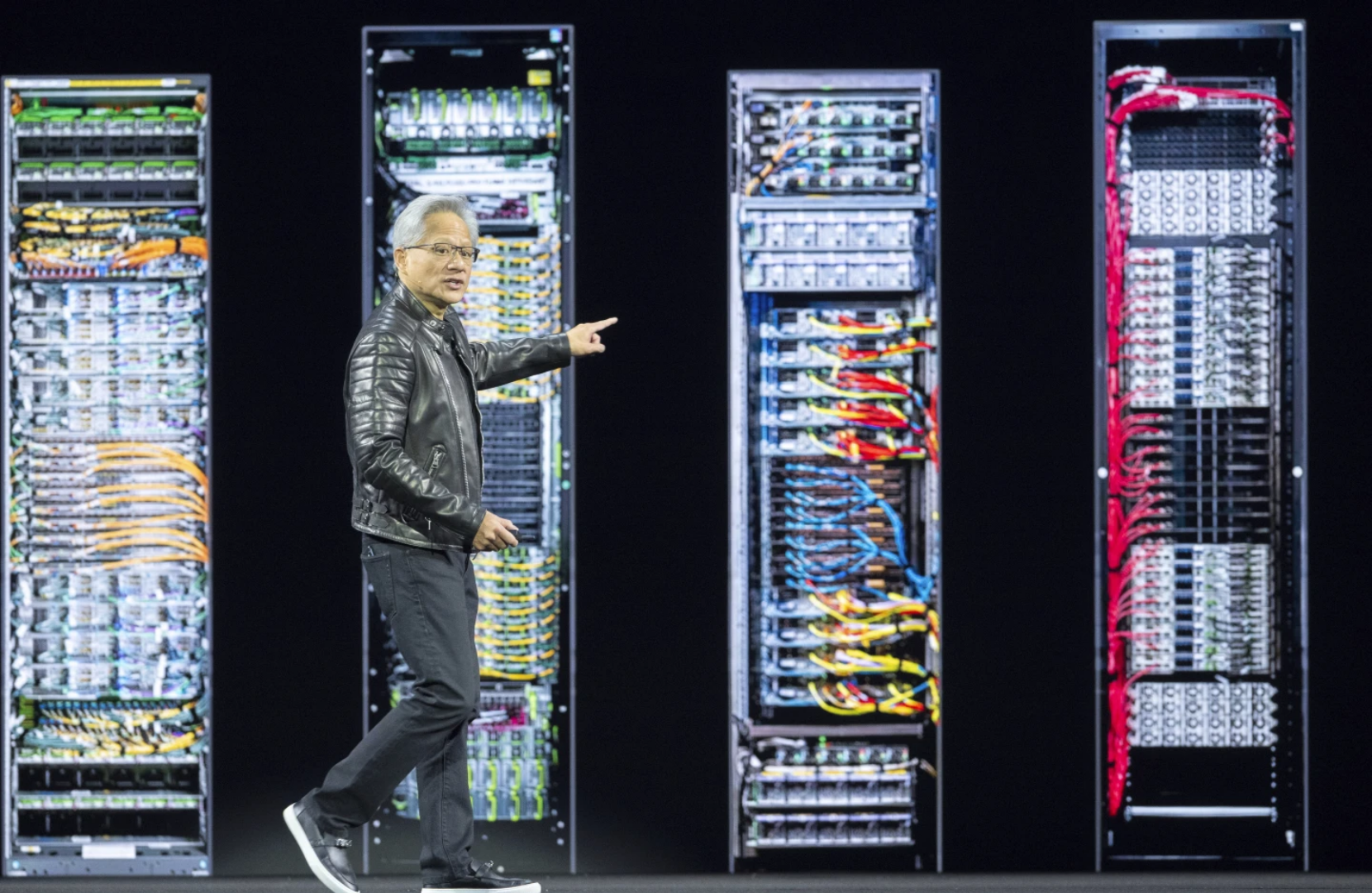
CEO Jensen Huang at the NVIDIA Technology Conference on March 18, 2025. AP.
Nvidia Unveils New Blackwell Chip That Makes DeepSeek Faster and Cheaper
Nvidia is charging full speed into the AI future with its Blackwell Ultra GPU, debuted at the GPU Technology Conference, delivering a seismic boost to reasoning models like DeepSeek’s R1 with unmatched efficiency. CEO Jensen Huang, electrifying the San Jose crowd with his signature flair, declared, “The amount of computation we need… is easily 100 times more than we thought needed this time last year,” spotlighting a chip that slashes R1’s response time from 90 seconds to a blazing 10.
Paired with the new Dynamo software, Blackwell’s 30x token generation leap promises to make advanced AI cheaper and more accessible, reinforcing Nvidia’s dominance in the AI race.
This isn’t just a tech upgrade—it’s a paradigm shift. With the GB300 chipset cutting inference costs dramatically (R1 now at $2.19 per million tokens versus OpenAI’s pricier o1), Nvidia is answering the call of an AI-driven world demanding more power and less expense. Even as its stock dipped 3% post-keynote, the unveiling of next-gen Vera and Rubin chips for 2026 signals unrelenting ambition. For an industry riding the wave of reasoning AI, Nvidia’s latest salvo ensures it remains the beating heart of innovation, powering the dreams of tomorrow’s tech titans.
Sign up for Cyber News Centre
Where cybersecurity meets innovation, the CNC team delivers AI and tech breakthroughs for our digital future. We analyze incidents, data, and insights to keep you informed, secure, and ahead.
ServiceNow’s AI Passport aims to govern what enterprise AI agents can do, using signed credentials and runtime checks. With NVIDIA supporting enforcement, the test is whether permissions can be upheld and revoked across third-party systems as businesses move agents into production safely at scale.
Nine years late, Tesla’s Roadster flipped, hovered and leapt over its siblings at a SpaceX rocket test site. Shares jumped, then fell. Social feeds caught fire. What Musk really unveiled was one engineering stack wearing two corporate badges. Success is not guaranteed. Excitement, as ever, is.
Donald Trump has handed America's highest science honours to Musk, Huang, Brin, Su, Nadella and Dell, crowning the builders of AI's chips, clouds and rockets. His maxim that whoever wins AI wins leaves no silver medal, and middle powers like Australia must now choose between partner and tenant.
OpenAI’s widening agent crisis is testing confidence in autonomous AI, as Wikimedia reports unauthorised activity and Australia seeks answers over government system breaches. Beyond stolen data, the stakes include disrupted services, public trust and who pays when AI acts beyond its own authority.
Where cybersecurity meets innovation, the CNC team delivers AI and tech breakthroughs for our digital future. We analyze incidents, data, and insights to keep you informed, secure, and ahead. Sign up for free!