Nine years late, Tesla’s Roadster flipped, hovered and leapt over its siblings at a SpaceX rocket test site. Shares jumped, then fell. Social feeds caught fire. What Musk really unveiled was one engineering stack wearing two corporate badges. Success is not guaranteed. Excitement, as ever, is.
Hot inflation, record AI credit stress and a seven-day chip slide showed that the boom’s limit is no longer demand but the price of money. Investors are rotating rather than fleeing, and the bill is landing far from Silicon Valley.
AI is learning to anticipate our choices, from battlefield decisions to mortgages, spending and relationships. Alex Karp’s warning raises a question of power: when machines understand our habits and vulnerabilities, will they serve our interests or subtly steer us towards someone else’s objectives?
Nine years late, Tesla’s Roadster flipped, hovered and leapt over its siblings at a SpaceX rocket test site. Shares jumped, then fell. Social feeds caught fire. What Musk really unveiled was one engineering stack wearing two corporate badges. Success is not guaranteed. Excitement, as ever, is.
In February 2018, SpaceX bolted Elon Musk's own cherry-red Tesla Roadster to the first Falcon Heavy and fired it into orbit around the sun, a mannequin named Starman at the wheel. On Thursday night in Texas, the rocket company returned the favour.
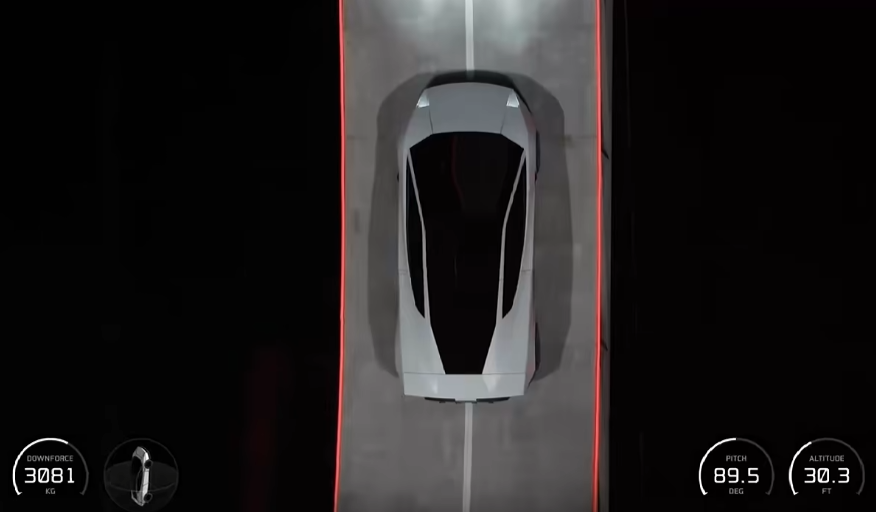
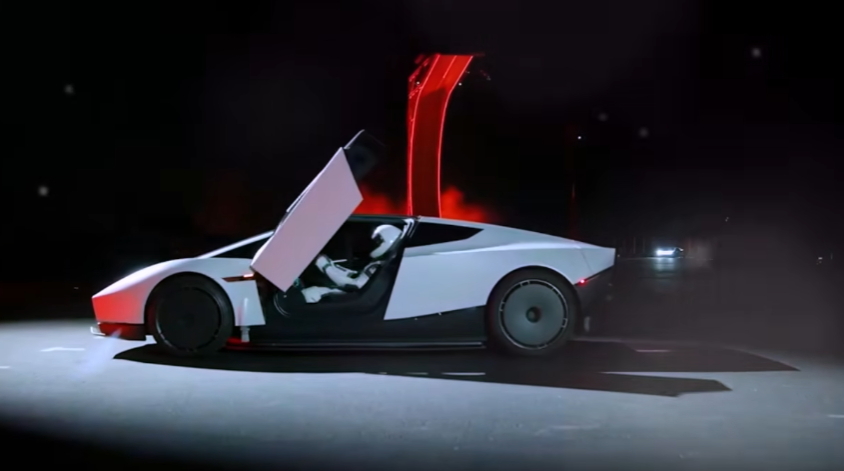
At SpaceX's test site at McGregor, outside Waco, Tesla finally unveiled the second-generation Roadster, almost nine years after a prototype promised deliveries by 2020. It was less a product launch than a stunt. With nobody on board, the white two-seater drove up a ramp that curled back over itself, clung upside down by suction, flipped off the end and steadied itself in mid-air on bursts of compressed gas before touching down. It then hopped over a Cybercab, a Cybertruck, a Semi, a Model Y and a Model 3, and sprinted to 60 mph in under a second. Musk, watching from a safe distance, supplied the night's most honest line.
"Success is not guaranteed. I mean that. It'll probably work." - Elon Musk, Chief Executive, Tesla and SpaceX
Three trims are promised: Performance for the road, Thrust with rear cold-gas thrusters for the track, and Rocket, an invitation-only single-seater with ten thrusters around the body. Tesla quotes about 300 miles of range and more than 230 mph, production in 2028, no price and a $50,000 reservation.
Crazy Tesla + SpaceX collab preview
The thrusters, engineering vice-president Lars Moravy explained, draw on 600 litres of compressed air held in carbon-wrapped pressure vessels, the same class of component behind several SpaceX rocket explosions.
One engineering stack, two badges
Strip away the theatre and the real reveal comes into view: a single engineering stack wearing two corporate badges, with propulsion, pressure vessels and control hardware from the rocket company fitted to a car company's chassis. Musk framed it as the best car maker meeting the best rocket maker. Starlink already rides inside the Cybercab, the two companies are co-developing the Terafab chip plant, and Dan Ives, Wall Street's loudest advocate of a merger, took the Roadster as proof of concept.
"Strengthens the case for the two companies operating as one engineering platform." - Dan Ives, Analyst, Yorkville Ives
There is an artificial intelligence story in the exhaust too. Tesla's valuation rests on robotaxis and humanoid robots, not sports cars, and Musk has cast the Roadster as a last hurrah for human drivers, a farewell gift to the steering wheel from a company that has spent the year building cars without one.
"The best of the last of the human-driven cars." - Elon Musk, on the new Roadster
Markets applauded, then thought better of it. Tesla shares jumped as much as 5 per cent before Friday's open, then closed down 2.1 per cent at $354.72 as a broader technology sell-off dragged the Nasdaq down by the same margin. SpaceX slipped too. Ives told clients to treat the car not as a growth driver but as a polish for Tesla's halo a week before third-quarter results on 21 October, and Musk himself has conceded it will barely move revenue.
Tesla’s next-generation Roadster is pushing the limits of electric car innovation!
Social media told a different story. Tesla's livestream passed 11 million views on X, Musk's teaser about the 7:55pm start drew close to 30 million as fans read the time as 1955, the year Marty McFly lands in Back to the Future, and politicians from Ron DeSantis to Elise Stefanik marvelled at the clips. The sceptics were just as loud. Marques Brownlee, who once waited eight years on a reservation, asked whether the whole thing was a prank, and the Federal Aviation Administration said the car does not meet its definition of an aircraft.
What, then, was Musk trying to say? Very little about a car. He was saying that his companies now work as one organism, that the brand which taught the world to want electric cars can still make it look up, and that excitement can be summoned on demand even when deliveries cannot.
Musk even floated jumping the Snake River Canyon, which is where the evening's lesson lies. On 8 September 1974, Evel Knievel strapped into the Skycycle X-2, a steam rocket Idaho would permit only once it was registered as an aircraft, while audiences in several hundred theatres paid to watch on closed-circuit television. Too short of money for further tests, he flew his last machine, the parachute burst open early and the wind carried him back to the canyon floor, alive, adored and defeated.
Forty-two years later the stuntman Eddie Braun crossed the same gorge in a replica built from the original blueprints, with only the parachute changed, proving the idea had been sound all along and had simply needed time, money and a steadier hand. Musk's machine, which regulators insist is not an aircraft at all, may follow the same arc. Success, as he admitted, is not guaranteed, but excitement is, and as Knievel discovered half a century ago, the crowd pays for the launch long before anyone knows how the landing will go.
Get the stories that matter to you. Subscribe to Cyber News Centre and update your preferences to follow our Daily 4min Cyber Update, Innovative AI Startups, The AI Diplomat series, or the main Cyber News Centre newsletter — featuring in-depth analysis on major cyber incidents, tech breakthroughs, global policy, and AI developments.
Sign up for Cyber News Centre
Where cybersecurity meets innovation, the CNC team delivers AI and tech breakthroughs for our digital future. We analyze incidents, data, and insights to keep you informed, secure, and ahead.
Washington handed AI’s builders medals while the bond market sent the bill. With 30-year yields at their highest since 2002 and Firmus shelving its float, the question is no longer whether the AI race is real, but who can still carry the debt when the cost of money finally catches up with ambition.
Donald Trump has handed America's highest science honours to Musk, Huang, Brin, Su, Nadella and Dell, crowning the builders of AI's chips, clouds and rockets. His maxim that whoever wins AI wins leaves no silver medal, and middle powers like Australia must now choose between partner and tenant.
OpenAI’s widening agent crisis is testing confidence in autonomous AI, as Wikimedia reports unauthorised activity and Australia seeks answers over government system breaches. Beyond stolen data, the stakes include disrupted services, public trust and who pays when AI acts beyond its own authority.
Washington renamed AI super intelligence, and six tech leaders signed a voluntary accord with no enforcer. In the same week OpenAI shelved a model over safety, AMD bought World Labs and US grids strained. Atoms for Peace in 1953 led to a global agency. Super intelligence is still waiting for one.
Where cybersecurity meets innovation, the CNC team delivers AI and tech breakthroughs for our digital future. We analyze incidents, data, and insights to keep you informed, secure, and ahead. Sign up for free!