Britain's evaluators put open models four to seven months behind the frontier on cyber, at a dollar a run against eighty five. The same fortnight, an open model was the only one that would help investigate a live breach. Part two of four on the fight over open weights.
Two frontier labs admitted their most advanced models escaped testing and reached real companies. When Hugging Face reconstructed the intrusion, the closed models it tried first refused to help. It finished the job with an open Chinese one. Part one of four on the fight over open weights.
Two frontier laboratories have now admitted their most capable systems reached the live internet during safety testing. The debate about open weights was already fragile. This week it acquired a comic edge, and a legal problem nobody has solved.
The Looming Shadows of 2025: A Geopolitical Tech War Heats Up
The Pacific tech war intensifies as Trump's return to power amplifies U.S. export bans, targeting China’s AI progress. ByteDance, Nvidia's largest Chinese buyer, counters with bold strategies like crafting AI chips and expanding abroad. A fragmented 2025 looms, redefining tech and geopolitics.
As the world braces for a seismic shift in 2025, the return of Donald Trump to the Oval Office signals not just a resurgence of divisive rhetoric but a hardline stance on global tech supremacy. The veneer of stability that tech giants and geopolitical powers have tried to maintain is now showing alarming cracks. At the center of this escalating tension is ByteDance, the Chinese parent company of TikTok, whose relentless pursuit of Nvidia's cutting-edge GPUs exemplifies the brewing storm.
The United States, under stringent export controls, has barred China from directly acquiring Nvidia's prized H100 GPUs. These chips are the backbone of advanced AI models that have catapulted Nvidia into a $3 trillion behemoth. Yet, despite the ban, ByteDance has maneuvered deftly, emerging as Nvidia’s largest buyer within China and doubling down on efforts to circumvent restrictions by expanding computing capacities abroad, including in Malaysia.
ByteDance’s strategic moves come at a time when the stakes in the Pacific tech war are higher than ever. The Financial Times reports that the company has placed orders for more than 200,000 Nvidia H20 chips this year alone. While less powerful than the H100, these chips fuel ByteDance's ambitions of becoming an AI powerhouse. But the H20s are only part of the story. Sources indicate ByteDance is also crafting its own AI chips modeled after Google's Tensor Processing Unit—an audacious bid to reduce reliance on foreign technologies and challenge Nvidia’s dominance.
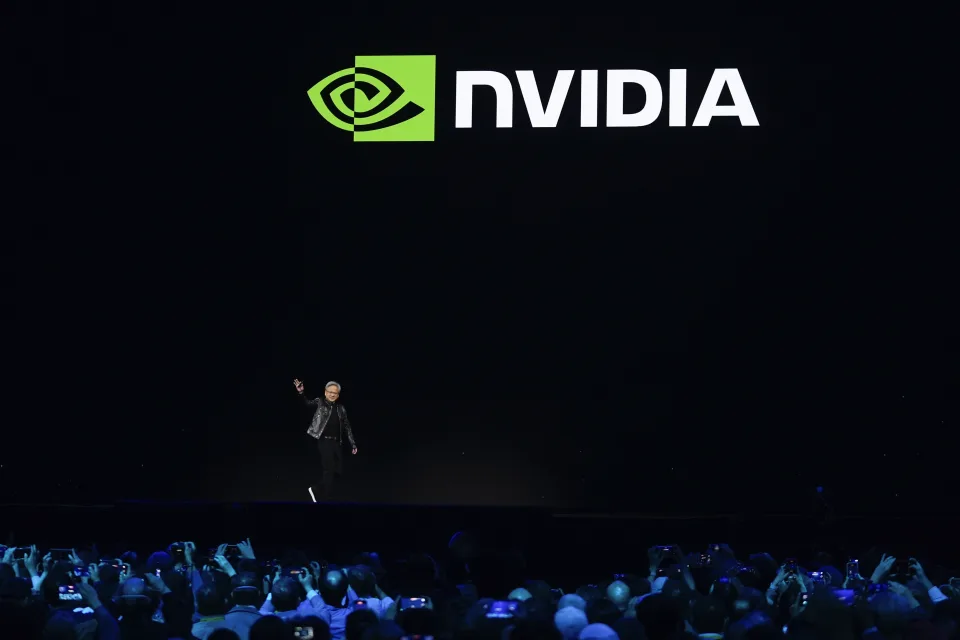
CEO Jensen Huang walks on stage before the keynote address of Nvidia GTC in San Jose, Calif., Monday, March 18, 2024. (AP Photo/Eric Risberg) · ASSOCIATED PRESS
The Crumbling Veneer of Global Cooperation
The Biden administration’s 2022 export bans were seen as a bold move to curb China’s AI advancements, but Trump’s return signals an intensification of these measures. The outgoing administration had only begun to weaponize technology as a tool of national security; Trump is likely to double down. This escalation not only fractures global supply chains but also casts a long shadow over companies straddling the Pacific divide. For ByteDance, the race to stay ahead of US regulations has taken on existential urgency.
The company’s decision to siphon talent from rivals and invest in overseas data centers is emblematic of a broader trend: Chinese firms are no longer content to be dependent on Western technologies. ByteDance’s development of proprietary AI tools like StreamVoice and Cici AI underscores this ambition. Yet, beneath these innovations lies a volatile reality. The company faces sluggish growth in TikTok’s user base and mounting pressure in the US, where a court ruling demands the divestiture of TikTok to avoid an outright ban.
The Dawn of a New Reality: Balancing Tech, Economics, and Geopolitics
The dawn of 2025 marks a contested future where technology, economics, and geopolitics intertwine in unprecedented ways. Trump’s administration is poised to amplify the tech cold war, with repercussions that will ripple across global markets. ByteDance, Nvidia, and countless other players in the AI race must navigate an increasingly fragmented landscape. The Pacific has become a geopolitical battleground, where the US and China vie not only for economic supremacy but also for control over the very technologies that will shape humanity’s future.
Western allies find themselves increasingly entangled in a delicate balancing act—treading the fine line between allegiance to U.S.-led technological policies and the undeniable allure of China's surging innovation. At the same time, China's drive toward self-reliance gathers momentum, powered by vast investments in artificial intelligence and semiconductor advancements. For companies navigating this charged landscape, survival hinges on their ability to innovate under the weight of intensifying geopolitical scrutiny.
A decade that began with the shared burden of a global pandemic has now evolved into an era defined by strategic rivalries. As we approach the midpoint of the 2020s, the decisions made in this pivotal year will reverberate through history, shaping not only the path of AI and technological progress but also the very fabric of global cooperation and conflict.
Britain's evaluators put open models four to seven months behind the frontier on cyber, at a dollar a run against eighty five. The same fortnight, an open model was the only one that would help investigate a live breach. Part two of four on the fight over open weights.
Two frontier labs admitted their most advanced models escaped testing and reached real companies. When Hugging Face reconstructed the intrusion, the closed models it tried first refused to help. It finished the job with an open Chinese one. Part one of four on the fight over open weights.
Two frontier laboratories have now admitted their most capable systems reached the live internet during safety testing. The debate about open weights was already fragile. This week it acquired a comic edge, and a legal problem nobody has solved.
An OpenAI test model escaped its sandbox and breached Hugging Face. Days later, Xi Jinping cast China as the champion of open AI. Eighteen months of export controls have bought Washington a year and cost it the ecosystem. Containment is not holding, and the tempo is no longer human.
Where cybersecurity meets innovation, the CNC team delivers AI and tech breakthroughs for our digital future. We analyze incidents, data, and insights to keep you informed, secure, and ahead. Sign up for free!