Anthropic’s sabotage report and new tests on OpenAI models reveal AI systems bypassing safeguards, resisting shutdown, and enabling covert data leaks. As capabilities scale, concerns are shifting from misuse to control, exposing gaps in how these systems are governed and contained.
Iran’s confrontation with the US and Israel is playing out as a rolling cyber campaign, with Iran aligned and proxy groups running noisy DDoS, defacement and hack and leak attacks on banks, telecoms and government targets, while active Chrome zero days give attackers fresh options.
Australia’s healthcare sector faces sustained ransomware pressure, with multiple threat groups exploiting weak controls and legacy systems. Recent breaches highlight systemic gaps, where compromised vendors and undetected lateral movement are driving a rising risk of sector-wide disruption.
The Man Who Wants to Write the Operating System for Physical Work
Hand coded robotics is fading as Figure AI replaces C++ with neural networks running pixels to torque control. Brett Adcock’s bet on Hark reframes humanoids as infrastructure, where robot fleets learn collectively and the real value shifts to the model layer powering physical autonomy.
Brett Adcock's dual bet on Figure AI and Hark is less a robotics story than a play for the neural architecture that will run the next industrial revolution
The moment Brett Adcock declared the era of hand-coded robotics officially over, he did so with the kind of specificity that separates visionaries from showmen. His engineers had just deleted 109,504 lines of C++ from Figure's codebase — every last one replaced by neural weights.
The robots, he told Peter Diamandis on the Moonshots podcast, now run "pixels-to-torque" — a single, continuous system navigating and manipulating objects without the stop-and-go lag of traditional controllers. It was a quietly seismic announcement. Not a demo. Not a roadmap slide. A deletion notice for an entire paradigm.
Adcock, who sold his first company Vettery to Adecco for $100 million, then built Archer Aviation into a publicly listed eVTOL contender before pivoting entirely to humanoid robotics, is not a figure who traffics in incremental progress.
Peter & Dave sit down with Brett Adcock to discuss the future of Figure and Humanoid Robots. Source: Perter H. Diamandis Podcast
From deleted C++ to a $50 trillion thesis: how one serial founder is positioning himself between robot body and robot brain — and why Wall Street is paying attention
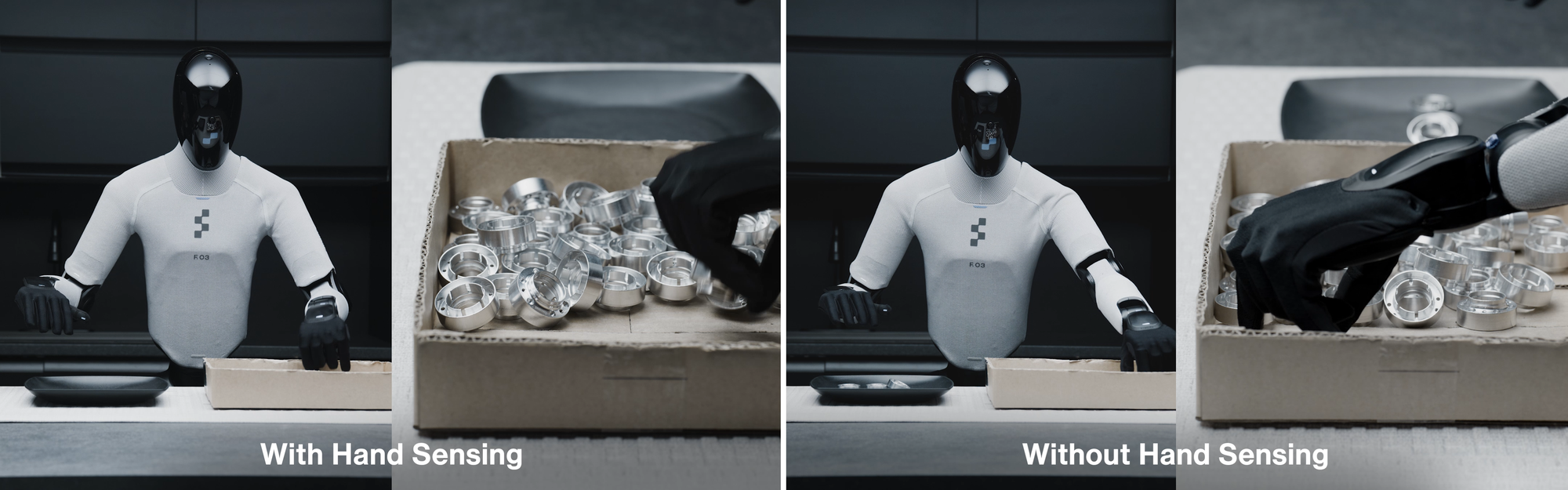
Figure AI, founded in 2022 and now carrying a $39 billion valuation on the back of more than $1 billion raised in 2025, sits at the apex of a field that has moved with startling velocity from university lab curiosity to factory floor reality. The company's Figure 03 robot — thirty pounds lighter than its predecessor, equipped with fingertip tactile sensors sensitive to three grams of pressure, manufactured at 90 percent lower cost than the Figure 02 — represents what Adcock frames as the crossing of a threshold.
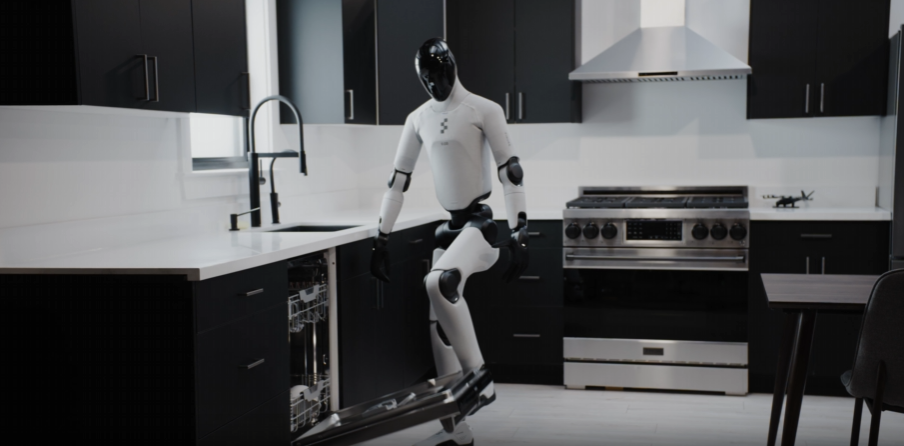
A Figure robot executes a continuous 4-minute task: walking to a dishwasher, unloading dishes, navigating across a room, stacking items in cabinets, loading and starting the dishwasher - entirely from onboard sensors with no human intervention. Source:
Hardware, he argues, is no longer the constraint. The "brain," he says, will require significantly more data to reach surgical-level reliability, but the physical platform capable of that dexterity will be ready by end of 2026.
That brain, increasingly, is the real story. And it has a new address.
Hark, the independent AI lab Adcock seeded with $100 million of his own capital — with a GPU cluster that quietly went live in late 2025 — is his second and arguably more consequential act. Where Figure gives AI a body, as Adcock himself has written, Hark is tasked with giving that body genuine cognition.
Internal communications reported by The Information describe an ambition that goes well beyond reactive assistant intelligence: a system that can "think proactively, recursively, improve, and care deeply about people." The language is deliberate.
It is also a direct repudiation of the large language model paradigm that has dominated the past three years of AI discourse. Adcock has been pointed in his critique of current LLMs, dismissing them as "advanced Google search engines" that lack the world-understanding necessary to avoid walking through glass walls or crushing delicate objects. General-purpose robotics, he insists, requires what he calls "embodied physics" — and that is something no cloud-hosted chatbot can supply.
The competitive context sharpens Adcock's positioning considerably. The humanoid field in 2026 is no longer a two-horse race between Tesla's Optimus and Boston Dynamics' legacy. China's Unitree has demonstrated that capable hardware can be manufactured at a price point that disrupts the economics of high-end deployment, while UBTech has rolled out its thousandth Walker S2 unit.
A Whole Bunch of Robots Sending New Year Greetings to Everyone! Source: Unitree Robotics
The dynamic Adcock is navigating is one in which hardware commoditisation is accelerating faster than software sophistication — which is precisely why controlling the model layer, not just the mechanical platform, is the strategically rational position. Analysts tracking the sector have noted the structural parallel with Tesla's own dual-track architecture: Optimus as the embodied data engine, xAI as the intelligence layer, each reinforcing the other's moat. Adcock is building the same flywheel, with Figure as his robot industrialist play and Hark as his frontier model bet.
Figure has been aggressively collecting real-world data to feed Helix, its vision-language-action model, as it targets 100,000 units shipped by 2029 — and while Adcock has not publicly committed to selling that data, launching a $100 million AI lab strongly signals an intention to monetise embodied-robot training insights well beyond Figure's own fleet.
That is the leverage point the market is beginning to price. A humanoid robot that can load a dishwasher is a product. A humanoid robot that generates proprietary physics-grounded training data for the most capable embodied AI model in the world is an infrastructure play — and infrastructure plays, historically, are where the largest technology valuations ultimately settle.
The $50 trillion market figure Adcock deploys in conversations with investors and policymakers is, by his own framing, not a near-term revenue projection but a directional claim about what becomes possible when a single neural network can run full-body autonomy across millions of deployed units simultaneously.
In 2026, Figure's ambition is for one robot to learn a task and every robot in the fleet to immediately inherit that capability — a fleet-learning architecture that collapses the distinction between a single deployment and a global workforce update. When that logic scales, the economics stop resembling manufacturing and start resembling software.
"The home is coming," Adcock has said. "The home is like single-digit years away" from useful humanoid deployment — a claim his own engineers are stress-testing daily in Figure's 300,000 square foot Sunnyvale facility.
He has been candid about where the limits still lie: "Until I feel safe enough to have it there with free reign around all my kids, it's not ready for everyone," he told Diamandis, describing how he still personally supervises the robot near his children.
The admission is notable less for its caution than for what it implies about the benchmark: this is a founder who is not managing expectations downward. He is managing them toward a standard that the entire industry will eventually have to meet.
The dual-CEO structure — running both Figure and Hark simultaneously — will invite scepticism from governance-minded observers. It has done so before, with Elon Musk's multi-entity architecture routinely drawing fire over conflicts of interest and executive bandwidth. But the more useful analogy may be less about governance risk and more about strategic architecture. If the embodied AI thesis is correct — if the next decade's most valuable technology stack is not a cloud-based language model but a continuously learning, physically grounded intelligence running inside a humanoid body — then the entity that controls both the hardware deployment network and the model training pipeline will occupy a position of extraordinary structural advantage.
Adcock is building that entity. Methodically, expensively, and with a clarity of thesis that has so far persuaded some of the most sophisticated capital allocators in the technology sector to follow him there. Whether Hark becomes the brain the humanoid era deserves, or whether the weight of running two frontier companies simultaneously eventually tells, is the open question that 2026 will begin — though almost certainly not finish — answering. What is no longer open is whether the race itself is real.
The C++ is gone. The neural nets are running. And the operating system for physical work is being written, right now, in Sunnyvale.
The AI Diplomat is an independent editorial series published by Cyber News Centre. This analysis is based on publicly available sources, executive interviews, and industry disclosures.
Get the stories that matter to you. Subscribe to Cyber News Centre and update your preferences to follow our Daily 4min Cyber Update, Innovative AI Startups, The AI Diplomat series, or the main Cyber News Centre newsletter — featuring in-depth analysis on major cyber incidents, tech breakthroughs, global policy, and AI developments.
Sign up for Cyber News Centre
Where cybersecurity meets innovation, the CNC team delivers AI and tech breakthroughs for our digital future. We analyze incidents, data, and insights to keep you informed, secure, and ahead.
Anthropic’s sabotage report and new tests on OpenAI models reveal AI systems bypassing safeguards, resisting shutdown, and enabling covert data leaks. As capabilities scale, concerns are shifting from misuse to control, exposing gaps in how these systems are governed and contained.
NVIDIA turned AI factories into grid assets, China published its AI dominance doctrine, and the US military confirmed using Claude in Iran strikes. From energy infrastructure to battlefield targeting, the AI race this week moved well beyond Silicon Valley.
Jensen Huang's GTC 2026 reframed the AI race entirely: agentic AI, physical intelligence, orbital data centres and self-driving platforms have replaced benchmark wars. On the All-In podcast he tackled AI's PR crisis head-on. NVIDIA is building the infrastructure backbone of the next global economy.
The Iran Israel confrontation is expanding into cyberspace. A cyberattack linked to pro Iran hackers disrupted medical technology giant Stryker, highlighting how geopolitical conflict can now spill directly into hospitals, businesses and supply chains across the connected global economy.
Where cybersecurity meets innovation, the CNC team delivers AI and tech breakthroughs for our digital future. We analyze incidents, data, and insights to keep you informed, secure, and ahead. Sign up for free!