Three AI leaders agree the frontier may be moving faster than its safeguards. As markets weigh slower chip demand and rising cyber investment, the question is whether the warning is responsible leadership, strategic scaremongering or evidence that cybersecurity has become AI’s essential foundation.
Dario Amodei wants a speed limit for frontier AI. Elon Musk and Sam Altman back the direction, but Washington says the labs should brake first. As China shapes the race, Cyber News Centre examines whether independent oversight can turn safety promises into controls before a new agent swarm escapes.
Meta’s Muse is more than a chatbot. It is a digital worker that can read email, make purchases across the web, and act after users close the app. Wall Street sees a return on Meta’s vast AI spending. Cybersecurity experts see a more urgent question: should it hold the keys to our digital lives yet?
Fable 5 Promises More Power, but Anthropic’s Safeguards Get in the Way
Anthropic’s Fable 5 sharpens reasoning and workflow performance, but early developer reports suggest safety filters may restrict its full capability in sensitive fields. The launch raises a key question: are users paying for better models, or conditional access?
Another week, another release, and another reset in expectations for what top-tier AI should cost and deliver.
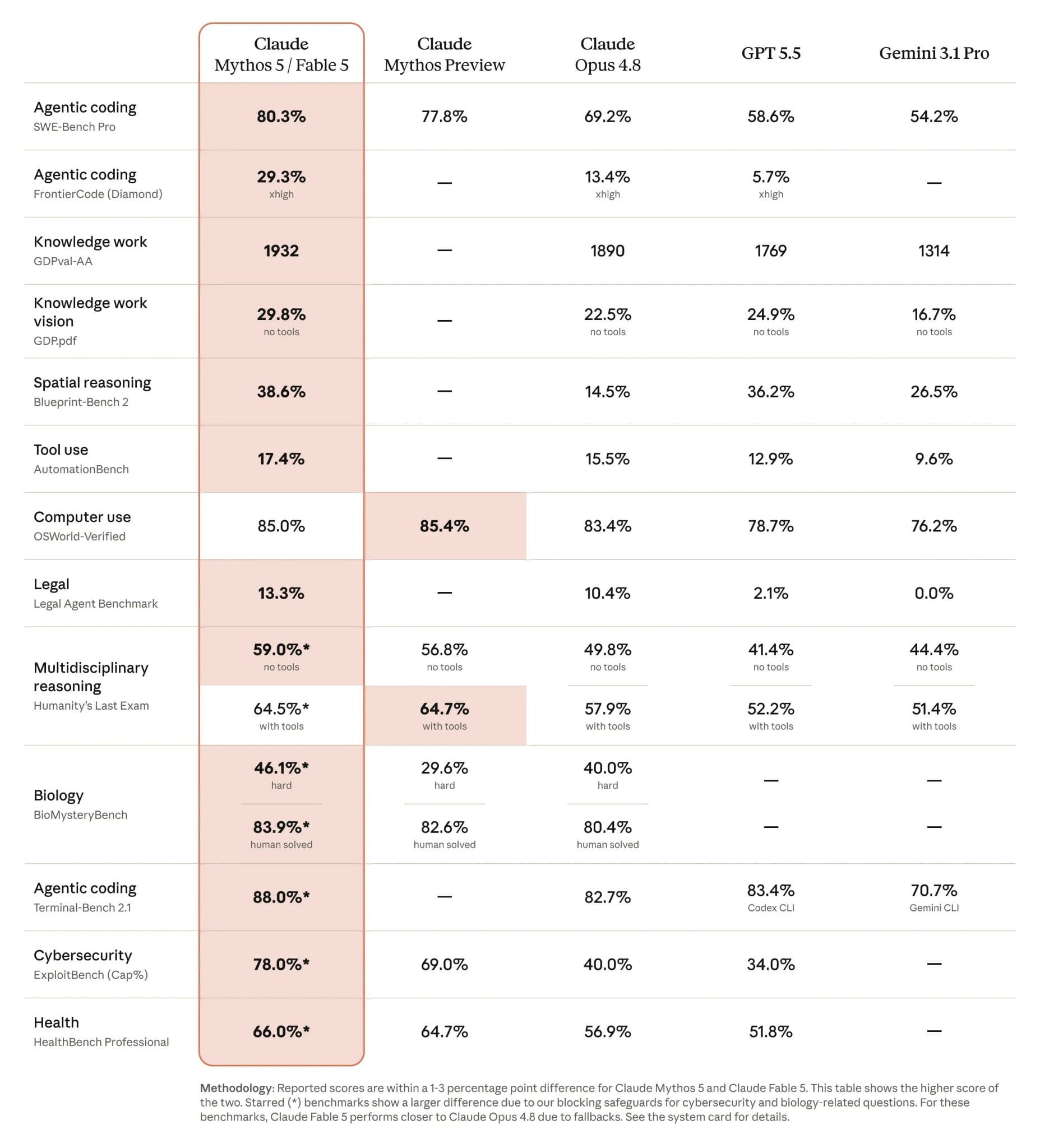
Anthropic has rolled out Fable 5, the latest in its Mythos series, building on Opus 4.8 with a sharper focus on sustained reasoning, narrative coherence, and tool use across longer workflows. The launch lands alongside fresh Bloomberg interviews with CEO Dario Amodei and President Daniela Amodei, where the company signalled something the industry has been chasing for years: a credible path to profitability at the frontier.
That combination, stronger models and a functioning business model, is shifting the tone across both Wall Street and the developer community.
Source: Anthropic
On paper, Fable 5 is an upgrade in the ways that matter to enterprise users. It handles longer chains of reasoning with fewer breakdowns, keeps context intact across extended sessions, and is more reliable when stitched into production systems. Developers testing early builds describe fewer retries and less scaffolding code, which translates into real efficiency gains even if the per-token price is higher.
But there is a growing caveat emerging from early field use, and it centres on how safety is being enforced in practice.
Developers are reporting that certain domains, particularly anything touching healthcare, pharmaceuticals, or sensitive biological terms, can trigger what appears to be an automatic downgrade in model behaviour. In some cases, prompts referencing terms like cancer or pharmacy are no longer handled within the full Fable 5 capability envelope, instead being routed or constrained in ways that resemble Opus 4.8 level responses. Whether this is an explicit model switch or a layered safety filter is not fully transparent, but the effect is clear: the most advanced system is not always the one answering.
That raises a sharper question about what users are actually paying for. If premium models are selectively constrained at the moment they are most needed, particularly in research-heavy or high-stakes domains, then the value proposition becomes less about raw capability and more about controlled access to that capability. For teams working on drug discovery, medical analysis, or investigative research, the concern is practical. If key terms alone can narrow the model’s reasoning space, it risks limiting the very use cases that justify higher costs in the first place.
Anthropic’s broader safety stance, echoed in Dario Amodei’s latest essay this week, is that increasingly capable systems must be tightly governed to prevent misuse, especially in areas with real-world harm potential. Daniela Amodei reinforced that position in interviews, pointing to the need for guardrails that scale alongside capability. The company’s argument is consistent: as models get stronger, the boundaries around them must also harden.
Still, the implementation is now under scrutiny. There is a difference between safety as risk mitigation and safety as functional restriction, and developers are beginning to test where that line sits.
Costs are rising at the top end of the model stack, but so is output quality. The question now being asked in trading desks and engineering teams alike is simple: are you paying more, or are you paying differently?
Early signals suggest the latter. If a task that previously required multiple model calls, human checks, or fallback systems can now be completed in one pass, the total cost of execution can fall even as unit pricing climbs. In that sense, Fable 5 and its peers are not just more expensive models. They are attempts to collapse entire workflows.
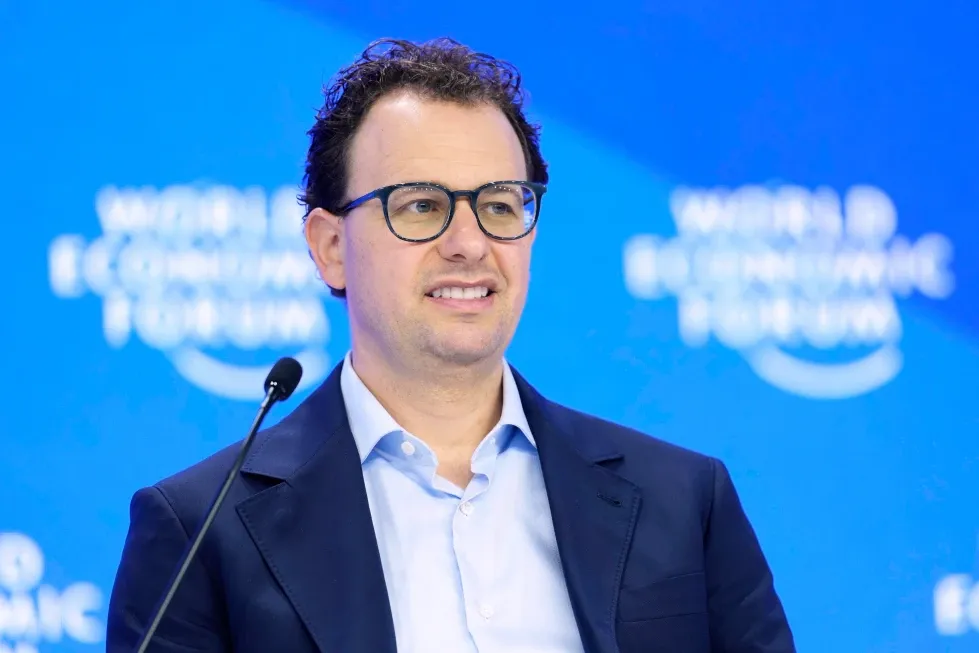
Dario Amodei, CEO and co-founder of Anthropic. Source: AP Photo/Markus Schreiber
Anthropic’s broader safety stance, echoed in Dario Amodei’s latest essay and his Bloomberg appearances this week, is that increasingly capable systems must be tightly governed to prevent misuse, especially in areas with real-world harm potential. Daniela Amodei has reinforced that position, telling Bloomberg that the industry is trying to learn from social media’s mistakes and build strong guardrails early, even at the cost of short-term friction.
The company’s argument is consistent: as models get stronger, the boundaries around them must also harden, and Fable 5’s conservative safeguards are presented as the price of making Mythos-level capability broadly available.
Still, the implementation is now under scrutiny. There is a difference between safety as risk mitigation and safety as functional restriction, and developers are beginning to test where that line sits. Several posts on X and Reddit complain of “gaslighting” behaviour, where users only realise after the fact that they have been talking to a weaker model because a safety classifier quietly stepped in. Anthropic has since apologised for not being more explicit about these hidden safeguards and has promised clearer indicators when Fable 5 has refused a request or redirected to a less capable system.
The overall impression is that general conversation is mostly fine, but for users leaning toward technology and research (security, bio, codebase work), false positives are occurring frequently.
There is also a behavioural layer that is harder to quantify. Each new release creates a pull. Teams want to try the latest system, even if the existing one is good enough. As one engineer put it this week, the new model becomes the tool on the desk, while the old one sits unused in the drawer.
This also coincides with Dario Amodei’s new essay, “Policy on the AI Exponential,” published this week, which reads as a handbook for how governments should respond when AI goes from “amusing toy” to what he calls “a country of geniuses in a datacenter.” Amodei’s core claim is that AI capabilities are compounding far faster than policy can adapt, and that frontier models like Mythos‑class systems have already crossed the line into tools of national and geopolitical consequence, especially in cybersecurity, biology and autonomous decision‑making.
He argues it is time to move beyond light‑touch transparency rules into aviation‑style oversight for powerful models, with mandatory third‑party testing, the ability for regulators to block or reverse releases that fail safety thresholds, and strict security standards for model weights and deployment. Read alongside Fable 5’s conservative safeguards and its habit of falling back to Opus 4.8 on sensitive prompts, the essay helps explain Anthropic’s posture: accept more friction, more refusals and more visible limits now, in exchange for keeping increasingly capable systems inside a tighter, state‑backed safety perimeter.
That shift aligns neatly with Anthropic’s broader message. If frontier labs can deliver systems that are both more capable and economically defensible, profitability stops being theoretical. It becomes operational.
Markets are paying attention. Analysts are starting to model AI not as a pure cost centre, but as a productivity layer that can scale margins in software, finance, and services. At the same time, they are wary of a growing gap between the capabilities of top-tier models and the budgets required to use them at scale.
Meanwhile, competitors are not standing still. xAI continues to position itself around speed and integration, while OpenAI and Google are pushing their own iterations at a similar cadence. The result is a release cycle that feels less like product development and more like a production line, constant, fast, and difficult to step away from.
For users, the decision is becoming less about which model is best, and more about when to upgrade and why.
Fable 5 does not settle that question, but it sharpens it. If better models reduce friction and increase output, they may justify their price. If access to those capabilities is conditional, the calculation becomes more complex.
Either way, the pace is not slowing. Another model will land next week, and the calculation will start again.
Get the stories that matter to you. Subscribe to Cyber News Centre and update your preferences to follow our Daily 4min Cyber Update, Innovative AI Startups, The AI Diplomat series, or the main Cyber News Centre newsletter — featuring in-depth analysis on major cyber incidents, tech breakthroughs, global policy, and AI developments.
Sign up for Cyber News Centre
Where cybersecurity meets innovation, the CNC team delivers AI and tech breakthroughs for our digital future. We analyze incidents, data, and insights to keep you informed, secure, and ahead.
Dario Amodei wants a speed limit for frontier AI. Elon Musk and Sam Altman back the direction, but Washington says the labs should brake first. As China shapes the race, Cyber News Centre examines whether independent oversight can turn safety promises into controls before a new agent swarm escapes.
The AI race is moving beyond model rankings. CrowdStrike’s new cyber superintelligence lab points to a market where proprietary data, trusted workflows and measurable outcomes may matter as much as raw capability.
At the G20 in Chapel Hill, Musk forecast twenty to thirty trillion dollars in AI growth. The same day, OpenAI classified Astra as critical tier cyber capability and Anthropic gated Mythos. Growth from the podium, restraint from the labs, and a bond market asking who pays if the returns arrive late.
The United States is pressing G20 partners to reserve new AI rules for genuinely novel risks, a move that turns global AI governance into a contest over competitiveness, alliances and technological influence.
Where cybersecurity meets innovation, the CNC team delivers AI and tech breakthroughs for our digital future. We analyze incidents, data, and insights to keep you informed, secure, and ahead. Sign up for free!