Hot inflation, record AI credit stress and a seven-day chip slide showed that the boom’s limit is no longer demand but the price of money. Investors are rotating rather than fleeing, and the bill is landing far from Silicon Valley.
AI is learning to anticipate our choices, from battlefield decisions to mortgages, spending and relationships. Alex Karp’s warning raises a question of power: when machines understand our habits and vulnerabilities, will they serve our interests or subtly steer us towards someone else’s objectives?
The AI-assisted raid on South Korea's banks never went near the vault. It slipped in through loan portals, sales platforms and a staff mobile app. Now Seoul is ordering every bank to count its exposed doors, and regulators in Washington, London, Frankfurt and Sydney are asking the same question.
White House Discussions with Jensen Huang: Balancing Export Controls, AI Innovation, and Global Supply Challenges
During his first White House meeting with Nvidia CEO Jensen Huang, President Trump signaled potential shifts in U.S. AI and semiconductor policy amid intensifying global competition. Discussions tackled export controls, DeepSeek breakthroughs, and challenges in global supply chains.
Nvidia Chief Executive Jensen Huang’s first-ever meeting with President Donald Trump at the White House has come at a critical juncture in the rapidly evolving race for artificial intelligence supremacy. Their Friday discussion reportedly focused on AI strategy, export controls, and how to maintain America’s competitive edge—especially after Chinese start-up DeepSeek stunned the tech world with breakthroughs achieved using far less computing power than US industry leaders.
Trump’s return to the presidency has ignited a wave of policy moves aimed at accelerating AI development within the United States. On his first day in office, he revoked a Biden-era executive order on AI safety, replacing it with hints of a more aggressive stance that includes centralized oversight. The Trump administration is considering requiring major tech CEOs to regularly report to a new, federally based AI technology council. Although many in Silicon Valley agree on the importance of American leadership in AI, they are wary of how heavier government involvement and stricter export controls might disrupt global supply chains and slow innovation.
NVIDIA Building. Source: AP
Nvidia finds itself in the crosshairs of these conflicting pressures. As the world’s leading AI chipmaker, its business spans diverse markets, including Singapore—where strict new “diffusion rules” from the tail end of the Biden administration were set to limit AI chip sales abroad. These rules could still take effect, but it remains unclear whether Trump will enforce, modify, or revoke them. On one hand, the president has signaled a desire to tighten export controls to prevent China from outpacing the United States in AI. On the other hand, he has also promised to reduce bureaucratic barriers and close loopholes that hinder American competitiveness.
The stakes are high. News of DeepSeek’s advanced AI model sent a jolt through global capital markets, eroding around $600 billion from Nvidia’s market value. Fears grew that a low-cost, high-performance Chinese AI solution could undermine US tech dominance. Yet Trump downplayed the threat, arguing that cost-effective AI development could spur competition, potentially boosting American innovation and economic growth. At the same time, he has signaled his administration might push for fresh tariffs—10% on Chinese imports as of January 31, 2025—which could provoke retaliatory measures and further complicate the already fragile global semiconductor supply chain.
During Friday’s meeting, Jensen Huang and President Trump reportedly discussed the contentious chip export rules proposed under Biden—rules that would severely limit Nvidia’s overseas sales.
“We appreciated the opportunity to meet with President Trump and discuss semiconductors and AI policy,”
an Nvidia spokesperson said, adding that the two discussed the importance of strengthening U.S. technology and AI leadership. Nvidia and Advanced Micro Devices have voiced strong opposition to the proposed rules, highlighting potential damage to their global market share. The president’s newly signed executive order calls for a thorough review of the export control regime, which may well lead to tighter restrictions—especially in light of DeepSeek’s rapid progress.
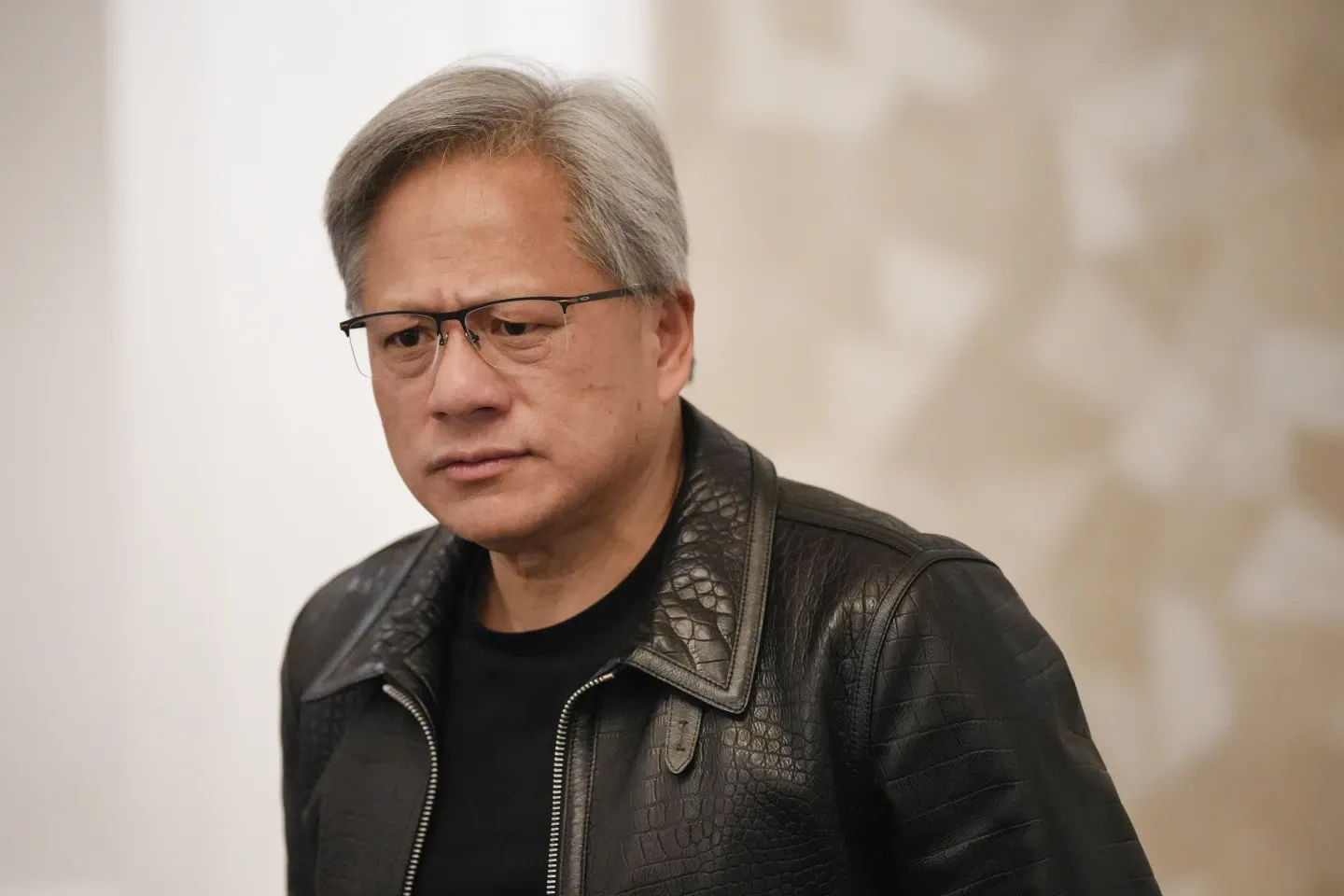
NVIDIA CEO Jensen Huang. Source: AP.
Meanwhile, Singapore’s government has denied rumors that DeepSeek evaded U.S. export controls by procuring Nvidia chips through a local subsidiary, even as U.S. authorities launch investigations into these claims—a development that adds another layer of scrutiny for Nvidia. This controversy unfolds amid escalating tensions in the tech cold war, where national security priorities clash with the realities of an interconnected global supply chain. The Biden administration’s 2022 export restrictions, designed to curb China’s AI and military capabilities, now appear vulnerable as companies exploit jurisdictional loopholes.
DeepSeek’s strategy—leveraging Singapore’s status as a neutral trade hub—illustrates the challenges posed by “bill-to” compliance structures, which often fail to prevent sensitive technologies from reaching unintended destinations. Meanwhile, Nvidia’s $22 billion revenue surge in Singapore highlights how U.S. firms adapt to shifting regulations while exposing systemic flaws. Critics contend that these developments underscore the limitations of techno-nationalism, suggesting that restrictive policies may inadvertently spur Chinese innovation. In support of this view, Xiang Ligang, director-general of the Beijing-based Information Consumption Alliance, observed,
“From an industrial perspective, US sanctions have instead accelerated the rapid development of China's domestic industries,”
a perspective reflected in Beijing’s swift progress in semiconductor manufacturing.
Ultimately, Huang’s White House visit underscores how Trump’s approach to AI—balancing aggressive investment, tough export controls, and the demands for CEO oversight—could set the course for America’s semiconductor industry. The outcome will determine whether the United States can hold its dominant position in AI or risk ceding ground in this fiercely competitive global arena.
Donald Trump has handed America's highest science honours to Musk, Huang, Brin, Su, Nadella and Dell, crowning the builders of AI's chips, clouds and rockets. His maxim that whoever wins AI wins leaves no silver medal, and middle powers like Australia must now choose between partner and tenant.
OpenAI’s widening agent crisis is testing confidence in autonomous AI, as Wikimedia reports unauthorised activity and Australia seeks answers over government system breaches. Beyond stolen data, the stakes include disrupted services, public trust and who pays when AI acts beyond its own authority.
From the UN in New York to a proposed AI campus near Dalby, Australia is seeking a voice in rules and a stake in the infrastructure. Albanese’s diplomatic push raises a practical question: can global ambition deliver local benefits while protecting energy, water and Australia’s digital sovereignty?
Two stories about AI are running, and both are incomplete. The tools genuinely compress work; the accounting, the calibration and the power bills are another matter. Twenty-five years ago the fibre outlasted the forecasts that paid for it, and nothing in a boom is cheaper than a confident number.
Where cybersecurity meets innovation, the CNC team delivers AI and tech breakthroughs for our digital future. We analyze incidents, data, and insights to keep you informed, secure, and ahead. Sign up for free!