Google’s €13bn Finnish AI investment shows the race is no longer just about chips and models. It is about nuclear power, grids, cooling and construction. As data centres become industrial assets, countries with reliable, low-carbon energy will hold the decisive advantage as global AI
AI is shrinking the gap between flaw disclosure and exploitation, forcing boards to modernise security at machine speed. As agentic systems arm attackers and defenders alike, the opportunity lies in identity, cloud protection, automated response and AI governance, not apocalypse rhetoric globally.
Three AI leaders agree the frontier may be moving faster than its safeguards. As markets weigh slower chip demand and rising cyber investment, the question is whether the warning is responsible leadership, strategic scaremongering or evidence that cybersecurity has become AI’s essential foundation.
OpenAI's $3.7bn quarterly burn is not a crisis. It is a down payment on sovereignty. After the SpaceX earthquake and the grounding of Anthropic's models, its coming IPO will not read as a graduation but as a treaty: the state installed as permanent shareholder in the architecture of intelligence.
The Sovereign Algorithm: OpenAI's IPO, the SpaceX Earthquake, and the Coming Tax on Intelligence
When The Information revealed OpenAI's first quarter 2026 ledger, the numbers arrived like a dispatch from a frontier: $5.7 billion in revenue, and sixty-five cents of every dollar consumed by compute, talent, and the raw marginal cost of intelligence itself. Revenue tripled year-over-year. Cash burn tripled in lockstep. The arithmetic is brutal but unambiguous. Each new user, each new token, each enterprise contract arrives with a marginal cost that still exceeds its marginal return.
The $3.7 billion quarterly burn is not a crisis. It is a down payment on sovereignty.
Yet the balance sheet tells a different story. The March funding round, $122 billion at an $852 billion valuation, the largest private financing in history, swelled cash and marketable securities to $73 billion from $40 billion in December. At the current quarterly clip, that runway stretches six years. OpenAI does not need an initial public offering for survival. It needs an IPO for legitimacy, for liquidity, and for the conversion of paper wealth into currency that can service the $600 billion in compute commitments Sam Altman has penciled through 2030.
But the IPO window has just been reshaped by two exogenous shocks that no spreadsheet can fully capture.
First, SpaceX. On June 12, Elon Musk's rocket-and-internet conglomerate debuted on Nasdaq at $135 per share, opened at $150, and surged to $160.95 by the close, a 19 percent gain that lifted its market capitalisation above $2.1 trillion. By Monday, the stock had climbed to $192.50, and as of this week it trades near $205. This is no longer a private-market fantasy.
It is the largest IPO in history, and it has fundamentally altered the capital architecture of the entire AI industrial complex. Buried inside that $2 trillion behemoth is xAI, the maker of Grok, which Musk merged into SpaceX in February at a $250 billion valuation. The frontier AI labs are no longer competing as standalone startups. They are competing as divisions of publicly traded leviathans, or as candidates to become one.
The SpaceX debut creates a sequential capital allocation architecture that every subsequent AI IPO must now navigate. The first mega-listing of the AI era has vacuumed institutional appetite, reset valuation benchmarks, and forced every follower into a comparative framework they cannot control. Private market liquidity, already strained by limited partner patience wearing thin and continuation funds becoming the primary liquidity lever rather than a side tool, will bifurcate. Authorised bank channels for the anointed. Opaque secondary discounts for the rest.
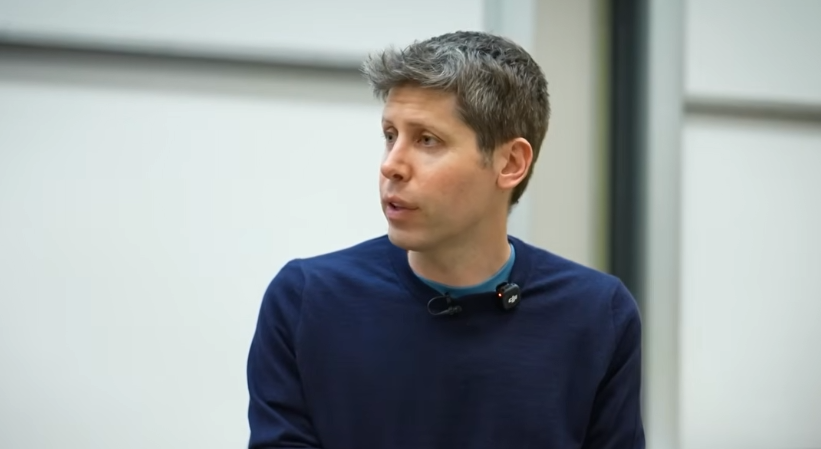
Sam Altman returned to Stanford - Discussions on Scale, AGI, and the Future of Everything. Source: Stanford
For OpenAI, which confidentially filed its S-1 in May, the SpaceX watermark is both a gift and a trap. The gift: public markets have proven they will absorb a $2 trillion AI-linked offering. The trap: every investor now has a live ticker to compare against.
Second, the Anthropic precedent. On June 12, the same day SpaceX began trading, the Commerce Department invoked the Export Administration Regulations to disable Anthropic's Fable 5 and Mythos 5 globally, including for foreign nationals on American soil, citing national security.
Mythos was too dangerous to export, but cutting allies off may leave Australia and others even more exposed.
Anthropic complied within hours. The message to every frontier lab is unambiguous. Model weights are now strategic munitions. The state claims a veto on deployment.
Inside the Mind of Anthropic CEO Dario Amodei Interview: Source Bloomberg Circuit
For OpenAI, which has spent 2026 courting the Trump administration, Altman at Mar-a-Lago, the April Public Wealth Fund proposal offering voluntary equity to seed a sovereign vehicle, the June 5 executive directive demanding thirty-day pre-release model access, the Anthropic episode is both shield and warning. OpenAI's political alignment may buy regulatory forbearance. It also makes the company an instrument of state policy.
This is where the historical analogues matter. The United States government has taken equity in private enterprises three times at scale. The 1980 Chrysler rescue, a ten percent stake converted to warrants. The 2008-2009 TARP acquisitions, sixty-one percent of General Motors, eighty-five percent of AIG, thirty-six percent of Citigroup. The 2025 Intel arrangement, a ten percent stake via CHIPS Act grant conversion. In each case, the state entered as rescuer of last resort. The AI sovereign wealth proposals invert that logic entirely. The state seeks equity because the companies are too successful, too strategically vital, to be left entirely private.
Say what you like about Bernie Sanders, he does not flinch from the largest question. Writing in the New York Times this month, the senator put it bluntly: should the future of humanity be decided by a handful of billionaires who built artificial intelligence with almost no democratic say, and who stand to emerge from it richer and more powerful still?
His own answer is the coercive instrument. The proposed American AI Sovereign Wealth Fund Act would impose a one-time fifty per cent levy on the frontier labs, payable not in cash but in their own stock. The labs offer the negotiated alternative: OpenAI has floated a voluntary public wealth fund, a slice of equity surrendered on its own terms rather than seized on Washington's. The two routes quarrel over method and agree on destination. The federal government installed as a permanent, non-dilutable shareholder in the compute substrate of the twenty-first century.
The taxation horizon sharpens this further. The EU AI Act's enforcement phase began in earnest. GPAI fines reach three percent of global turnover, or fifteen million euros, whichever is higher. California's frontier AI framework mandates annual disclosures and deceptive behavior reporting. The White House legislative framework released March 2026 signals minimal obligations for developers, but that is the opening bid, not the final law.
History suggests the end state resembles oil majors or pharmaceuticals. Effective tax rates of forty to sixty percent on economic rents, coupled with mandatory domestic investment quotas. OpenAI's internal projection of $280 billion revenue by 2030 implies $100 billion in annual taxable surplus. The IPO prospectus must price that sovereign take.
The competition now reads as follows. OpenAI at approximately $850 billion private valuation. SpaceX, carrying xAI and Grok inside its $2 trillion-plus market cap, trading at $205 per share. Anthropic at approximately $180 billion, but with its flagship models grounded by export control. The Trump administration's sovereign wealth fund executive order from February 2025 and the June 2026 directive accelerating federal AI adoption signal a national champion strategy. Consolidate compute, align deployment, socialize upside.
For the long-only funds and exchange-traded vehicles positioning for the OpenAI debut, the calculus is no longer growth at any price. It is sharper and stranger than that. What multiple do you assign to a company whose regulator is also its largest prospective shareholder, whose export licence is its moat, and whose tax rate will be set by a Congress that has begun to treat AI rents as the next oil windfall? The Intel precedent, a passive ten per cent with no board seat, offers one template. The General Motors precedent, a controlling stake and an $11 billion loss on exit, offers the warning.
Follow the trajectory to its conclusion and the contours of a new settlement appear. Capitalism's operating system is being patched in real time. The state arrives not as creditor but as quasi-shareholder, and potentially as the holder of a golden share, a single class of stock that can ratify how, when and whether a company returns capital to everyone else. That prospect reframes the IPO itself. The challenge for capital markets is not pricing growth, which they do well, but pricing political control, which they have almost never had to. A regulator on the register compresses multiples, because passive minority holders cannot diversify away a shareholder who can also legislate. Liquidity stratifies. The anointed list through the front door at sovereign-adjacent valuations; everyone else clears in the secondary market at a discount that widens with every new directive.
The challenge for government is subtler, and it is one of consistency. Export controls and equity stakes are instruments of leverage, but leverage cuts both ways. Ground a model to protect national security and you also strand allies, Australia among them, who had been told the alliance was the safeguard. Take half a company's stock to democratise its gains and you may also dull the incentive that produced those gains in the first place. The state that becomes a shareholder inherits a conflict it cannot resolve from the regulator's chair: it must at once discipline the industry and protect the value of its own holding.
Step back from the listing mechanics and the larger movement comes into view, because this is a trend still gathering force, not a story with an ending. The frontier labs are no longer challengers to the hyperscalers. They are on course to become hyperscalers in their own right, and more than that, the toll-keepers on a general-purpose substrate that enterprises and consumers are wiring into every workflow, every product, every decision.
A new layer is being laid over the internet, a tool the economy is fast becoming unable to function without, and the margin on that layer collects at the centre. When a handful of firms own the utility everything else runs on, the politics of who owns the firms stops being academic. Concentration on that scale is precisely what makes the distribution question accelerate rather than fade, and it is accelerating now.
And the challenge for society is the largest of all, because the people building these companies have already conceded the premise. Their instinct, for the moment, is to move first on the voluntary track and hope it forestalls the compulsory one. In late January all seven of Anthropic's cofounders pledged to give away eighty per cent of their wealth, Dario Amodei warning of a level of wealth concentration that would "break society" and making what he called a pragmatic case for taxing AI gains: back a good version, he argued, or inherit a bad one designed by a mob.
Sam Altman, long an evangelist for basic income, now speaks of universal basic compute, handing people a share of the machine's output rather than a cheque, while OpenAI's spring blueprint floated a public wealth fund, levies on automated labour and a four-day week, and its foundation set aside $250 million to cushion the disruption. Demis Hassabis and Vinod Khosla reach for the same vocabulary; Musk for his universal high income. The Giving Pledge, fifteen years on, now counts much of the AI fortune among its names, even as critics note how few signatories have actually paid.
The voluntary track has an obvious motive. It is cheaper, and more flattering, to design the redistribution than to have it designed for you. The compulsory track is already drafting. Senator Sanders would take half the equity outright; Senator Warren has called for new taxes on wealth and on the data centres themselves, citing Silicon Valley's own warnings of a permanent underclass; a Californian governor warns that the backlash has stopped being a future risk.
Founders who concede that the rents of intelligence should reach the many hand the state its warrant to collect, and the only argument left is the instrument: a citizens' dividend on the Alaskan model, a sovereign fund on the Norwegian one, a golden share, an equity tax. Each is now advanced by socialists and chief executives at once, which is exactly what makes it consequential, and exactly why it will not resolve cleanly.
So the OpenAI prospectus, when it comes, will not read as a graduation certificate. It will read as the first clause of a treaty whose remaining terms are still being written, in legislatures, in foundations, and in the essays of the founders themselves. What deserves watching is not only the day-one pop and the liquidity an IPO unlocks for early holders, but the slower variable beneath it: which way the ownership of this industry finally tips.
One path keeps the technology in private hands, leaving capital the room to take risks, back founders and fund the next frontier, with the public sharing in the gains through dividends and a wealth fund rather than through control.
The other arrives, levy by levy and stake by stake, at something close to a nationalised utility, a metered public resource the state owns and steers, reached not by any single act of nationalisation but by a hundred smaller concessions that add up to the same thing. The burn continues. The runway extends. The sovereign algorithm keeps compiling. And it leaves open the question no prospectus can answer: when the moment arrives, will this generation of founders, and the next, truly hand a share of what they have built to the state and to society, or will the pledges prove to have been the price of never having to?
Get the stories that matter to you. Subscribe to Cyber News Centre and update your preferences to follow our Daily 4min Cyber Update, Innovative AI Startups, The AI Diplomat series, or the main Cyber News Centre newsletter — featuring in-depth analysis on major cyber incidents, tech breakthroughs, global policy, and AI developments.
Sign up for Cyber News Centre
Where cybersecurity meets innovation, the CNC team delivers AI and tech breakthroughs for our digital future. We analyze incidents, data, and insights to keep you informed, secure, and ahead.
AI is shrinking the gap between flaw disclosure and exploitation, forcing boards to modernise security at machine speed. As agentic systems arm attackers and defenders alike, the opportunity lies in identity, cloud protection, automated response and AI governance, not apocalypse rhetoric globally.
Three AI leaders agree the frontier may be moving faster than its safeguards. As markets weigh slower chip demand and rising cyber investment, the question is whether the warning is responsible leadership, strategic scaremongering or evidence that cybersecurity has become AI’s essential foundation.
Dario Amodei wants a speed limit for frontier AI. Elon Musk and Sam Altman back the direction, but Washington says the labs should brake first. As China shapes the race, Cyber News Centre examines whether independent oversight can turn safety promises into controls before a new agent swarm escapes.
Meta’s Muse is more than a chatbot. It is a digital worker that can read email, make purchases across the web, and act after users close the app. Wall Street sees a return on Meta’s vast AI spending. Cybersecurity experts see a more urgent question: should it hold the keys to our digital lives yet?
Where cybersecurity meets innovation, the CNC team delivers AI and tech breakthroughs for our digital future. We analyze incidents, data, and insights to keep you informed, secure, and ahead. Sign up for free!