Two stories about AI are running, and both are incomplete. The tools genuinely compress work; the accounting, the calibration and the power bills are another matter. Twenty-five years ago the fibre outlasted the forecasts that paid for it, and nothing in a boom is cheaper than a confident number.
Google’s €13bn Finnish AI investment shows the race is no longer just about chips and models. It is about nuclear power, grids, cooling and construction. As data centres become industrial assets, countries with reliable, low-carbon energy will hold the decisive advantage as global AI
AI is shrinking the gap between flaw disclosure and exploitation, forcing boards to modernise security at machine speed. As agentic systems arm attackers and defenders alike, the opportunity lies in identity, cloud protection, automated response and AI governance, not apocalypse rhetoric globally.
Sam Altman’s AgentKit empowers anyone to build AI agents without code, while Chamath Palihapitiya’s “Software Factory” vision reimagines solo founders as AI-powered creators. As Elon Musk pushes his truth-seeking xAI, Silicon Valley’s battle for the future of intelligence intensifies.
Sam Altman's latest salvo in the artificial intelligence wars arrives with surgical precision—AgentKit, unveiled at OpenAI's DevDay 2025, promises to transform every software developer into an "AI hyperscaler" armed with nothing more than drag-and-drop simplicity. "It's like Canva for building agents," Altman declared on Monday, as his company rolled out what amounts to the democratisation of AI development.
Introducing AgentKit—build, deploy, and optimize agentic workflows.
The timing couldn't be more provocative. Across Silicon Valley, Elon Musk has been burning the midnight oil at his xAI headquarters in Palo Alto, sometimes sleeping at the office as he frantically pursues his own AI supremacy fantasy.
"We are the only company where the mission is truth,"
Musk proclaimed to his employees in September, positioning his Grok chatbot as humanity's salvation from what he calls a "dystopian future" shaped by lying AIs, according to The New York Times reporting last month.
This philosophical divide—Altman's platform play versus Musk's crusade for "maximally truth-seeking" systems—has crystallised into Silicon Valley's most entertaining corporate feud since Jobs versus Gates.
The Developer Democracy Experiment
Altman's masterstroke lies in radical simplification. AgentKit's Agent Builder lets developers visually orchestrate multi-step workflows without wrestling with fragmented tools, complex orchestration challenges, or manual evaluation pipelines that plagued previous development efforts. During Monday's demonstration, engineer Christina Huang built a functioning AI agent in under eight minutes, completing the task with 49 seconds to spare—a performance that would have required months of development just two years ago, watch the demo below.
The platform's ChatKit component promises to embed conversational AI into any application, whilst the Connector Registry provides enterprise-grade security for accessing internal data sources. OpenAI client Ramp reported building a procurement agent "in hours instead of months," with iteration time slashed by 70%.
"This is all the stuff that we wished we had when we were trying to build our first agents,"
Altman reflected, acknowledging the painful reality that even OpenAI struggled with agent development complexity.
The Rise of AI Software Factories
Altman's democratisation play arrives amid a seismic shift in software development economics that extends far beyond traditional coding. Venture capitalist Chamath Palihapitiya, founder of Social Capital and co-host of the influential All-In Podcast, announced plans in September to launch his "Software Factory"—a system designed to enable solo entrepreneurs to build billion-dollar software products without relying on traditional engineering teams. This represents more than incremental productivity gains; it's an existential challenge to the entire software development paradigm.
Palihapitiya's vision of individual founders commanding AI-powered factories to generate enterprise-grade applications mirrors the broader industry trend towards "AI-native" development, where human coders become orchestrators rather than line-by-line programmers. The implications are staggering, and tech analysts across the industry are documenting this fundamental restructuring.
Industry Analysis and Projections
If AgentKit and similar platforms deliver on their promises, the traditional software company structure—requiring teams of 50 to 100 engineers for a mid-sized SaaS product—could become obsolete.
Research from Bain & Company indicates that 33% of enterprise software will incorporate agentic AI by 2028, fundamentally altering not just what gets built, but who builds it.
Forrester and Gartner analysts have echoed these projections, with some predicting that AI agents will handle up to 80% of routine coding tasks within three years. McKinsey's technology practice has noted that the shift could eliminate hundreds of thousands of entry-level and mid-level software engineering positions while creating new roles for "AI orchestrators" and domain specialists who understand business problems rather than syntax.
Chamath Palihapitiya's Vision for the Future
Chamath Palihapitiya has been particularly vocal about this transformation, arguing that the bottleneck in software innovation has fundamentally shifted. In his view, technical implementation capability is becoming commoditised, while the ability to identify market opportunities, understand customer pain points, and design elegant solutions is becoming the scarce resource. Palihapitiya contends that his Software Factory concept proves that a single founder with deep domain knowledge can now compete with venture-backed startups employing dozens of engineers.
Palihapitiya recently expanded on this idea in a post on X, describing how Software Factory, built at 8090.ai, enables enterprises to transform legacy code with AI.
One of the great things in building Software Factory at https://t.co/UAxNYUWgf0 is that our customers have pulled us into building them some very interesting new features.
Like a car, Software Factory was initially designed to work best in “D”. The Factory runs forward - allows… pic.twitter.com/GL4xNuWFlO
He explained that the platform allows teams to collaborate with AI and other humans “in a tight loop to build demanding, production-grade enterprise software,” reducing the time to modernise large-scale systems from years to weeks.
He has emphasised that this democratisation will unleash a wave of "vertical SaaS" products built by industry insiders who previously lacked coding skills. A healthcare administrator could build specialised medical practice management software; a logistics professional could create warehouse optimisation tools—all without writing a line of code. This convergence of accessible AI tooling and venture capital's embrace of "coderless" software factories represents what Palihapitiya calls "the changing of the software guard," where domain expertise and business acumen matter more than programming prowess.
The question is no longer whether developers can build complex systems, but whether traditional development teams will remain competitive against AI-augmented solo founders who can iterate faster, build cheaper, and maintain deeper domain expertise.
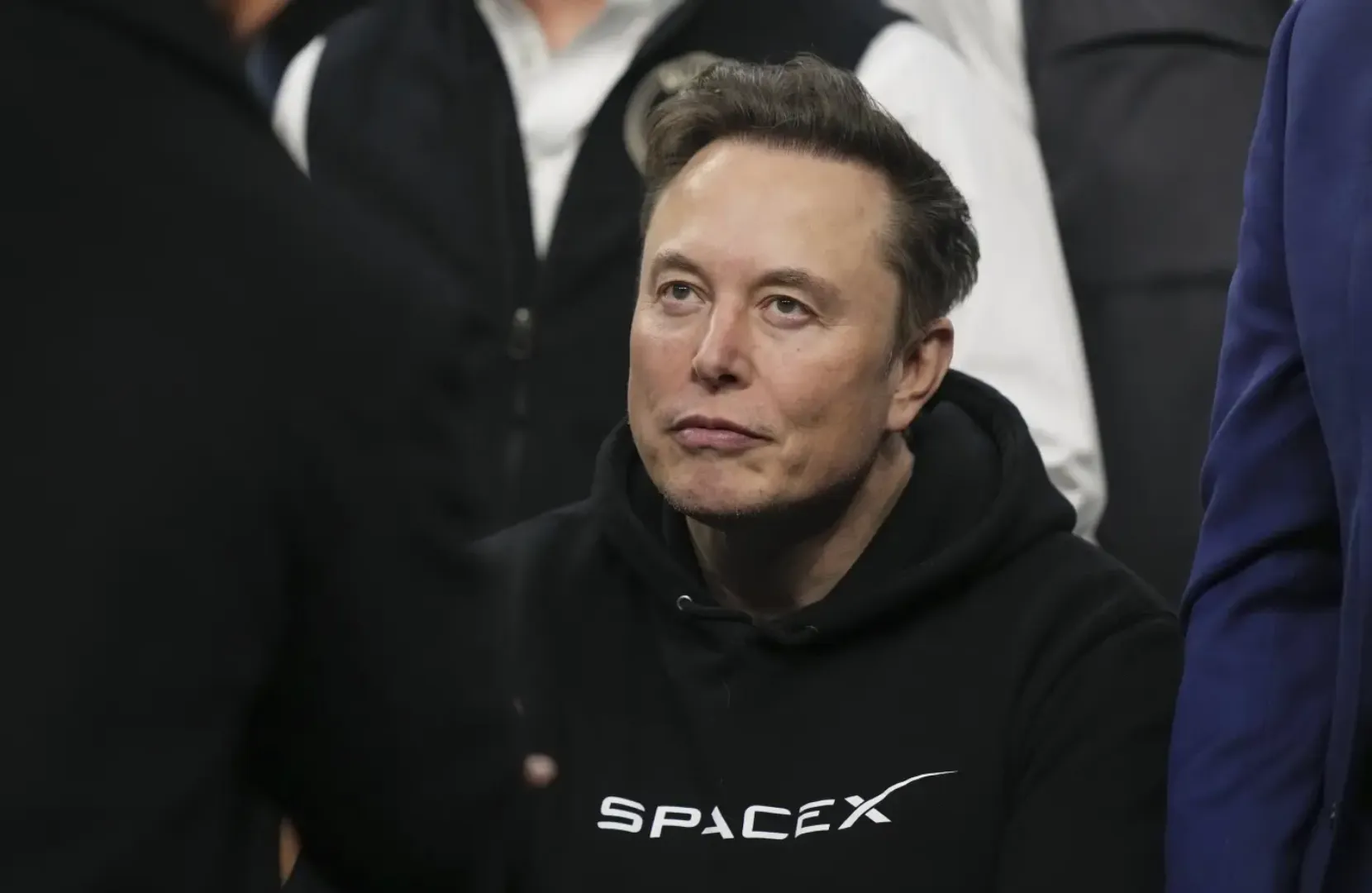
Elon Musk. AP.
Musk's Counter-Narrative
Meanwhile, Musk's increasingly erratic behavior suggests a man feeling the competitive heat. Since falling out with President Trump in June, the world's richest entrepreneur has redoubled his efforts with xAI, according to The New York Times, working frantic all-day spurts that sometimes stretched into the next day. His ambitious plans include building "Macrohard," a Microsoft competitor that sounds more like a parody than a product strategy.
"If you force the AI to lie or believe things that are not true, you're at great risk of creating a dystopian future,"
Musk lectured his xAI workforce, displaying the messianic complex that has defined his approach to AI development. Yet industry observers note that xAI faces significant talent hemorrhaging, with key personnel defecting to OpenAI and Meta—hardly a vote of confidence in Musk's "truth-seeking" mission.
The Economic Reality Check
The numbers tell a sobering story about this AI arms race's true cost. Oracle's staggering $300 billion commitment to OpenAI's Stargate infrastructure project represents one of the largest cloud contracts in history, yet Oracle shares tumbled 7.1% as investors questioned margin sustainability amid soaring Nvidia chip costs. Global hyperscale capital expenditures hit $127 billion in Q2 2025 alone—a 72% year-over-year surge that's testing investor patience.
The agentic AI market's projected growth from $5.25 billion in 2024 to $199 billion by 2034 sounds impressive until one considers the circular nature of these deals—OpenAI paying Oracle for infrastructure using money partly derived from Microsoft's investment, whilst Oracle invests in AI companies that will rent its infrastructure.
Beyond the Hype Cycle
Yet AI researchers point to fundamental economic shifts driving adoption beyond speculative hype. The widespread adoption of cloud computing has made it easier and cost-effective for businesses to deploy AI agents, with cloud-based platforms enabling companies to scale AI agent applications with lower infrastructure investments, driving wider adoption across industries. Consumers increasingly expect personalised interactions, and AI agents enable businesses to deliver customized solutions by leveraging data to provide targeted recommendations, customer support, and marketing outreach, increasing customer satisfaction and loyalty.
AI agents enhance customer engagement in e-commerce by offering real-time product recommendations, assisting with transactions, and improving the online shopping experience—capabilities that translate directly to revenue generation rather than speculative value. This practical utility explains why Box Inc. reported 103% net retention driven by its AI-first strategy, demonstrating that enterprises are willing to pay premium prices for agentic capabilities that deliver measurable business outcomes.
The Verdict
Altman's developer-first strategy appears shrewder than Musk's grandiose truth-seeking rhetoric. By democratising agent development, OpenAI threatens to commoditise the very AI start-ups that venture capitalists are frantically funding across 11 market niches. Meanwhile, Musk's $120 billion xAI valuation rests on promises rather than proven enterprise adoption.
In this high-stakes game of AI chess, Altman appears to be playing several moves ahead whilst Musk remains distracted by his own reflection in the mirror.
Get the stories that matter to you. Subscribe to Cyber News Centre and update your preferences to follow our Daily 4min Cyber Update, Innovative AI Startups, The AI Diplomat series, or the main Cyber News Centre newsletter — featuring in-depth analysis on major cyber incidents, tech breakthroughs, global policy, and AI developments.
Sign up for Cyber News Centre
Where cybersecurity meets innovation, the CNC team delivers AI and tech breakthroughs for our digital future. We analyze incidents, data, and insights to keep you informed, secure, and ahead.
Two stories about AI are running, and both are incomplete. The tools genuinely compress work; the accounting, the calibration and the power bills are another matter. Twenty-five years ago the fibre outlasted the forecasts that paid for it, and nothing in a boom is cheaper than a confident number.
Meta’s Muse is more than a chatbot. It is a digital worker that can read email, make purchases across the web, and act after users close the app. Wall Street sees a return on Meta’s vast AI spending. Cybersecurity experts see a more urgent question: should it hold the keys to our digital lives yet?
OpenAI’s Astra has reignited the AGI debate, with Jensen Huang declaring its arrival and researchers questioning the evidence. As autonomous AI advances, the race into 2027 will test who can turn greater capability into economic value while keeping human oversight firmly in place. The stakes climb.
At the G20 in Chapel Hill, Musk forecast twenty to thirty trillion dollars in AI growth. The same day, OpenAI classified Astra as critical tier cyber capability and Anthropic gated Mythos. Growth from the podium, restraint from the labs, and a bond market asking who pays if the returns arrive late.
Where cybersecurity meets innovation, the CNC team delivers AI and tech breakthroughs for our digital future. We analyze incidents, data, and insights to keep you informed, secure, and ahead. Sign up for free!