Nine years late, Tesla’s Roadster flipped, hovered and leapt over its siblings at a SpaceX rocket test site. Shares jumped, then fell. Social feeds caught fire. What Musk really unveiled was one engineering stack wearing two corporate badges. Success is not guaranteed. Excitement, as ever, is.
Hot inflation, record AI credit stress and a seven-day chip slide showed that the boom’s limit is no longer demand but the price of money. Investors are rotating rather than fleeing, and the bill is landing far from Silicon Valley.
AI is learning to anticipate our choices, from battlefield decisions to mortgages, spending and relationships. Alex Karp’s warning raises a question of power: when machines understand our habits and vulnerabilities, will they serve our interests or subtly steer us towards someone else’s objectives?
Nvidia, memory makers and SpaceX are dragging the AI token race onto Wall Street
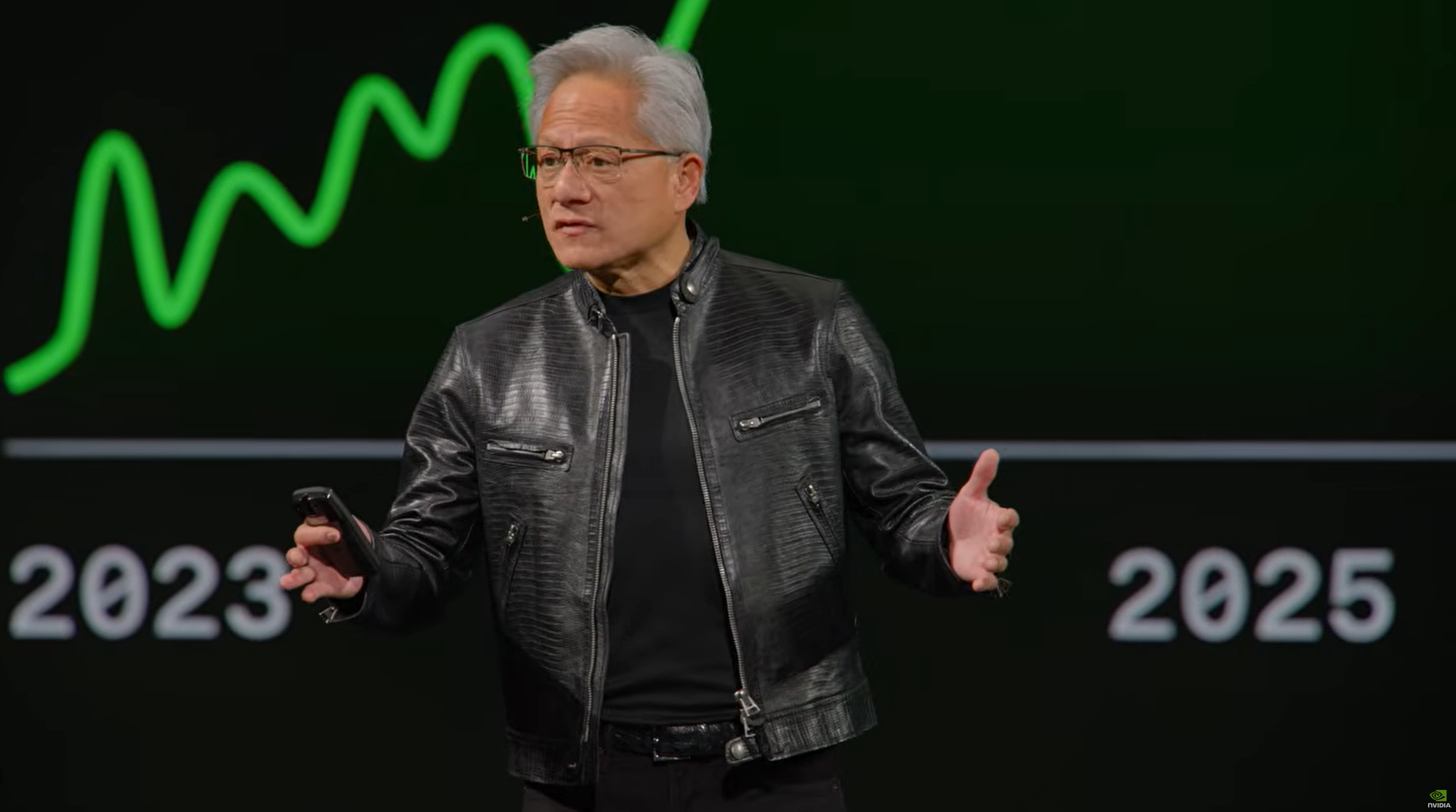
Nvidia’s Taipei showcase made it clear that AI is now an industrial race to mint tokens as cheaply as physics allows, pulling memory makers into an AI supercycle and setting the stage for SpaceX–xAI’s blockbuster IPO to turn orbital compute into Wall Street’s next obsession.
Nvidia spent the week in Taipei underscoring what markets already suspect: AI is turning into an infrastructure contest measured in tokens and watts rather than marketing slogans. At the same time, Elon Musk is lining up a SpaceX–xAI flotation that will drag the AI race squarely into public markets, while Anthropic joins OpenAI in a new cohort of platforms whose valuations are converging on the trillion‑dollar mark in under a decade.
GTC Taipei and Computex underlined what strategists in Washington and Beijing have known for years: Taiwan is no longer only the world’s foundry, it is fast becoming the gearbox of the inference economy. Nvidia’s keynote in Taipei framed data centres as “factories to generate tokens”, with Blackwell‑generation systems and GB200‑class clusters tuned to squeeze the cost of each million tokens ever lower. That is both a technical roadmap and an industrial strategy built on Taiwanese manufacturing, advanced packaging and memory capacity.
For the United States, its broader ecosystem has become a way of anchoring technological advantage in a world where China is racing to build a sovereign AI hardware stack. For China, constrained by export controls on leading‑edge GPUs and design tools, Taiwan’s role at the nexus of chip design, packaging and memory makes the island a strategic chokepoint as well as a commercial partner. The very keynote that delights investors in New York and London serves as a reminder in Beijing and Washington that the bottlenecks now lie on a narrow strip of land in the Taiwan Strait.
Trump, Xi and a fragile calm
The recent meeting between President Trump and Xi Jinping has taken some of the heat out of the immediate US–China confrontation, at least in public. Televised rhetoric has cooled and both sides have been keen to present the encounter as proof they can manage their rivalry without letting it spiral into open crisis. Markets have taken that at face value, treating the meeting as a modest de‑escalation and a signal that channels of communication remain open.
Beneath that surface calm, however, the structural competition remains intact. Washington’s export controls on advanced AI chips are still in place, with Nvidia’s most capable data‑centre GPUs barred from the Chinese market, and efforts to tighten loopholes continuing in the background. Beijing has responded by accelerating domestic chip programmes and leaning on local cloud providers to build around what hardware they can access.
The next phase of the tariff drama will not only concern steel, cars or solar panels: it is likely to sweep up AI servers, advanced memory and the data‑centre equipment that underpins inference at scale. As Washington weighs fresh controls and Beijing readies its own retaliatory toolkit, Taiwan’s semiconductor and memory exports risk becoming bargaining chips in a broader contest over who effectively controls the world’s AI infrastructure. The irony is stark: the more the global economy leans on cheap tokens, the more exposed it becomes to disruption in a handful of AI‑heavy supply chains.
SpaceX, xAI, Anthropic and the trillion‑dollar hypercycle
The SpaceX–xAI merger is heading for what could be one of three mega‑listings directly tied to the AI boom.
The SpaceX–xAI story has also broken through into cultural noise. In the weeks since the merger and IPO buzz hit the wires, social feeds have been flooded with memes of Elon Musk standing triumphantly on the Moon, rockets and dog coins in the background, as if the listing were already a lunar landing.
From Wall Street trading floors to Reddit threads and provincial radio call‑ins, the narrative of “the biggest IPO in history” has gone fully mainstream, turning Musk’s face and SpaceX’s ticker into shorthand for the entire AI gold rush.
Alongside OpenAI and Anthropic, which has used the rapid adoption of Claude and its code‑generation capabilities to move into the very top tier of model providers, xAI is part of a cohort of firms now circling trillion‑dollar territory in less than ten years. Anthropic’s recent S‑1 filing, signalling its intent to go public, has sharpened that picture: in roughly a month, more than 4 trillion US dollars of combined equity value is preparing to shift from private hands into public markets across three AI‑centric companies, roughly the size of an entire mid‑market stock exchange.
Musk’s language around the merged SpaceX–xAI entity casts it as a vertically integrated “innovation engine on and off Earth”, fusing launch capacity, satellite connectivity, mobile infrastructure and in‑house AI models into a single corporate structure.
Anthropic’s pitch leans on safety guarantees, controllability and Claude’s strength in code and enterprise workflows, while OpenAI continues to frame its models as a general‑purpose intelligence layer for business and consumer applications. The capital story is converging, however: each of these firms is positioning itself as indispensable infrastructure for the inference era rather than a narrow product play. To boosters in Silicon Valley, this looks like a kind of financial singularity, where hardware, software, data and capital align to let a small set of platforms dominate multiple layers of the stack.
When private AI becomes public
Behind the scenes, the tech set in California is treating this as the start of a new capital regime. For much of the past decade, AI was largely a private‑market story, dominated by late‑stage rounds, sovereign wealth funds and valuation marks set far from public price discovery. Now the narrative is shifting from private to public at speed, with public investors being invited directly into the capex cycle for AI infrastructure, from GPUs and high‑bandwidth memory to data‑centre build‑outs and, increasingly, orbital compute.
In venture circles, one line you hear with increasing frequency is that “AI infrastructure is becoming the new utilities sector”, a way of saying that the revenue streams from tokens, storage and bandwidth could come to look as stable and systemically important as electricity or telecoms. Critics, meanwhile, worry about concentration risk and democratic accountability as a handful of platforms capture an outsized share of global profits, data and political leverage. When Nvidia talks about data centres as token factories, Musk talks about space‑based AI as the only way to scale, and Anthropic frames Claude as a foundation for whole enterprise stacks, they are sketching a world in which AI infrastructure itself becomes a geopolitical actor.
For now, a Trump–Xi truce, booming memory orders in Taiwan and a queue of AI‑heavy IPOs provide a veneer of stability. Behind it, though, lies an uncomfortable reality: as inference spreads from hyperscale clusters to PCs and, eventually, satellites, the race to own the token rails of the global economy is intensifying, along with the risk that the next tariff or export‑control volley lands squarely on the chips, code and capital flows that keep the whole system running.
Get the stories that matter to you. Subscribe to Cyber News Centre and update your preferences to follow our Daily 4min Cyber Update, Innovative AI Startups, The AI Diplomat series, or the main Cyber News Centre newsletter — featuring in-depth analysis on major cyber incidents, tech breakthroughs, global policy, and AI developments.
Sign up for Cyber News Centre
Where cybersecurity meets innovation, the CNC team delivers AI and tech breakthroughs for our digital future. We analyze incidents, data, and insights to keep you informed, secure, and ahead.
Nine years late, Tesla’s Roadster flipped, hovered and leapt over its siblings at a SpaceX rocket test site. Shares jumped, then fell. Social feeds caught fire. What Musk really unveiled was one engineering stack wearing two corporate badges. Success is not guaranteed. Excitement, as ever, is.
The AI-assisted raid on South Korea's banks never went near the vault. It slipped in through loan portals, sales platforms and a staff mobile app. Now Seoul is ordering every bank to count its exposed doors, and regulators in Washington, London, Frankfurt and Sydney are asking the same question.
Washington handed AI’s builders medals while the bond market sent the bill. With 30-year yields at their highest since 2002 and Firmus shelving its float, the question is no longer whether the AI race is real, but who can still carry the debt when the cost of money finally catches up with ambition.
Donald Trump has handed America's highest science honours to Musk, Huang, Brin, Su, Nadella and Dell, crowning the builders of AI's chips, clouds and rockets. His maxim that whoever wins AI wins leaves no silver medal, and middle powers like Australia must now choose between partner and tenant.
Where cybersecurity meets innovation, the CNC team delivers AI and tech breakthroughs for our digital future. We analyze incidents, data, and insights to keep you informed, secure, and ahead. Sign up for free!